The Unreadable World
22nd October - 26th November, 2026
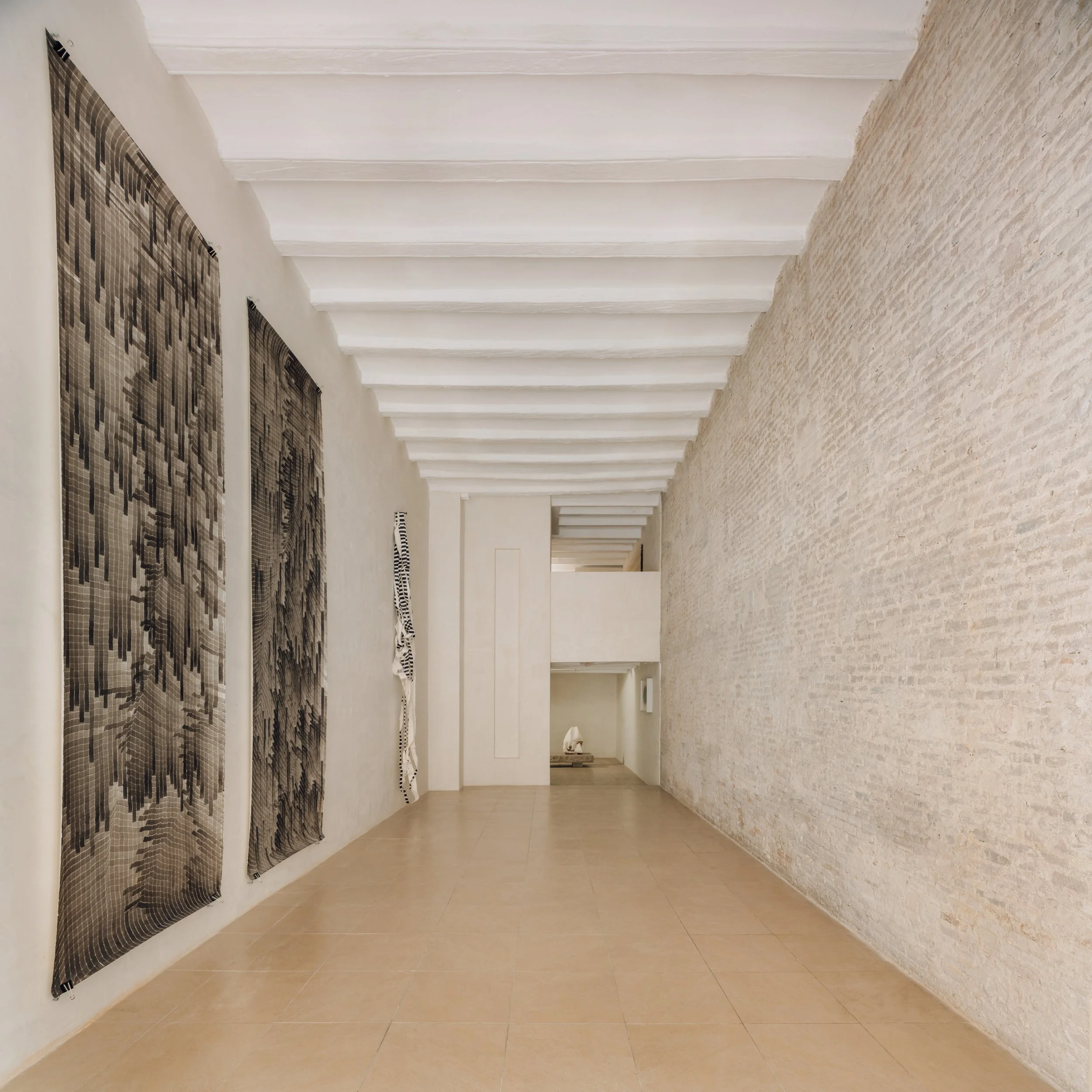
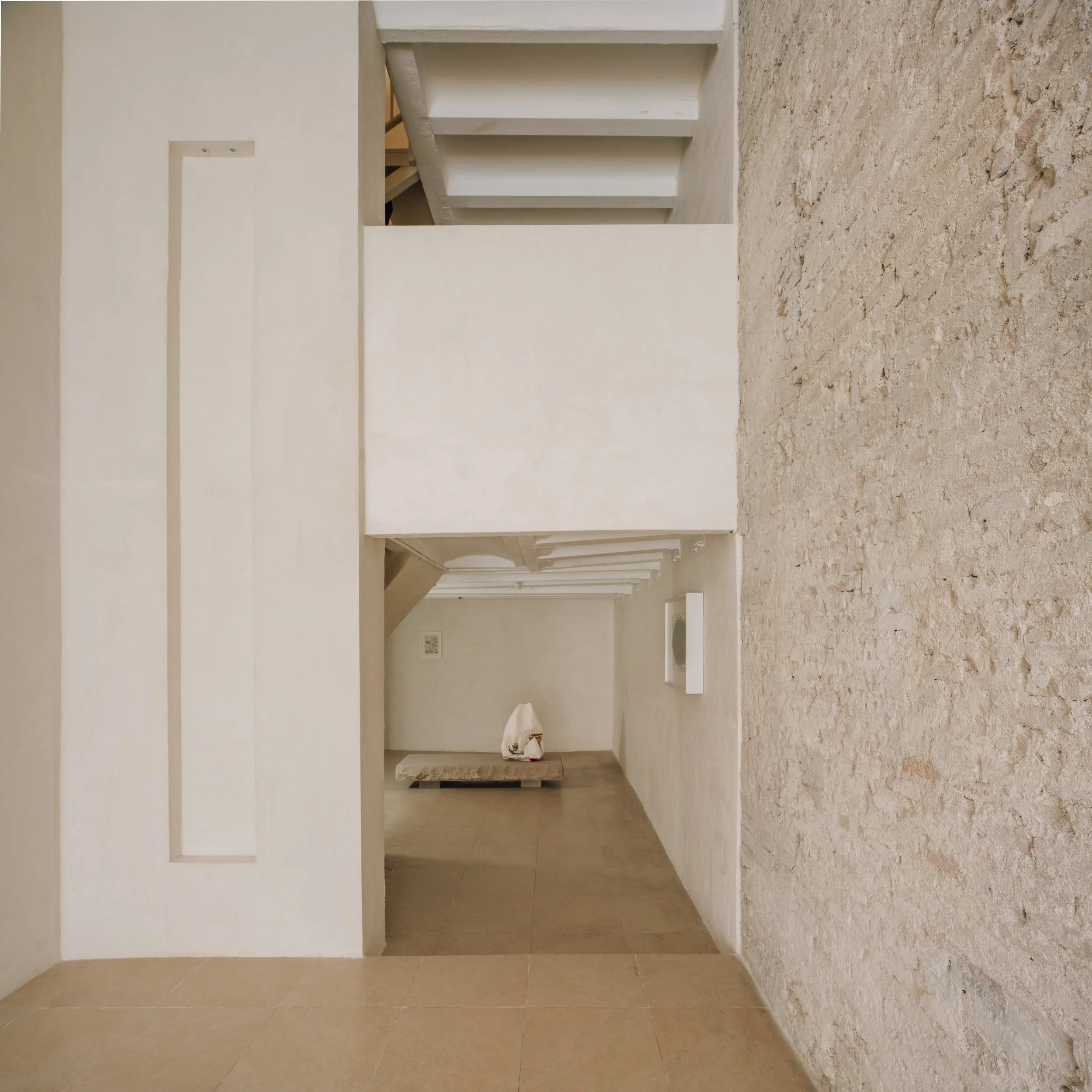
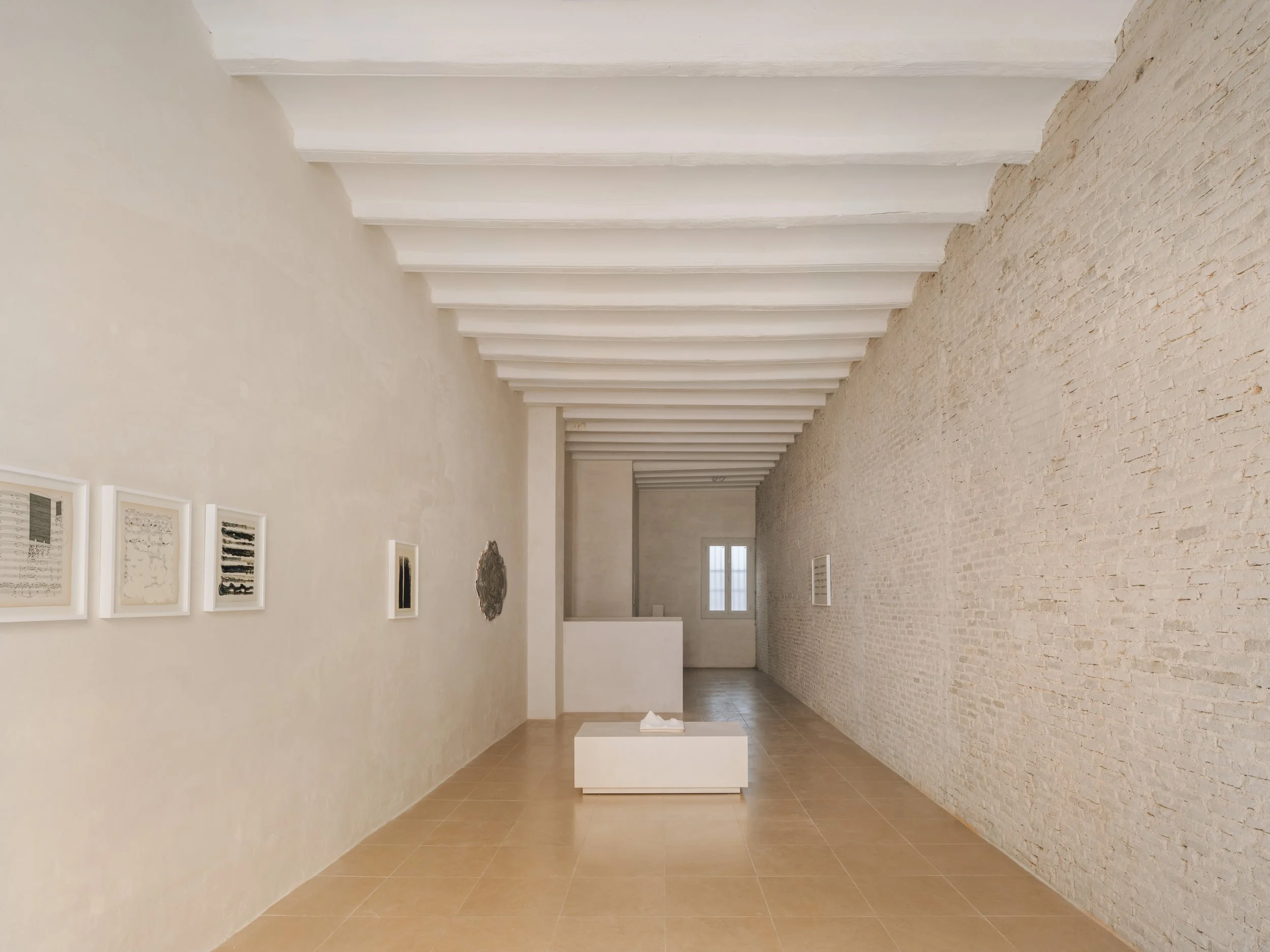
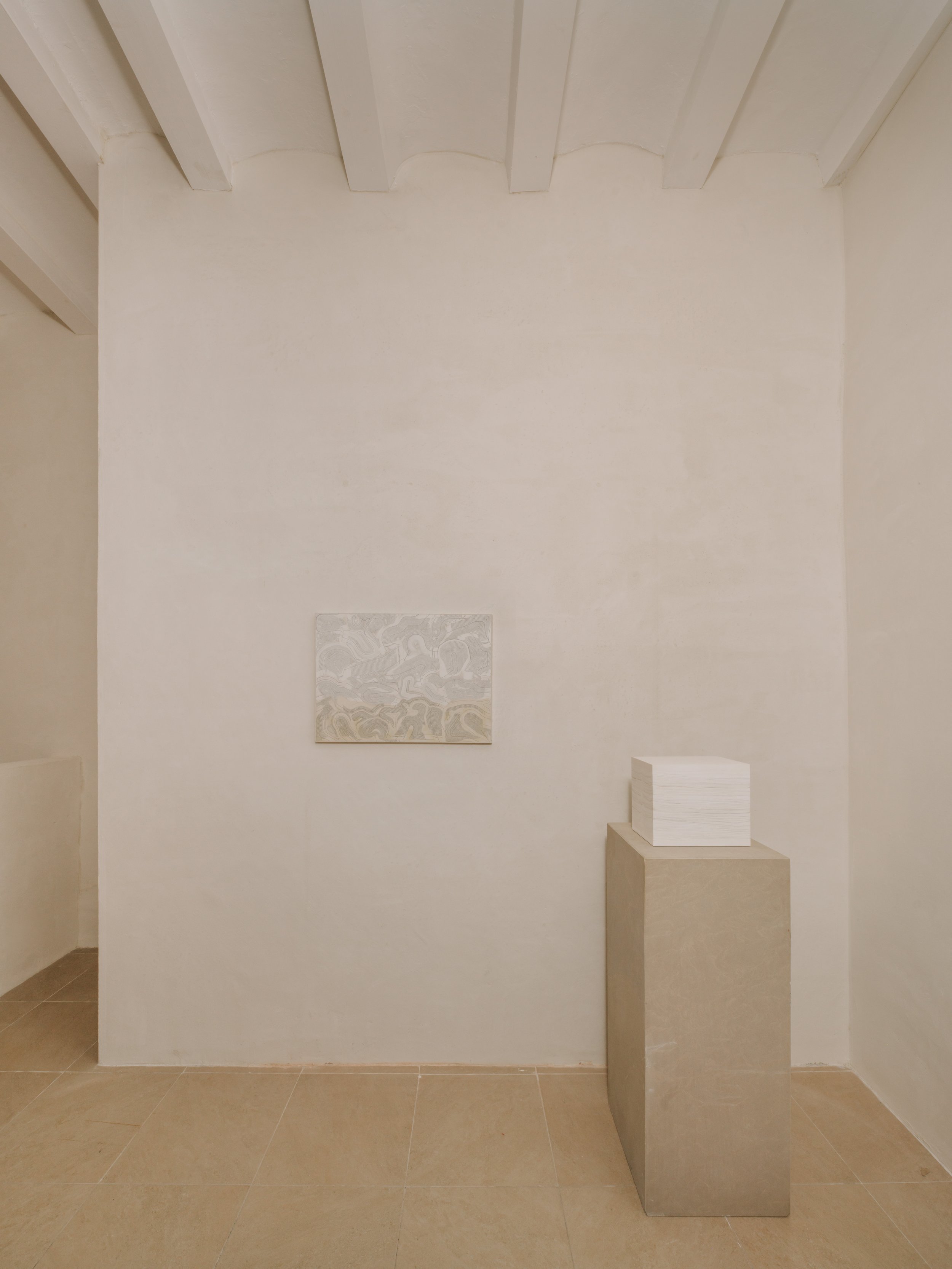
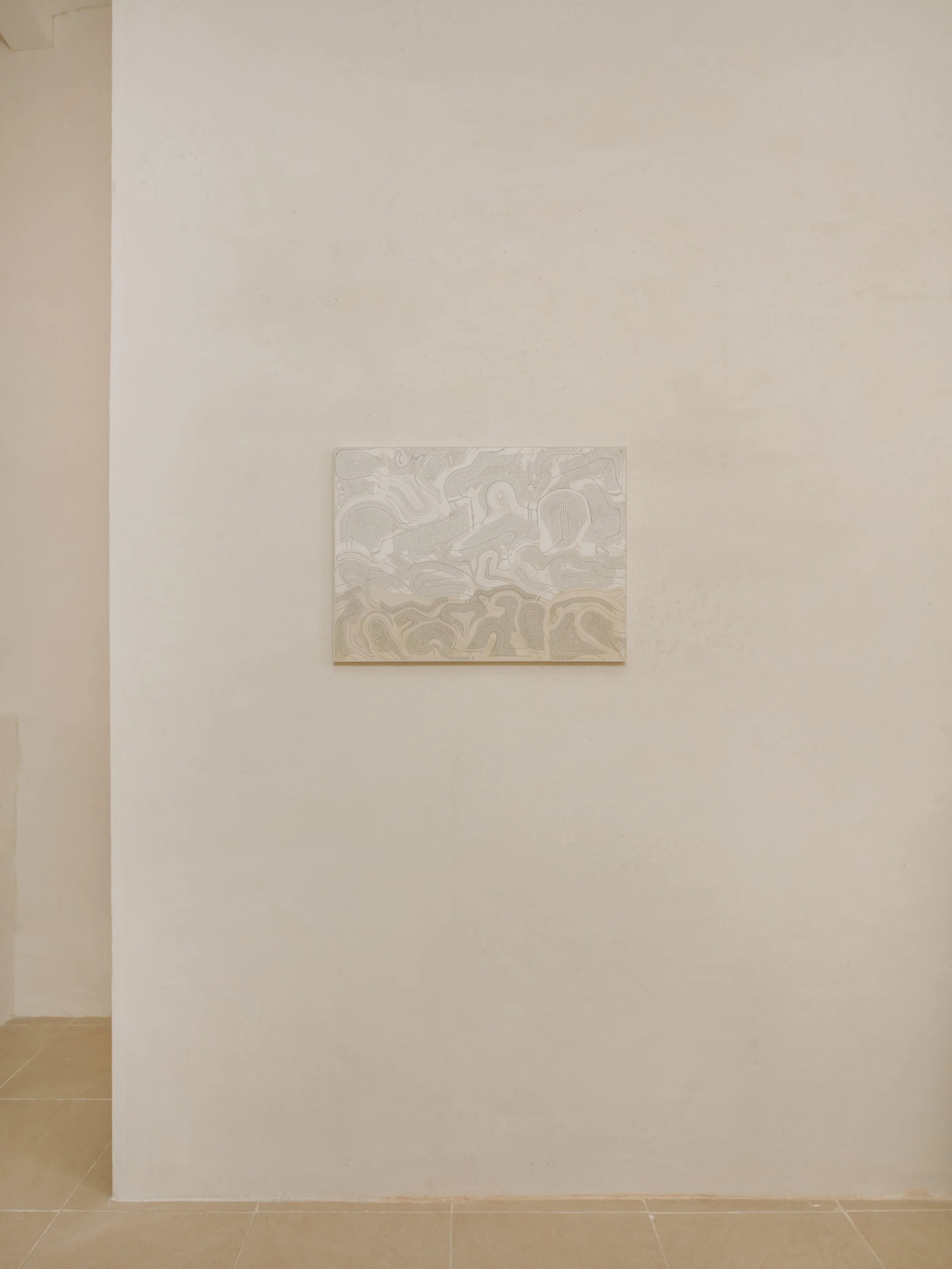
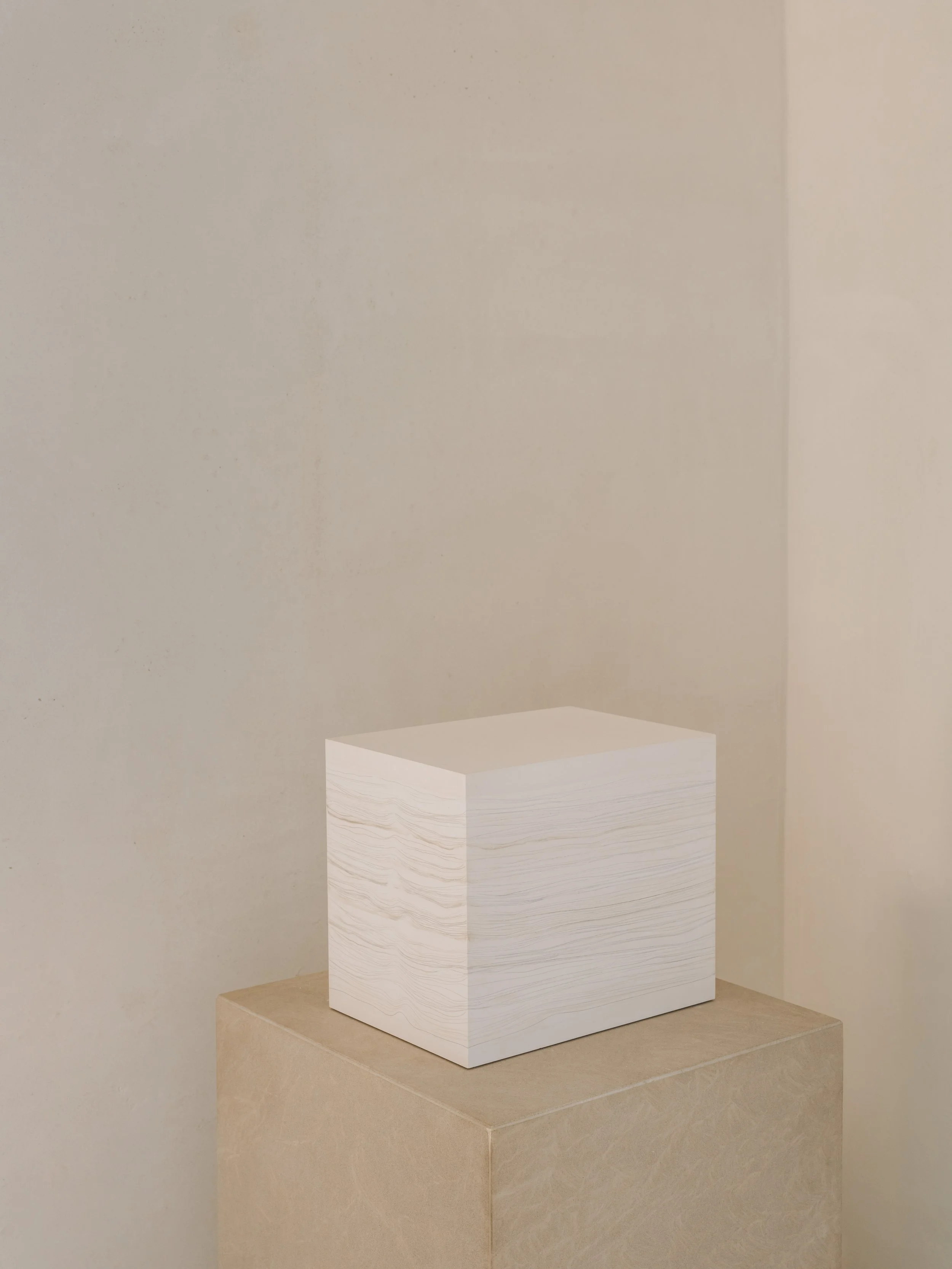
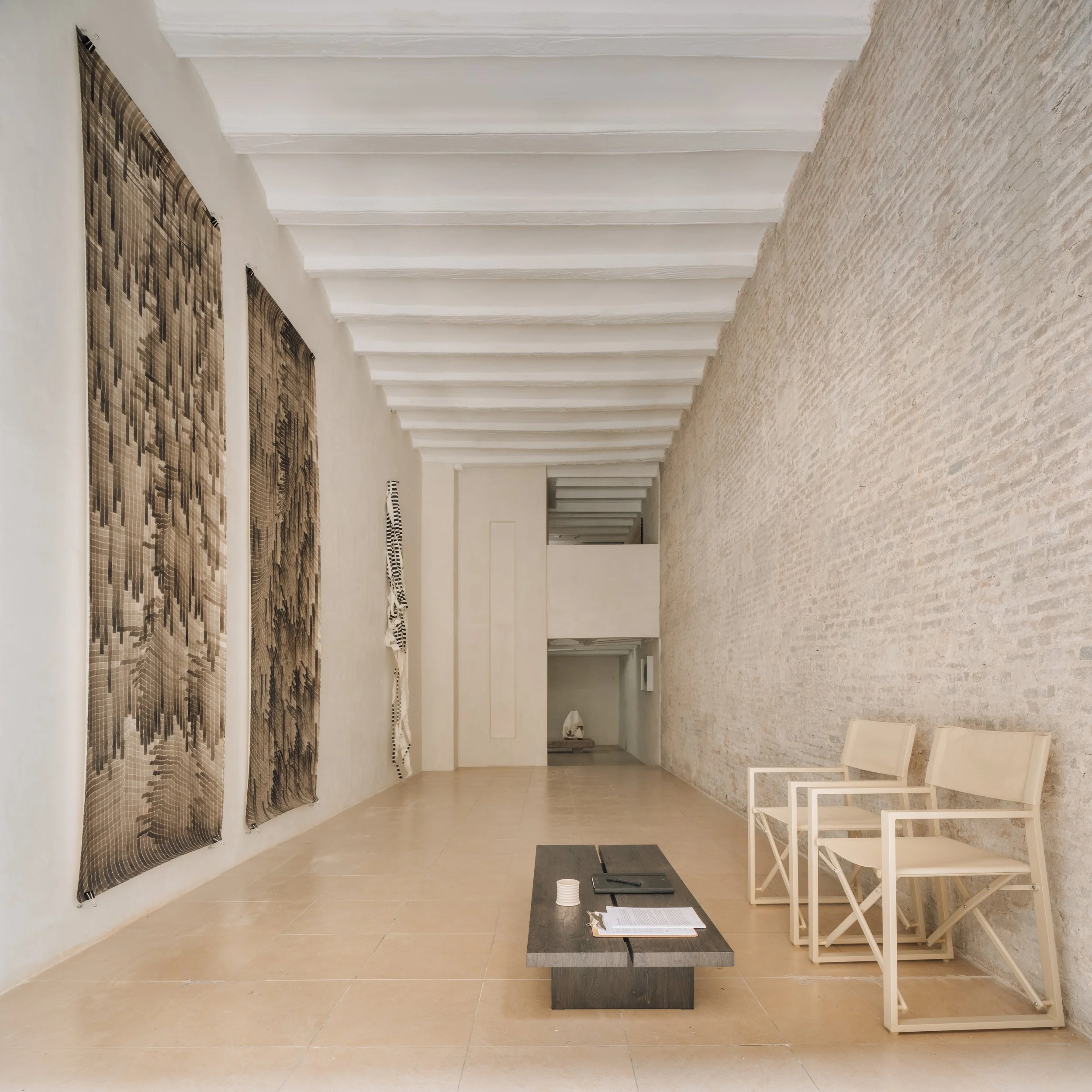
Richeldis Fine Art BCN presents an exhibition of British artist Jonathan Callan and Swedish artist Sophie Tottie. Tottie and Callan meet at the point where information loses its certainty and becomes visual and material form.
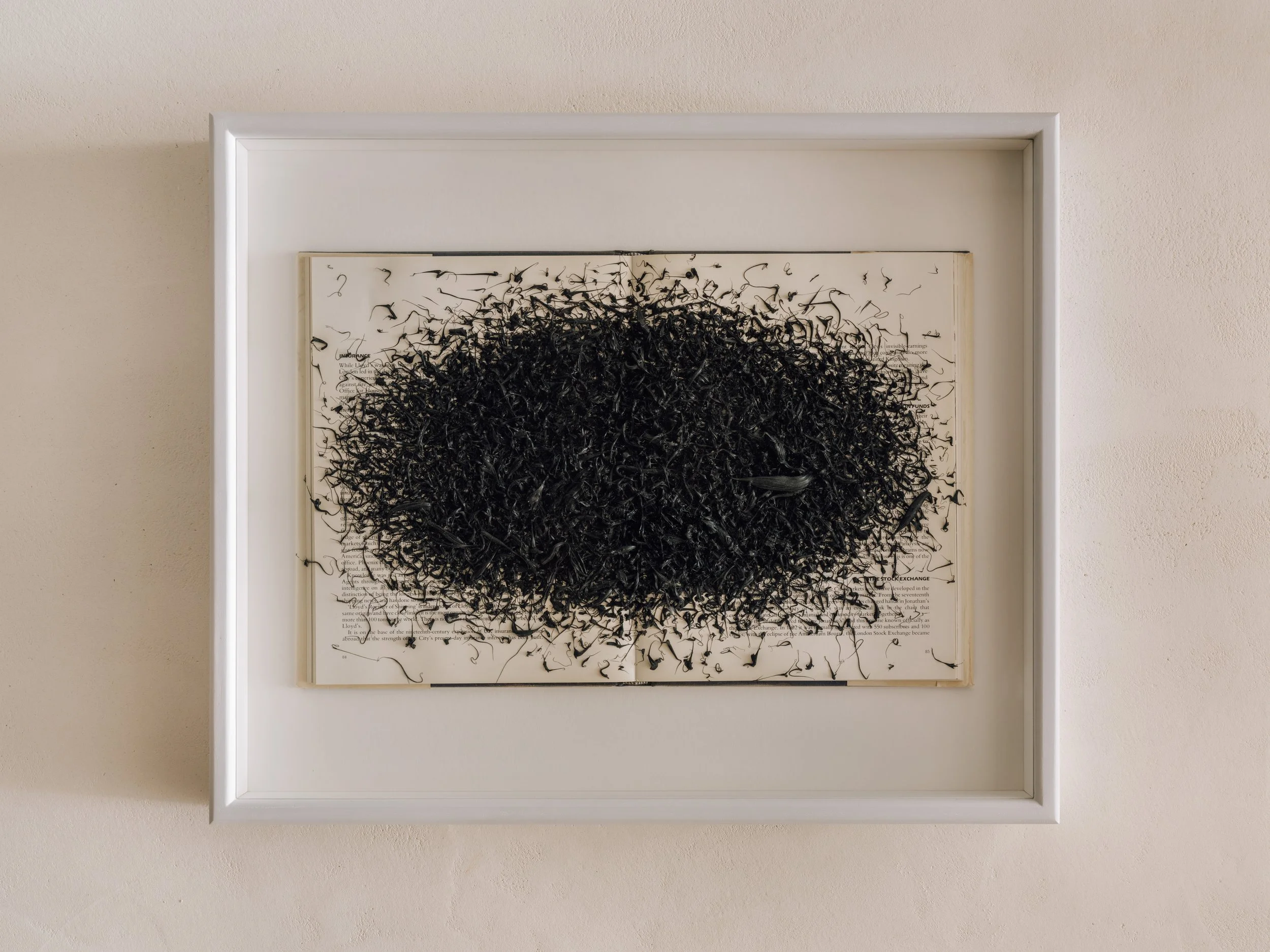
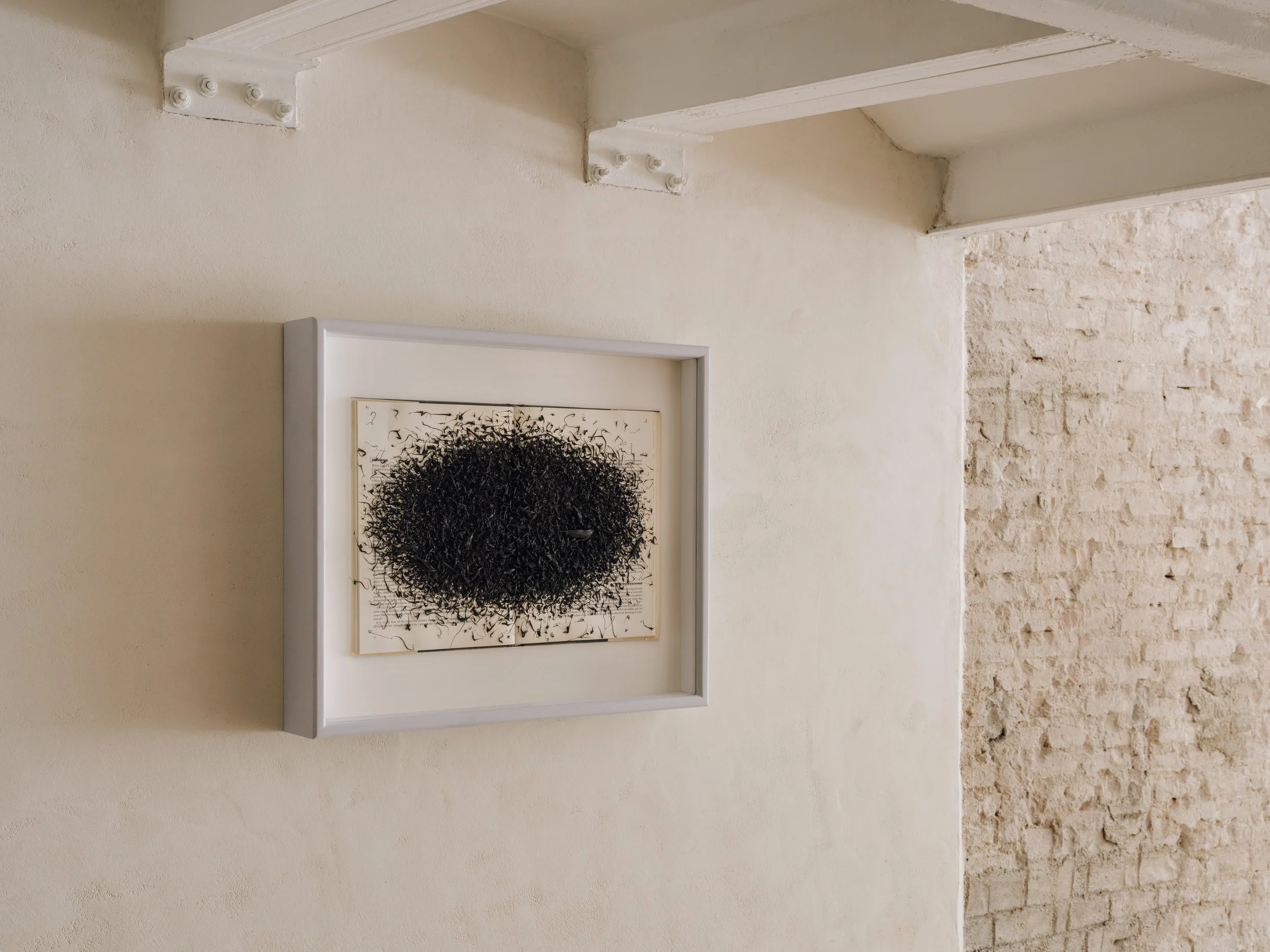
Across drawing, painting, sculpture and material intervention, both artists explore how systems of meaning are transformed through material form. For more than three decades, Jonathan Callan (b. 1961, Manchester) has developed a practice centred on the physical life of information and the different languages through which we or-giasen and understand experience. Working with books, maps, musical scores, photographs and oth-er printed matter, he approaches these materials not simply as carriers of meaning, but as objects with their own weight, structure and resistance. Books and pages are cut, drawn over, layered, buried, compressed or embedded in plaster, silicone and resin. Callan has described coming to regard books much as a potter regards clay: as material to be handled, tested and transformed. As he writes, “How we reduce our experiences of the world to different languages plays an incredibly significant role in how we then understand it.”
His interventions unsettle the expectation that printed information should remain stable or that an artist’s treatment of a text should necessarily illustrate its content. Instead, words can become image, pages become strata and familiar systems of communication can be made strange or newly visible.
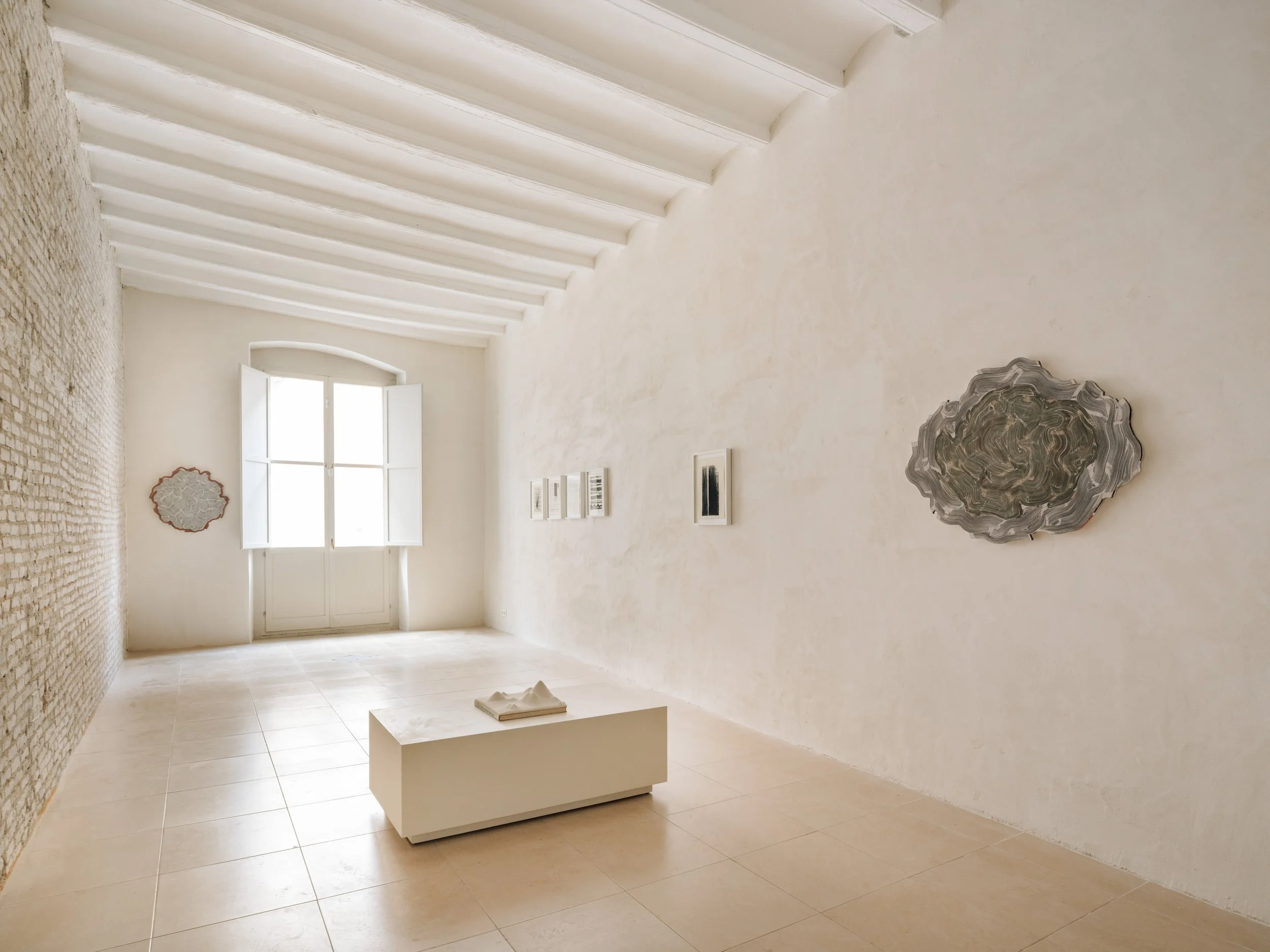
This exhibition brings together fourteen works spanning more than two decades, from 2004 to works made in 2026. Across this period, Callan’s methods and materials continually change while the underlying enquiry persists. Printed matter is drawn over, cut apart, combined, con-cealed or embedded; plaster, silicone and resin introduce different physical conditions. Individual works can appear markedly distinct from one another, yet remain connected by questions of how information is constructed, communicated and understood.
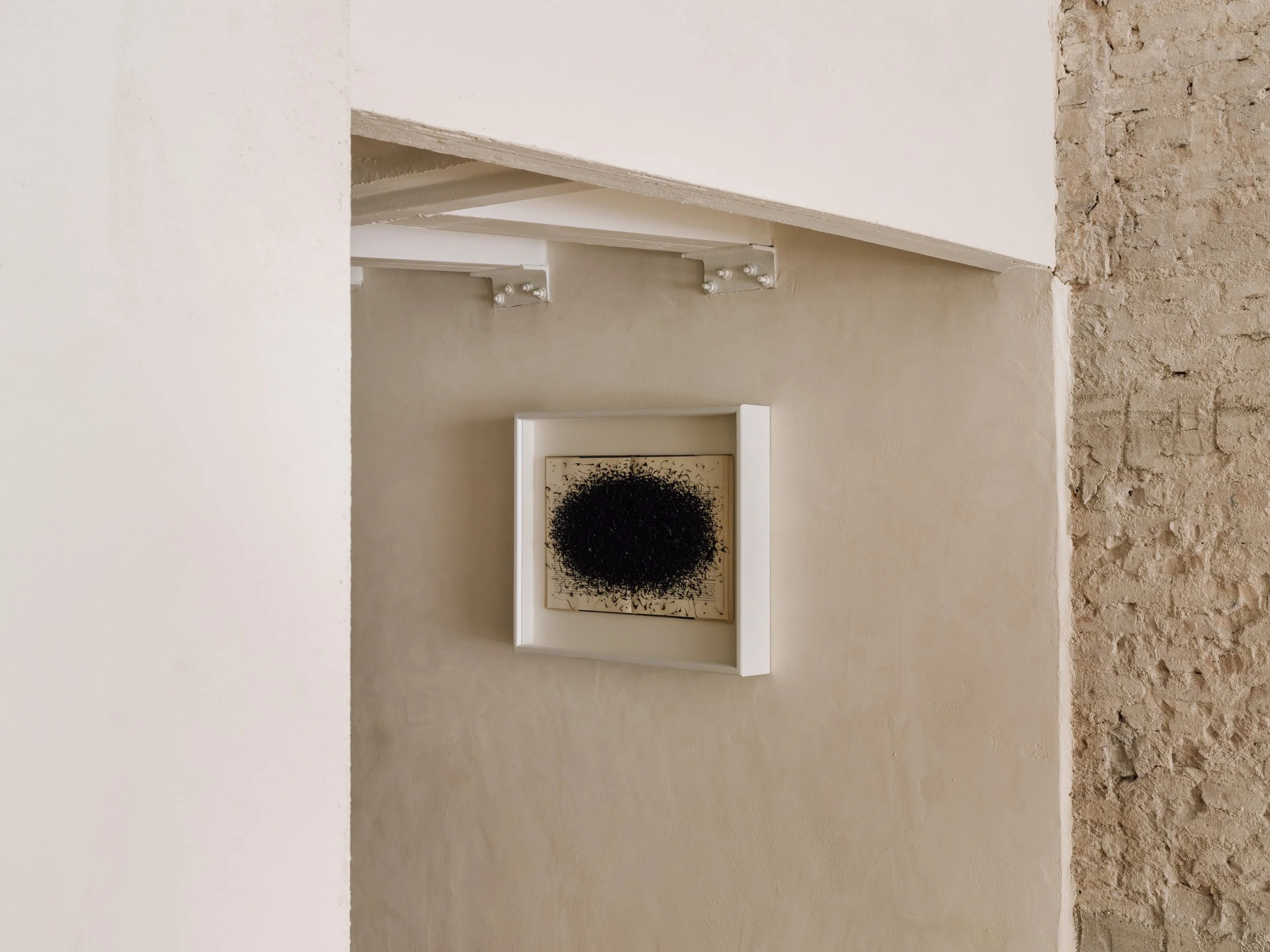
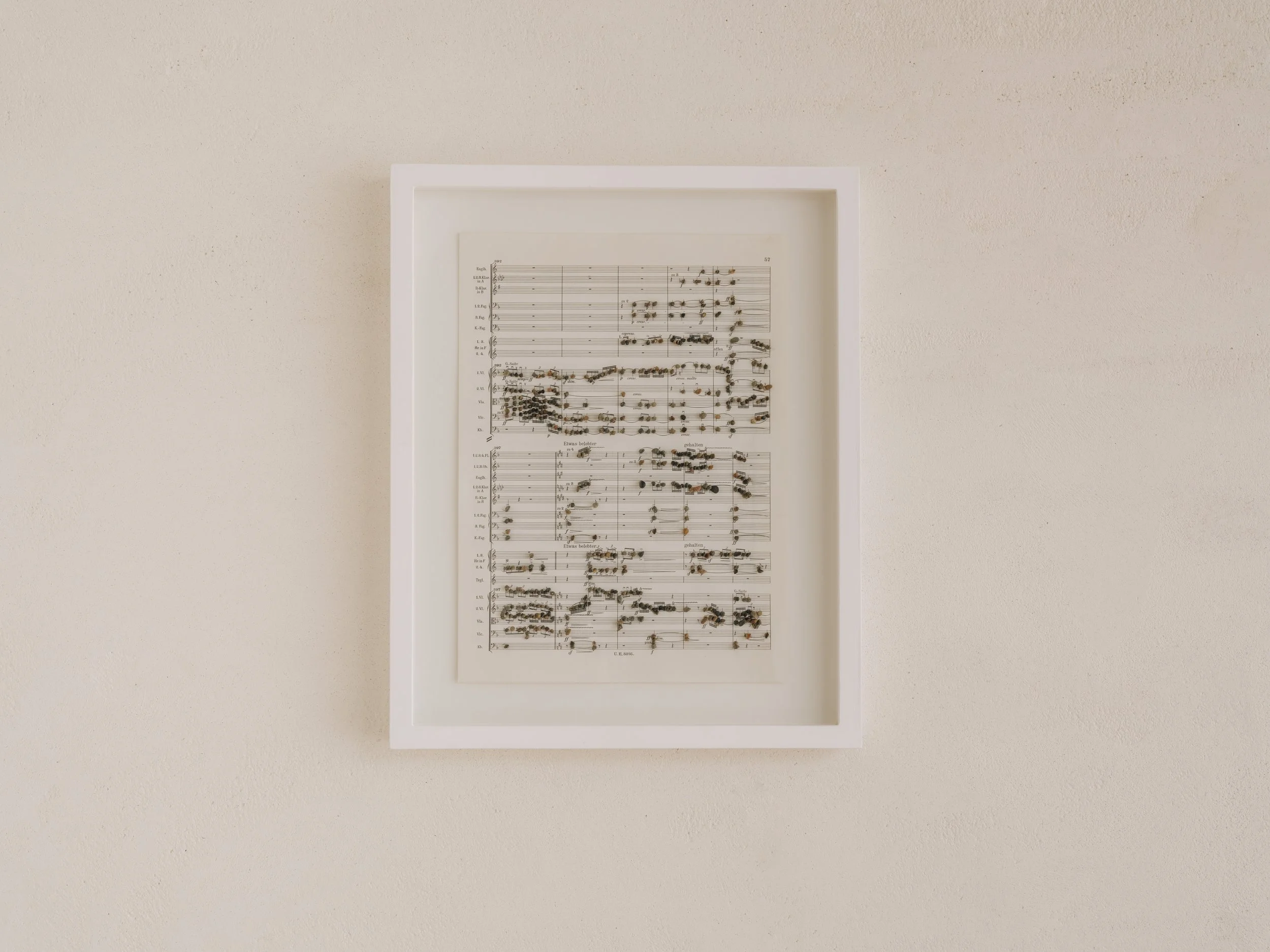
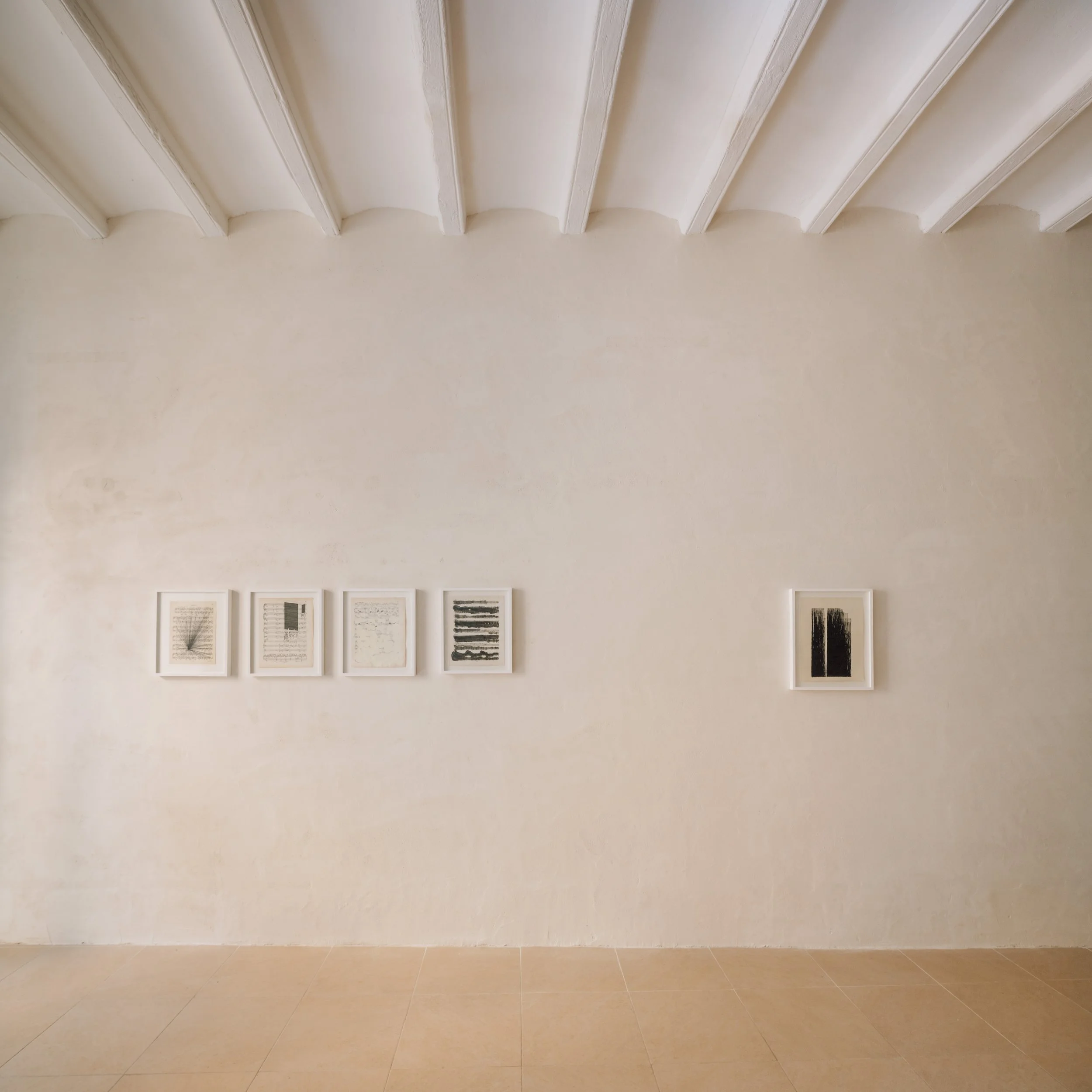
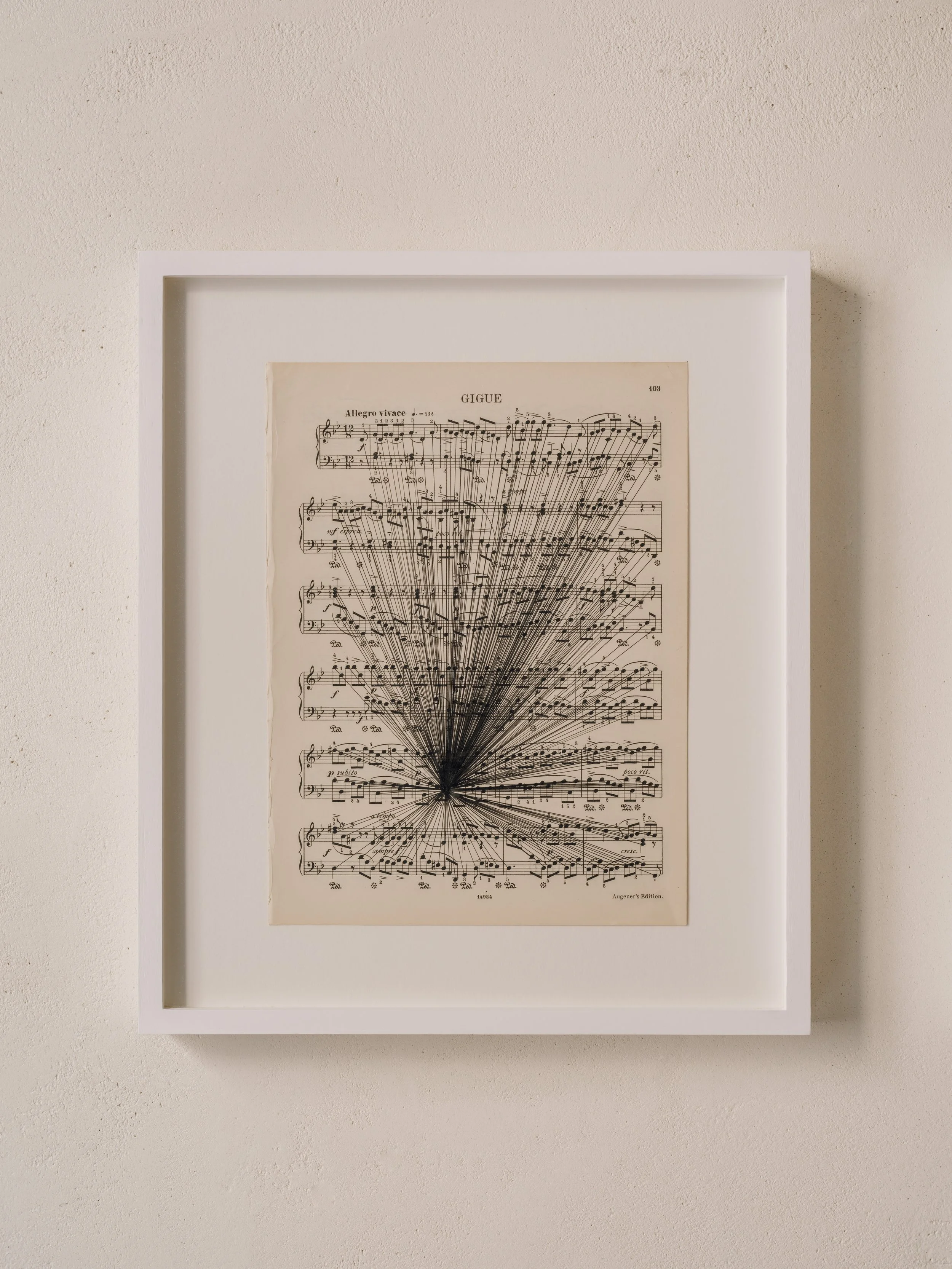
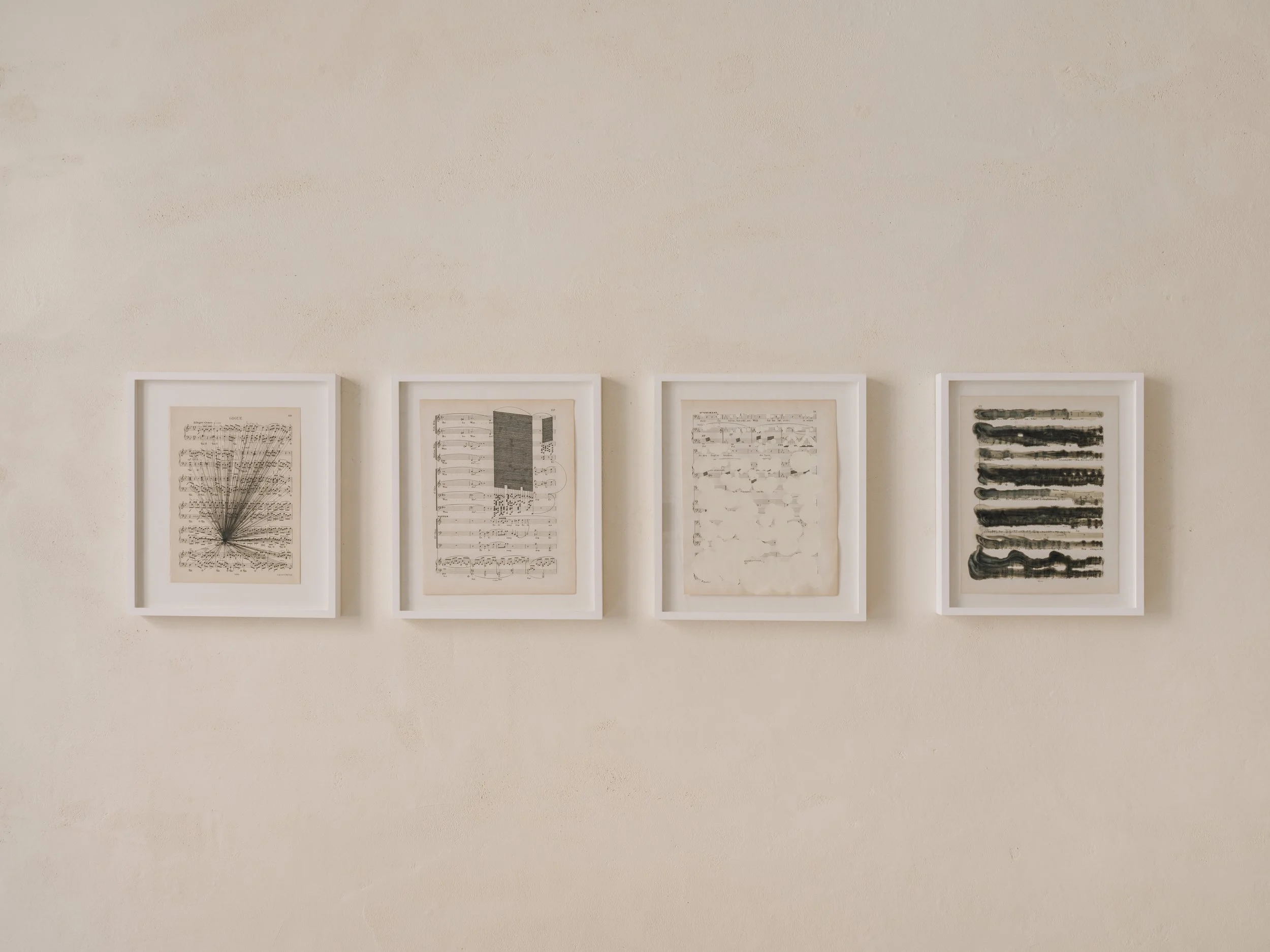
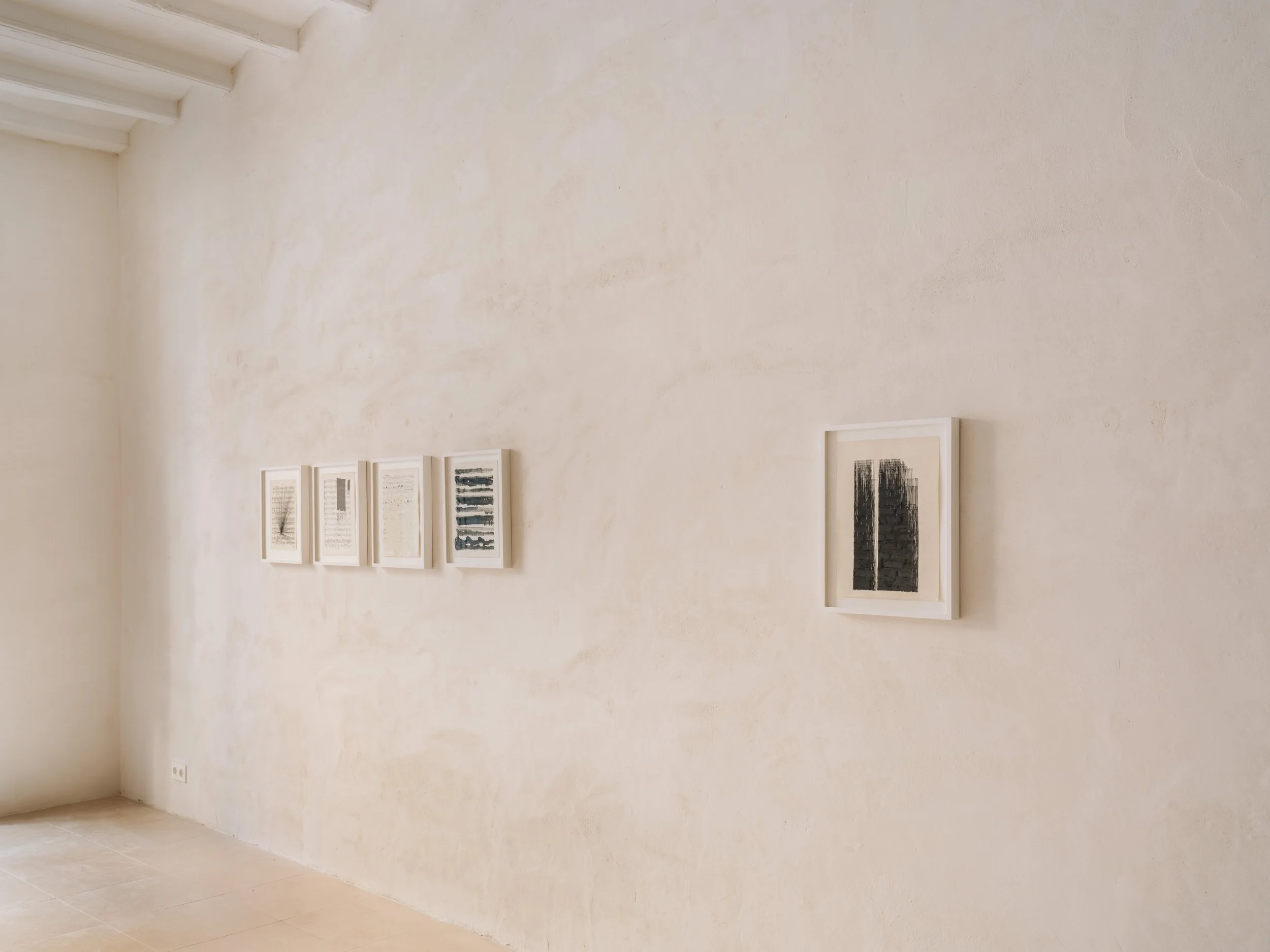
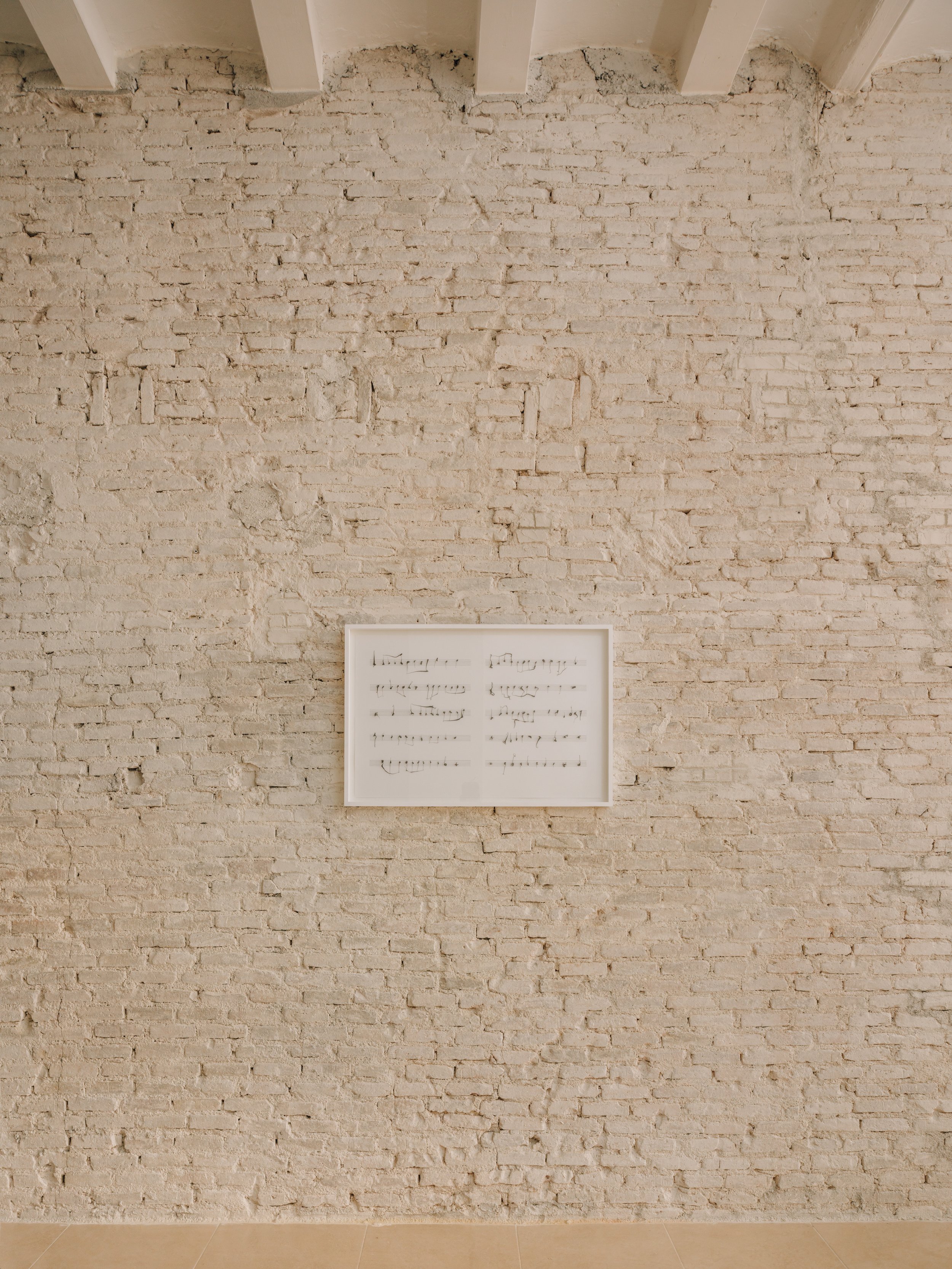
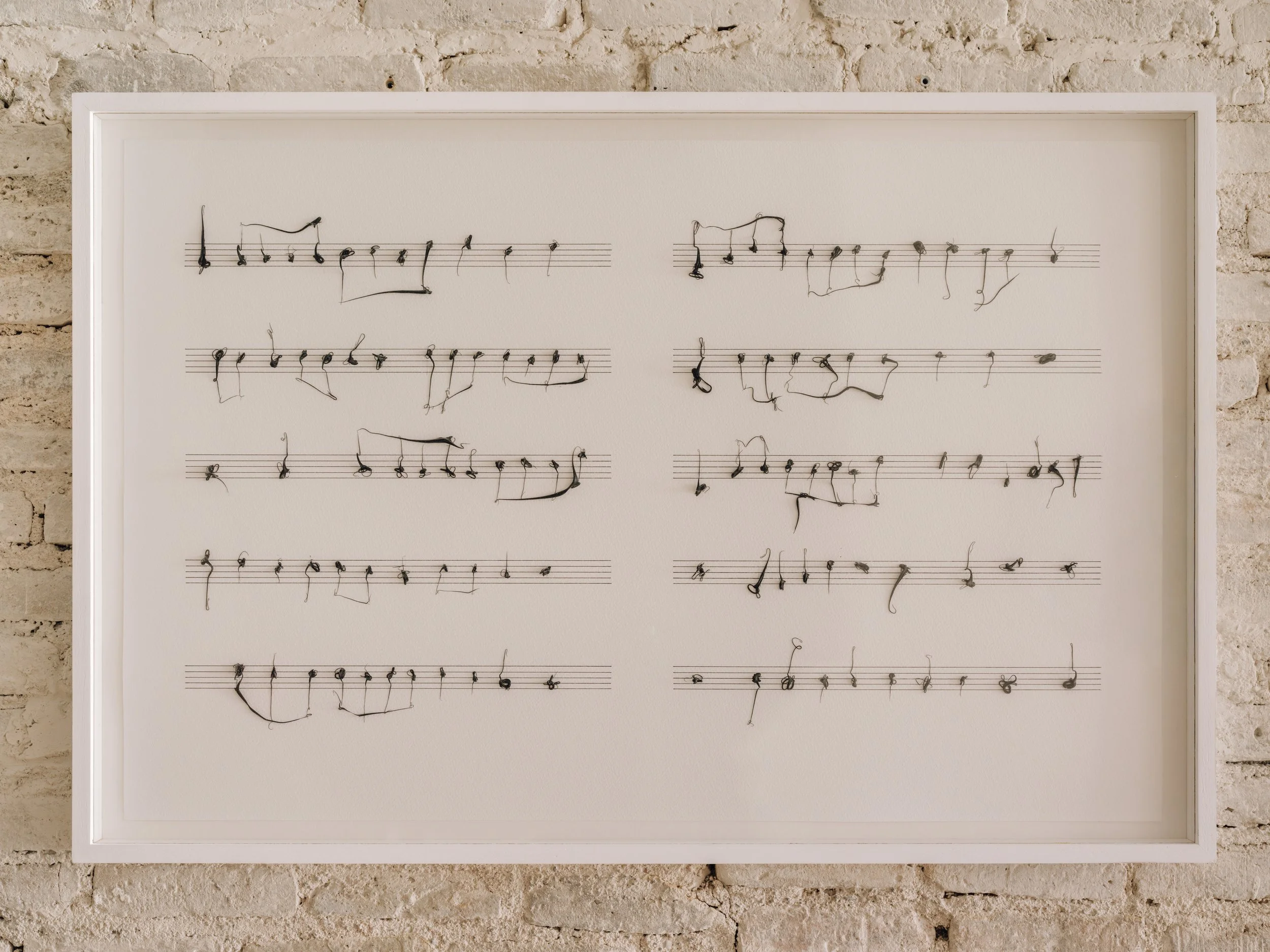
Musical notation forms one thread running through the exhibition. Callan’s attraction to it began long before his hearing deteriorated and, as he explains, sprang from the same interest that drew him to books, maps, and other modes of information. In Gigue, relative too (2004), a point is isolated on the page and every note is drawn towards it, creating what Callan describes as a new perspective both visually and musically. Years later, musical notation acquired a more personal significance through Callan’s progressive hearing loss. In two works whose titles incor-porate their original page references, Things I’ll never hear, p.29 and Things I’ll never hear p.257 (both 2022), the conventions of the musical score are altered in different ways. In Things I’ll never hear, p.29, each note is replaced by a circle that gradually increases in size down the page, an image Callan likens to an improbable snowstorm in which the flakes become larger as they approach the earth. Although Callan does not read musical notation, he deliberately respects the accuracy of its printed format while introducing changes that might initially appear authentic, giving the score what he calls a “surreal dimension.”
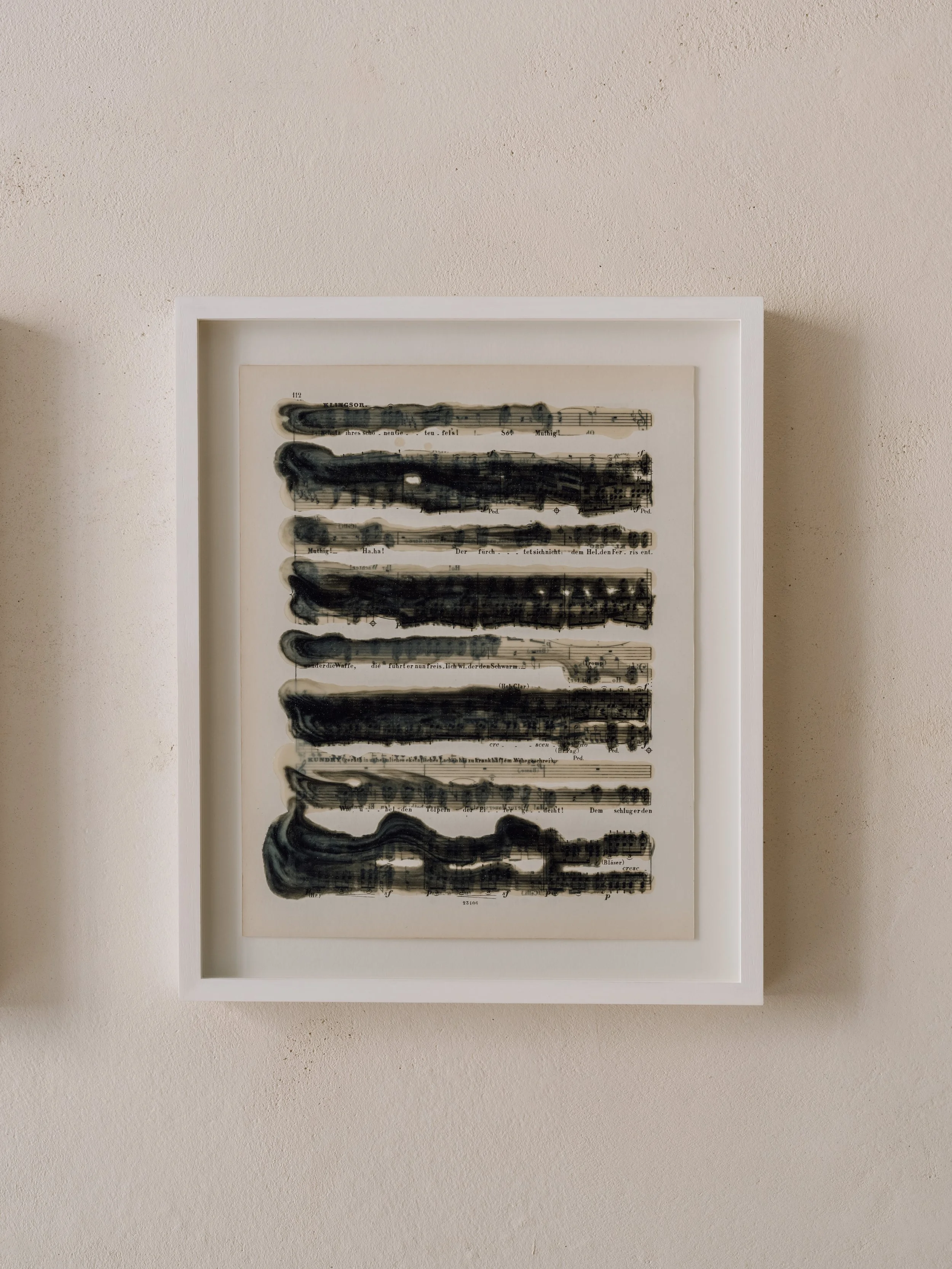
In Things I’ll never hear. Parsifal. P.112, this transformation becomes increasingly materi-al. Callan covers each note in black, adds a colour close to that of the blank paper and applies slow-setting epoxy resin. As the resin moves across the page, the pigments fuse and bleed into one another. Here the altered score is connected directly to Callan’s experience of progressive-ly losing frequencies: he describes sound becoming “a soup of compressed noise” in which space disappears.
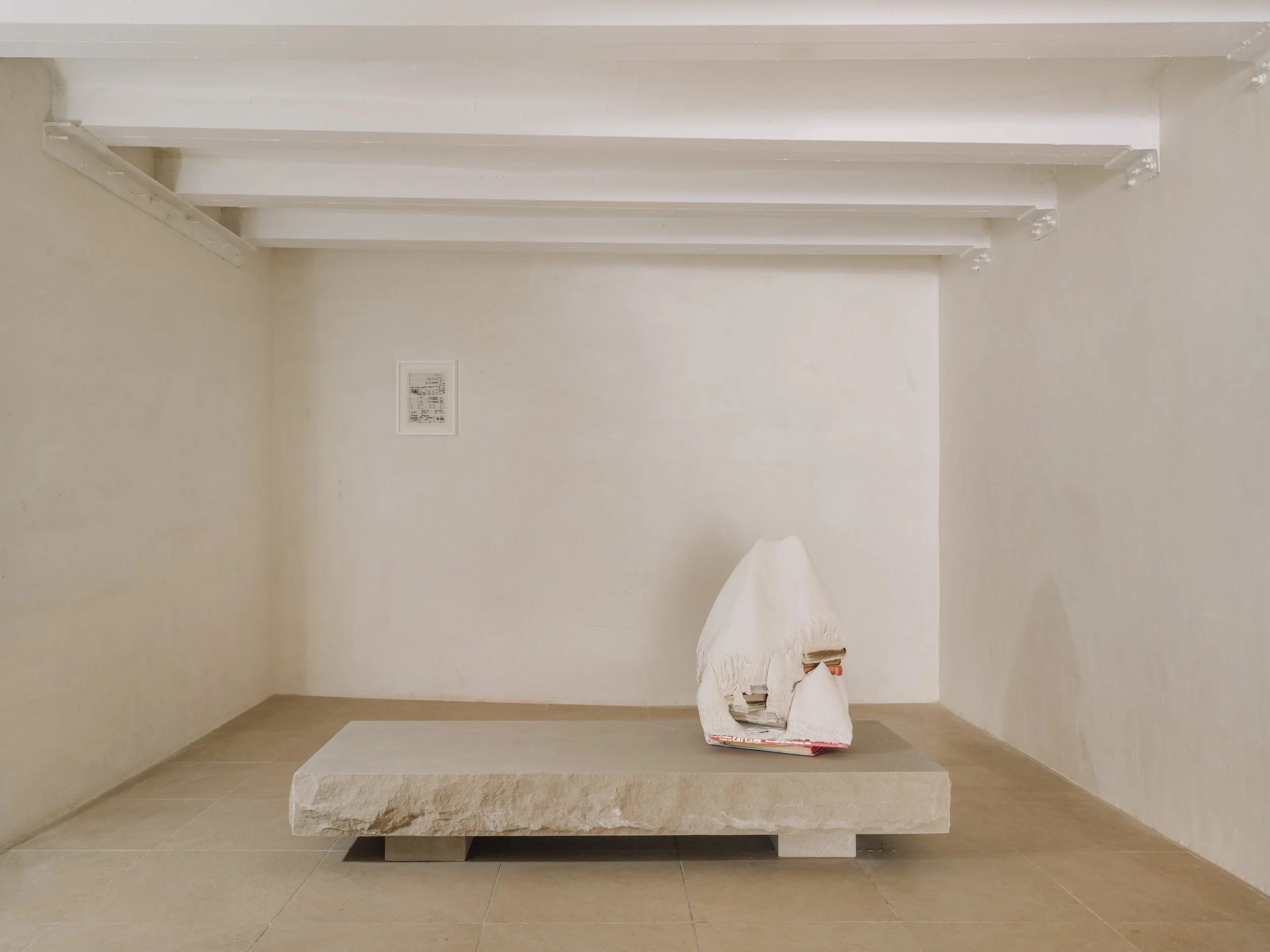
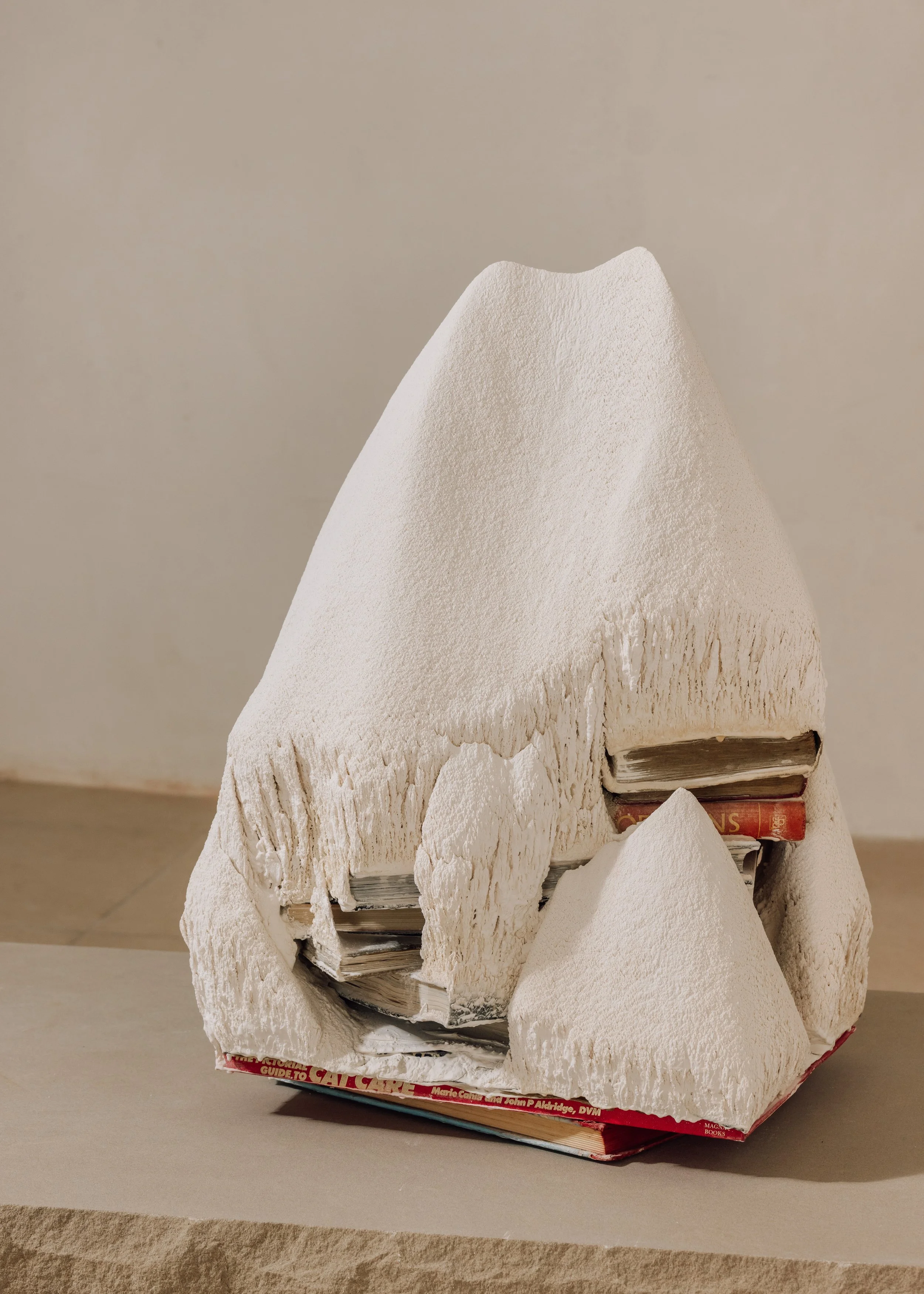
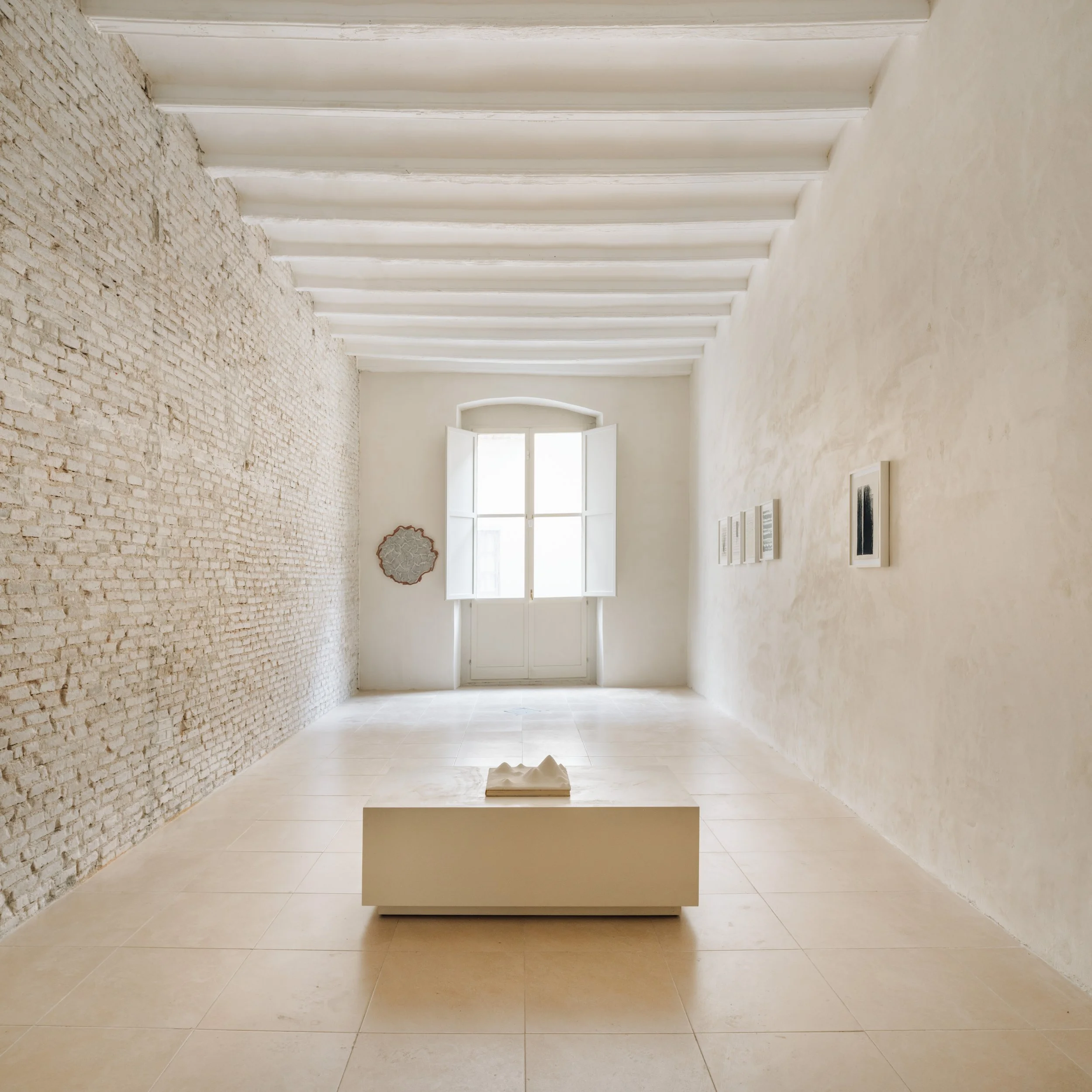
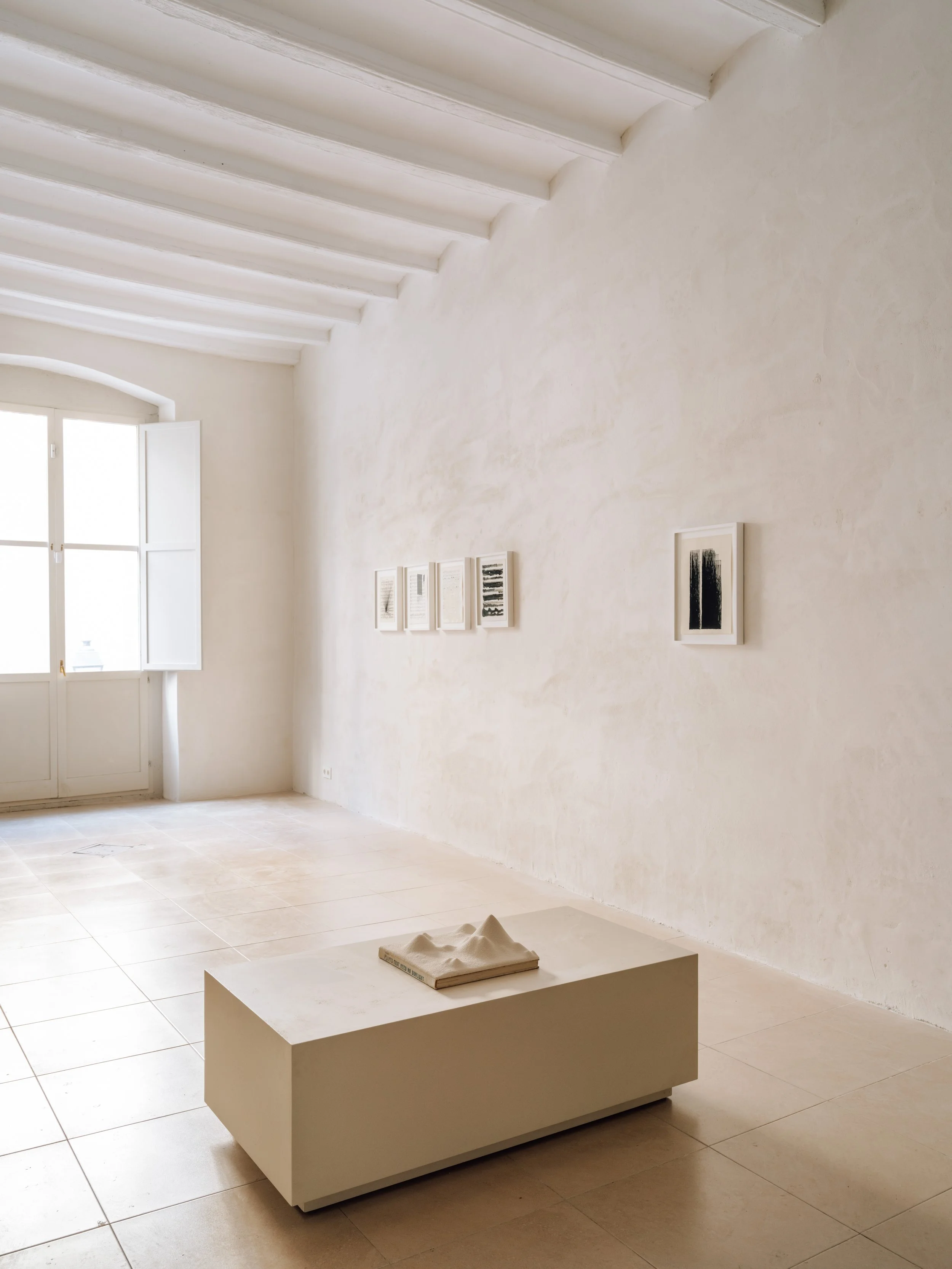
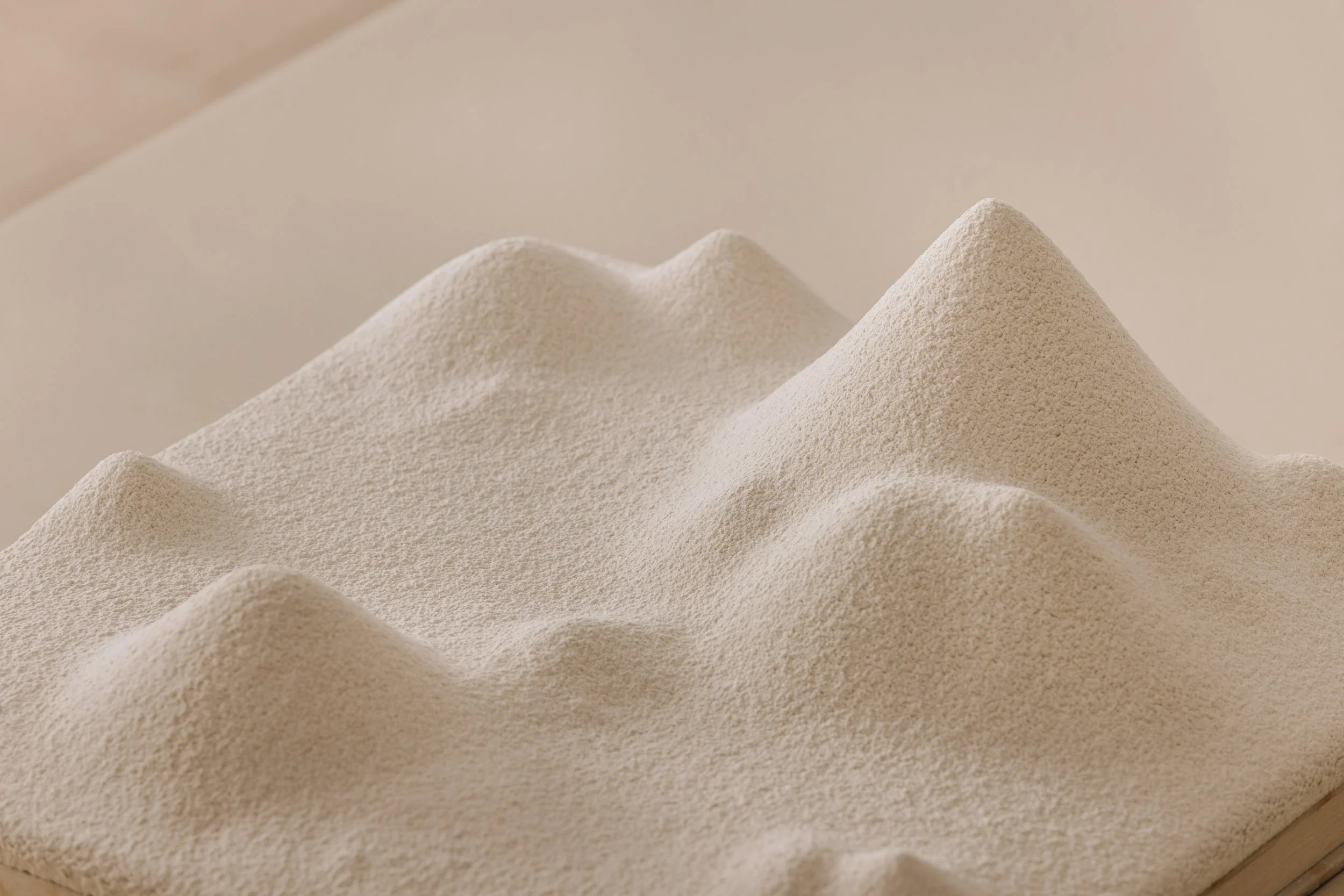
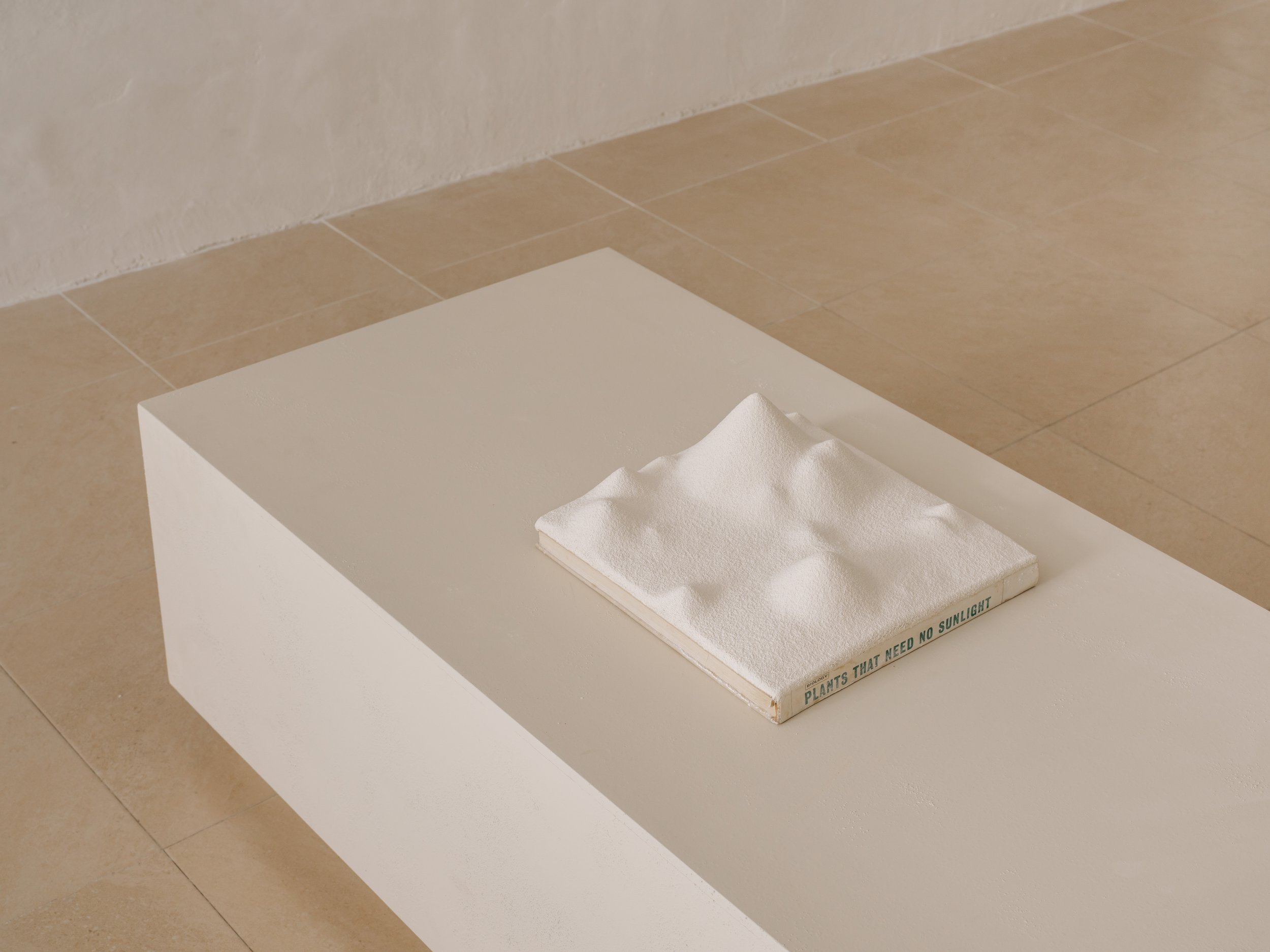
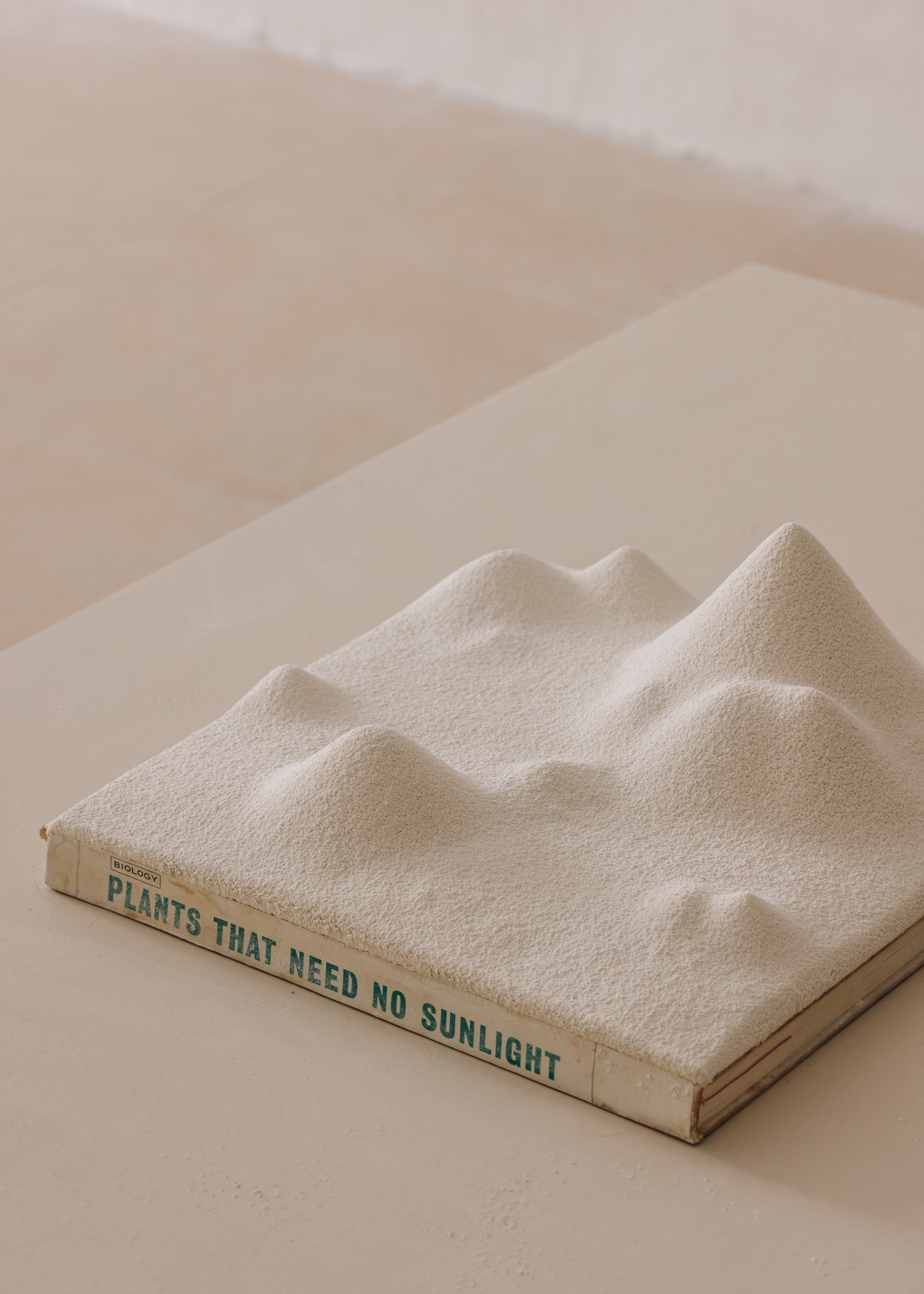
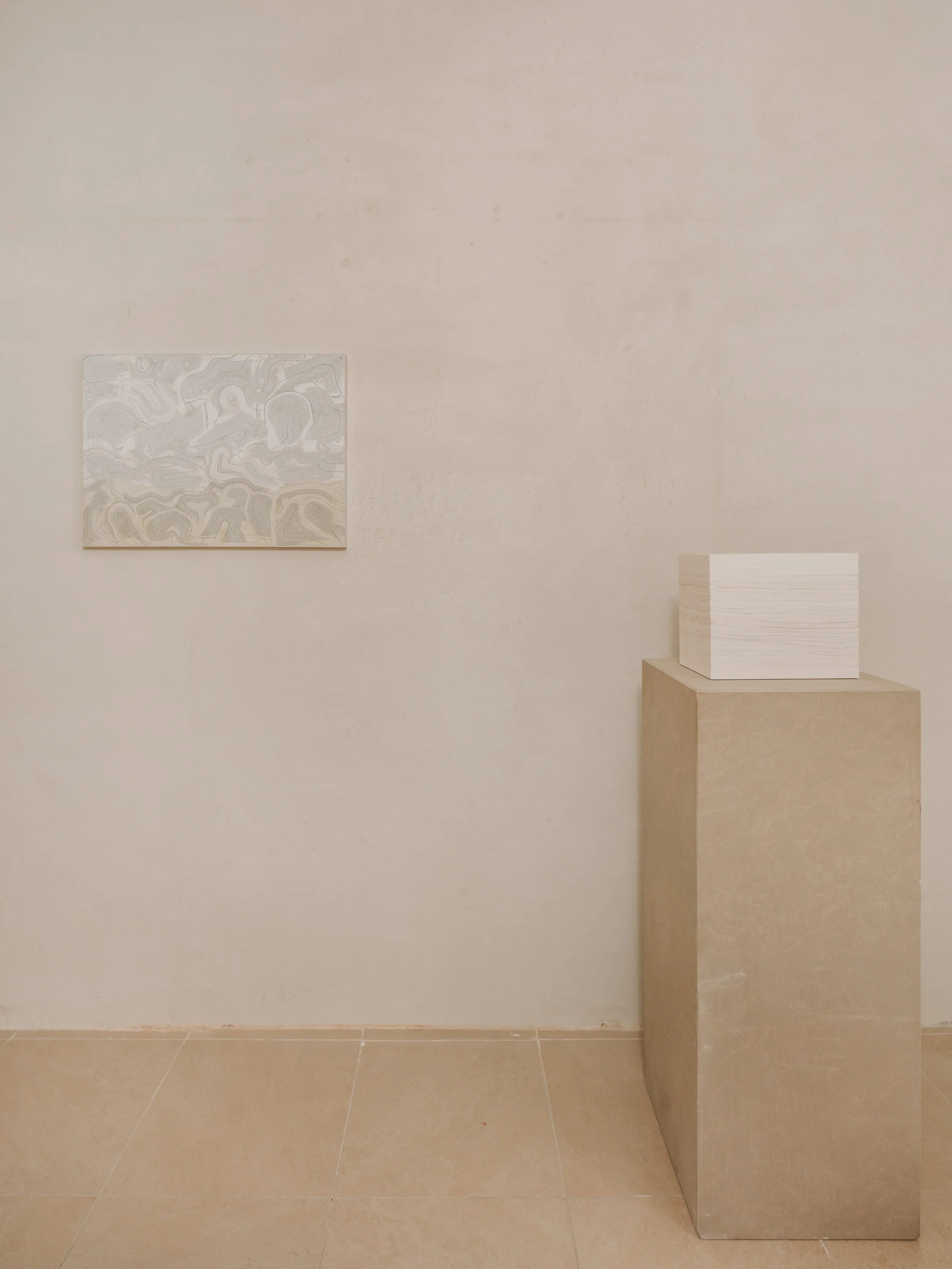
Elsewhere in the exhibition, information takes on almost geological properties. In Sheet music and the mind (2013–2020), a collection of books, including sheet music and a volume on the mind, is covered with sieved plaster. The loose material settles according to its natural “angle of repose” before hardening into peaks. Callan connects this process to scree, avalanch-es, landslides, sediment and snowfall, considering time as much a material in the work as the plaster itself. Meaning, too, becomes something capable of accumulating and hardening. As he writes, “Humans are creatures of meaning, Where we can’t find it we invent it.”
Information assumes a similarly geological structure in The Plastic Arts (2023). Pages removed from a book on classical sculpture are placed in a wooden mould beneath alter-nating layers of plaster. Information becomes deeply buried, remaining legible only at the exposed margins, which Callan compares to strata in sedimentary rock. The work belongs to a recurring interest in natural processes - both biological and geological - that runs through his practice.
The transformation of information does not always depend upon concealment. Callan is equally interested in the unexpected relationships that emerge when publications are cut apart, combined or allowed to contradict their apparent subject matter. In Great disasters in the universe (2016), for example, two publications meet physically: Great Disasters is guillo-tine-cut into five organic forms and inserted into a second publication.
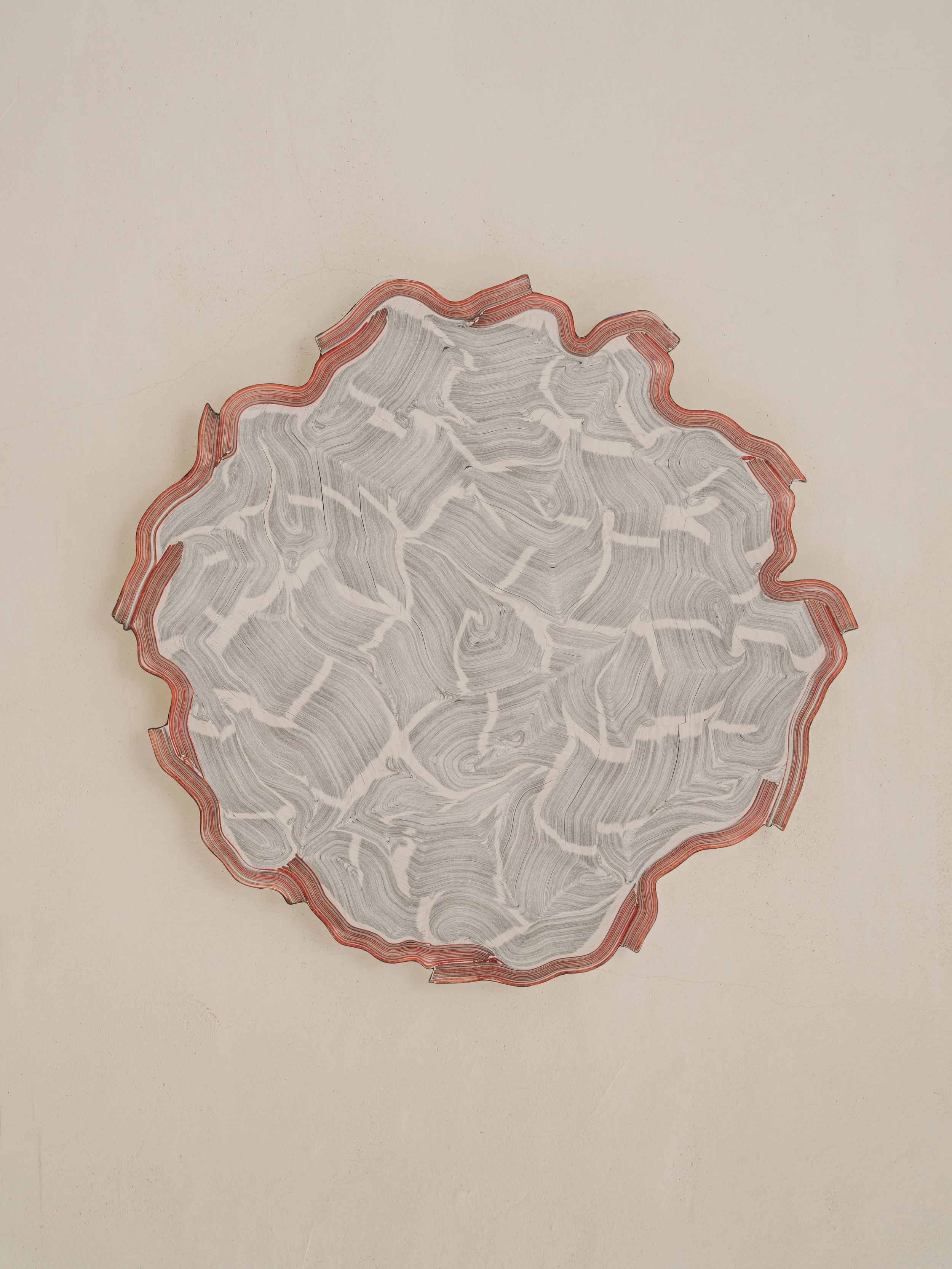
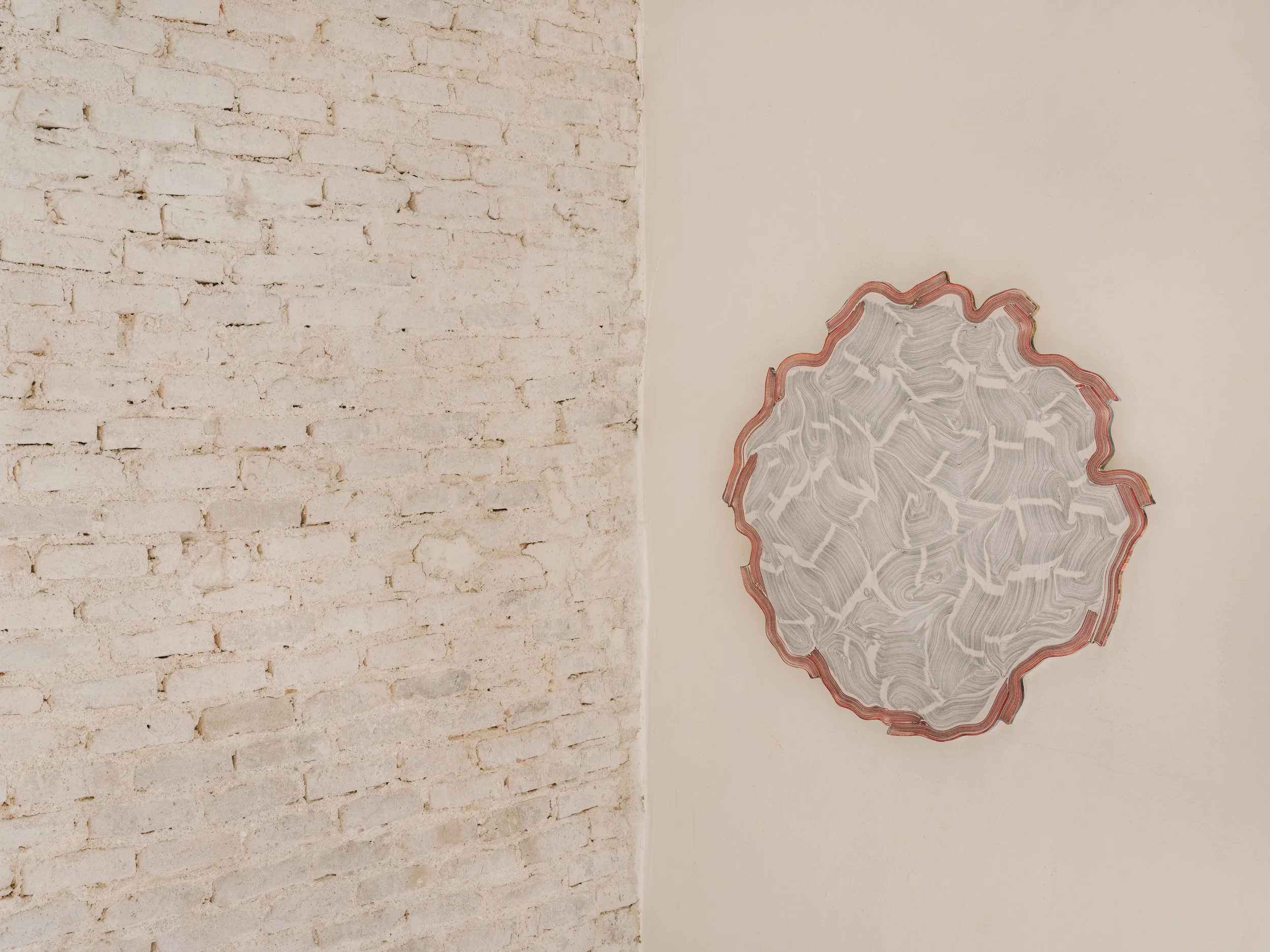
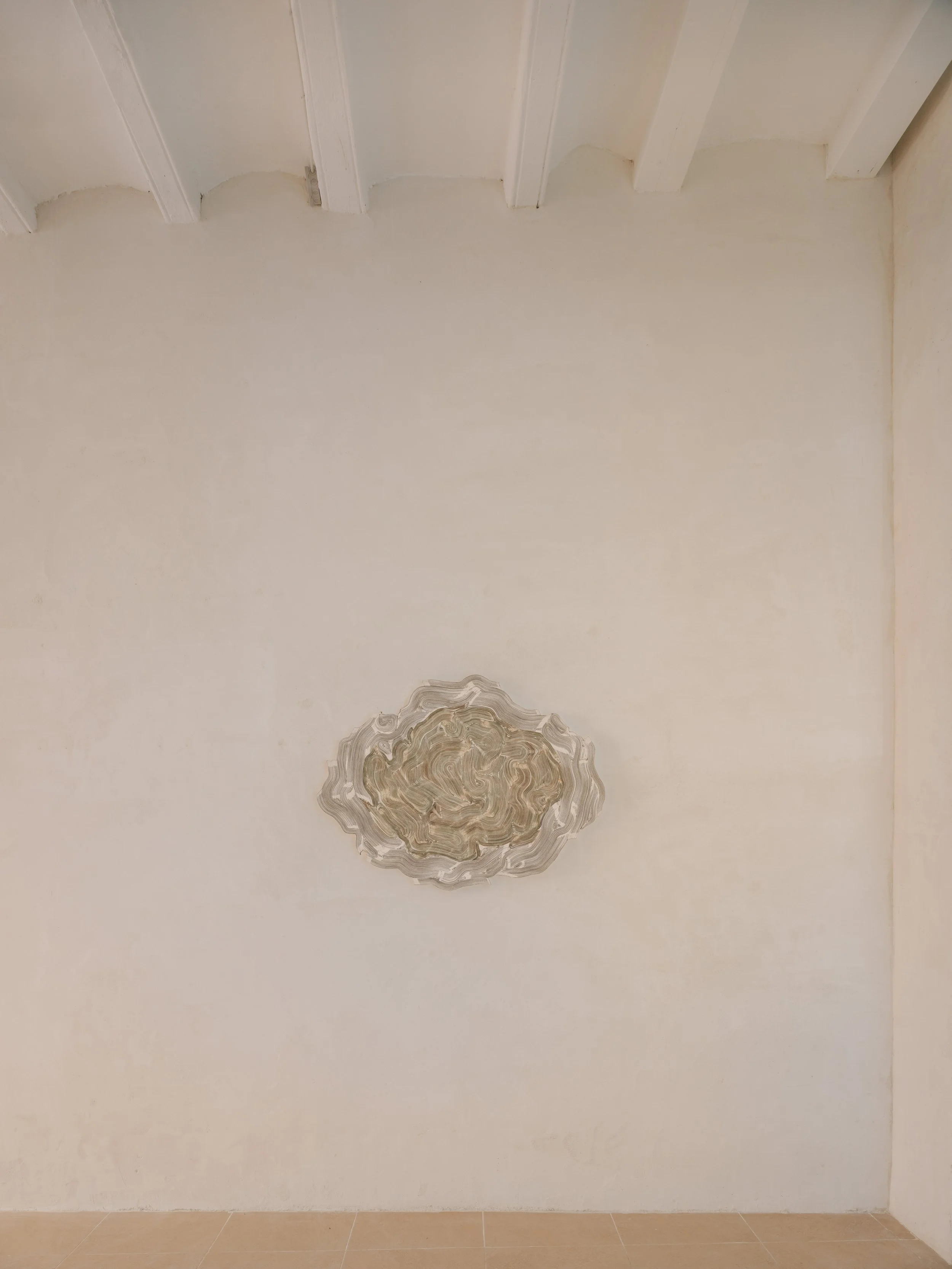
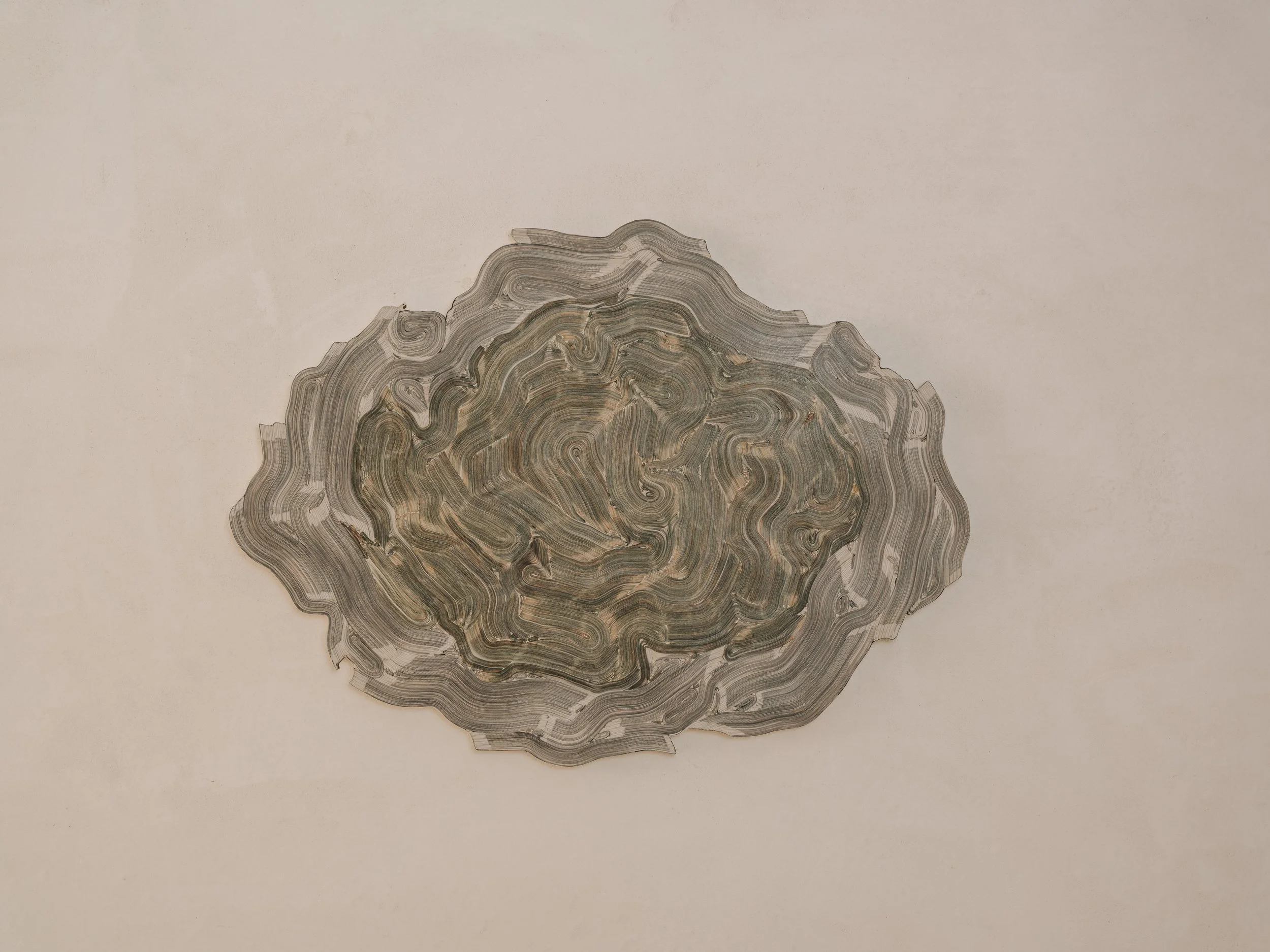
This is particularly apparent in recent works in resin. In European conflict around an atlas to the stars (2026), the pigmentation of the books becomes integral to the work’s appearance. A book on Europe, printed on magenta paper, forms its outer edge, while the inner publica-tion is not an atlas of the cosmos, as the title might initially suggest, but a book on film stars. The resulting circular object resembles, in Callan’s description, a sliced fruit or planet with a mobile core. In Painting around Science (2026), publications embedded in epoxy resin are arranged in broad forms that Callan thinks of as large brushstrokes. A book on Victorian painting encloses weekly periodicals on science, producing an unexpected reversal: the scientif-ic material is the more colourful of the two, while the book concerned with art is comparatively subdued. The work brings printed information towards painting, not through representation but through the colour and material properties already contained within the publications themselves.
Underlying these transformations is a wider questioning of the status we give to information. Callan observes that “We regard information as a sacred thing”, becoming distressed by its destruction or removal while at the same time producing more information than we are capable of absorbing. As he puts it“, the world currently produces more information than it can ever digest. It may be our biggest pollutant.” In A Dutch Waterfall (2020), lines of text describing the National Gallery’s collection of Dutch art generate hand-drawn descending c-utrains, each flowing over the next. Information remains the source of the work, but its language is transformed into a visual event.
Across the fourteen works in the exhibition, information is never treated as neutral or immateri-al. At a moment when information is increasingly generated, mediated and consumed through digital and artificial systems, this sustained attention to its physical form feels particularly reso-nant. Language becomes surface; pages become strata; notation becomes image; and printed information acquires weight, colour and texture.
Callan lives and works in London and is based at his studio at the London Dockyard in Woolwich. He studied at Goldsmiths College of Art before completing postgraduate studies in sculpture at the Slade School of Fine Art. In 1993, he was awarded a Henry Moore Fellowship in Sculpture. He has exhibited internationally, with solo exhibitions in London, New York, Cologne, Brussels, Copenhagen, Geneva and Pittsburgh, among others. His work has also been presented at institutions including Kettle’s Yard, Cam-bridge; The Drawing Center, New York; the Institute of Contemporary Art, Boston; Yale University Art Gallery; Teylers Museum, Haarlem; and the Serpentine Gallery, London.
Callan’s work is held in major public and institutional collections including The Museum of Modern Art, New York; The British Museum, London; The Henry Moore Institute, Leeds; the Whitworth, Manchester; the British Council Collection; High Museum of Art, Atlanta; Princeton University Art Museum; Leopold-Hoesch-Museum, Germany; Ferens Art Gallery, Hull; and South London Gallery.
“The world is always inevitably changing. At the same time, we humans look for pat-terns and regularities.” — Sophie Tottie
Since the 1990s, Sophie Tottie (b. 1964, Stockholm) has developed a conceptual practice concerned with systems of representation, language, and the structures through which informa-tion about existential questions is organised and understood. Working across painting, drawing, objects, photography, prints and video, her practice moves between conceptual systems and the physical processes through which they take form.
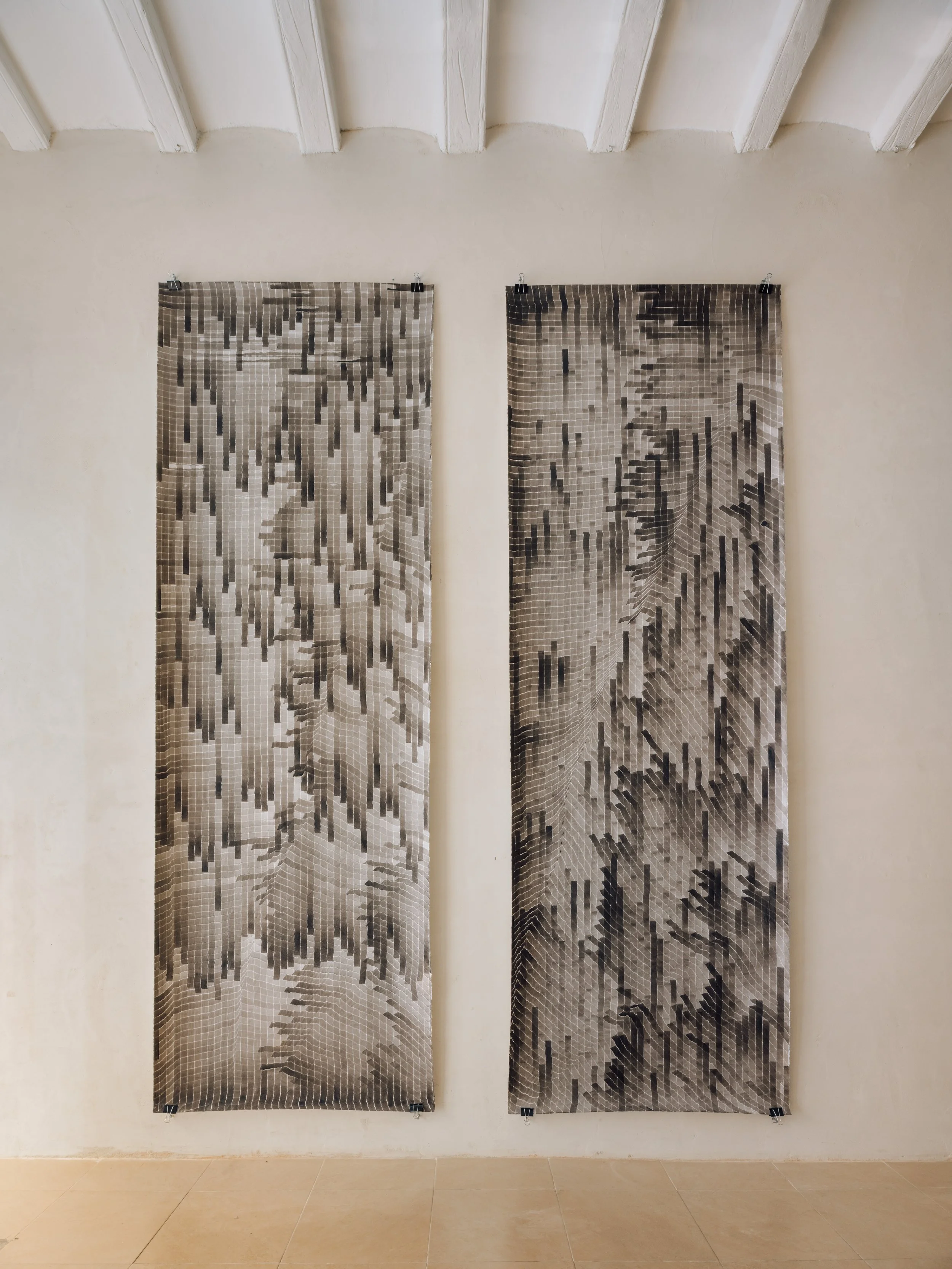
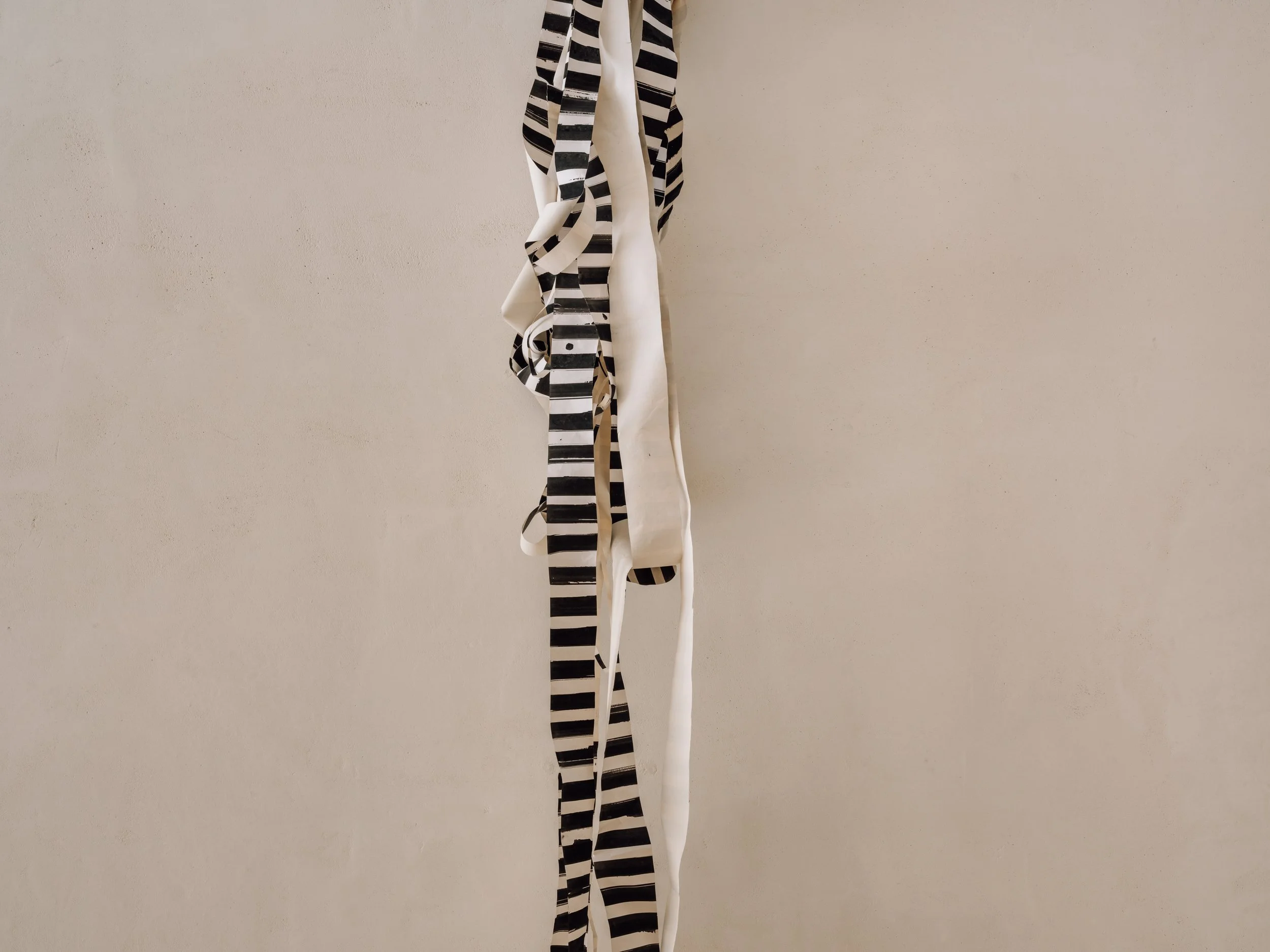
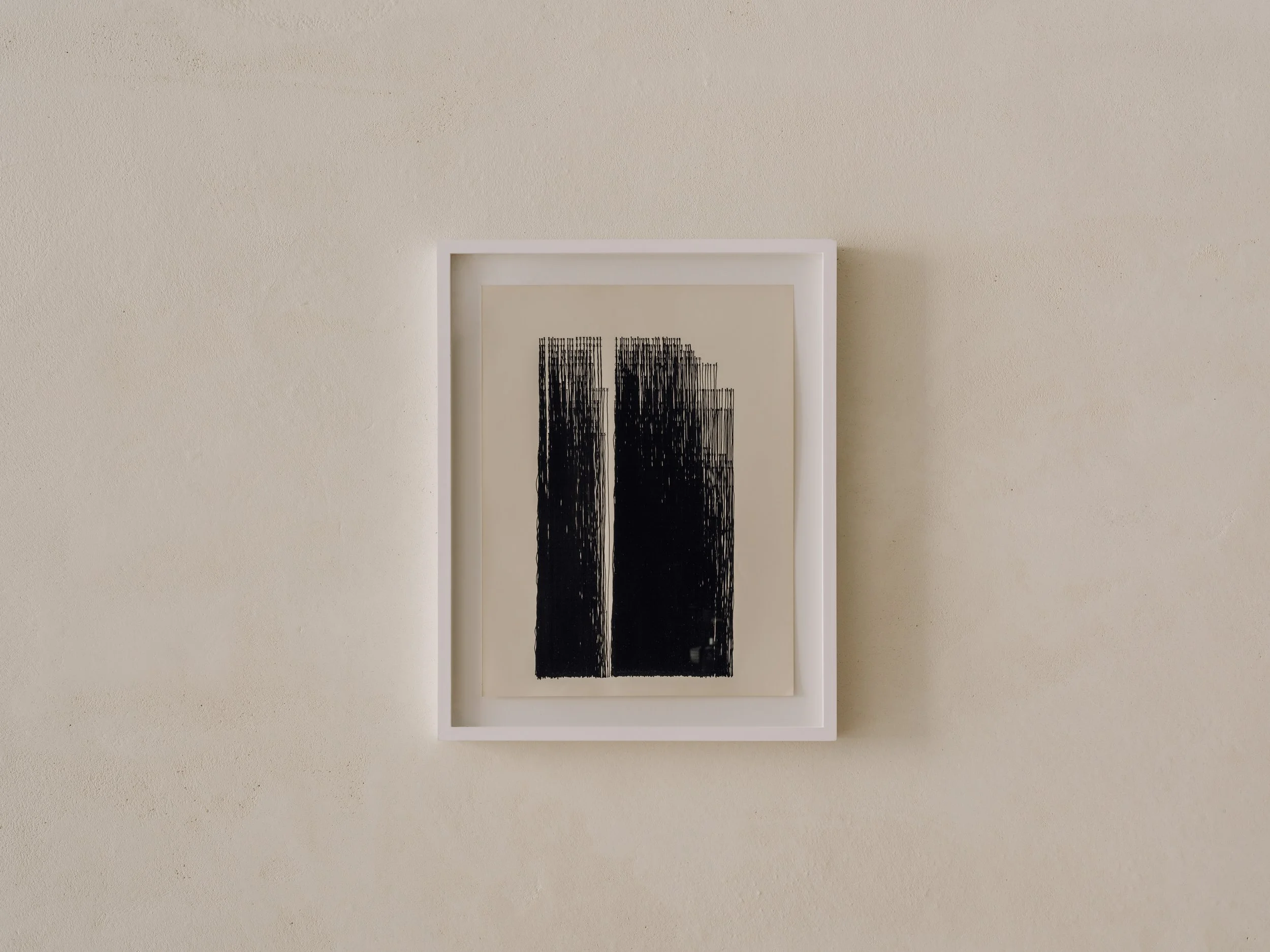
The line has long been central to this investigation. Tottie often begins with a simple mark, a defined system and often uses a repeated gesture, allowing minute variations produced by the movement of the hand to accumulate across the surface. Rather than correcting these irregularities, she allows them to determine what follows. Order generates deviation; repetition produces difference. This approach is particularly evident in her Written Language (line drawings) series. The Museum of Modern Art, New York, holds two works from the series, Written Language (line drawings), # V and # VI (both 2008), each measuring 216 × 113 cm. Beginning with a freehand line of ink at the top of the paper, successive lines follow and amplify the small inconsistencies of those preceding them, gradually transforming a simple system into a complex abstract field.
The scale of these drawings is integral to their making. Tottie has described drawing as a physical activity in which the movement of the hand and arm, affected by the body, its posture and position, leaves its trace on the paper. At more than two metres high, the Written Language works bring the dimensions of the drawing into direct relation with those of the body. Small deviations and involuntary movements are not eliminated but incorporated into the developing structure. Each line responds to the one before it, so that an initially ordered procedure progressively records the contingencies of its own execution. The drawing becomes both a system and a record of the body’s unpredictable abilities in relation to systems that reproduce exactly.
In Oxidopolis I and II (2014),presented at the Ileana Tounta Contemporary Art Center, Ath-ens, in 2018–19, this investigation of line, repetition and bodily movement extends into the ma-terial properties of inscription itself. In this work Tottie uses iron gall ink, a historic writing ink whose metal content oxidises through exposure to air, moving from transparent towards dark. Lines cross and overlay one another, forming dense woven fields in which the accumulation of marks progressively reduces visibility. In Oxidopolis II, which extends to 3.4 metres in height, the scale of the surface further emphasises drawing as a spatial and physical activity.
The choice of iron gall ink is significant. Historically valued for the durability of written documents, here it behaves as an active material: the mark continues to change through oxidation just after it has been applied. Mark making therefore becomes both a means of recording and a process of transformation. As lines accumulate and cross one another, their capacity to transmit linear scripture is progressively transformed; what might initially suggest writing or a system of notation becomes density, texture and material presence. Time is consequently present in these works in more than one sense. It is registered through the repeated labour required to construct the drawing, through the sequence in which one line determines the next and, in Oxidopolis, also through the chemical transformation of the ink itself. The finished work is not simply the image produced by a procedure but a record of duration: of movements, deviations and material changes accumulated across the surface.
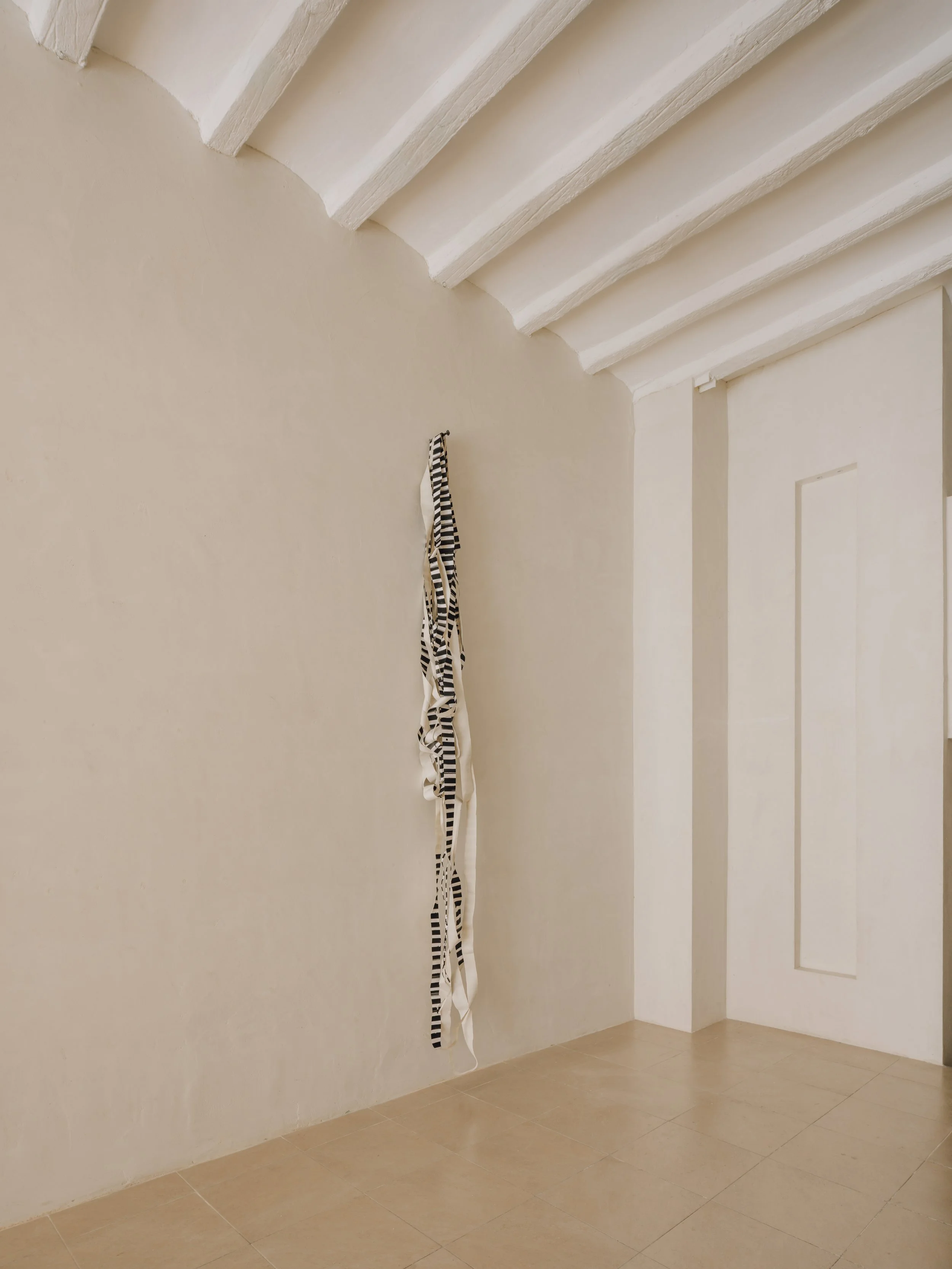
The Möbius Mesh works extend these questions while altering the relationship between line, language and surface. In Möbius Mesh (Blips) and Möbius Mesh (Triple Line) (both 2017), epeated lines form dense networks that move between drawing, writing and diagram which explore the ambiguity of fixed linguistic meaning. Both works measure 113 × 216 cm, retaining the bodily scale that characterises much of Tottie’s drawing practice. Small shifts accumulate and alter the structure as it develops. In Möbius Mesh (Cylinder) (2017–22), Indian ink on paper is wrapped around a metal tube and held by magnets, taking the line beyond the flat sheet and into a continuous spatial form. In this way the drawing object emphasizes how it is not only an image on a surface; the surface itself becomes part of the structure through which the line is experienced.
Drawing operates simultaneously as image, inscription, physical activity and record - a means of testing how systems of representation encounter the unpredictable conditions of their material existence.
Across a practice spanning more than three decades, Tottie has returned to a fundamental question: how do the systems we use to describe, organise and make sense of the world hold up when they encounter the physical world itself ? Her work draws on structures associated with order and communication - writing, diagrams, maps, measurement and the line - while revealing how readily their apparent certainty can shift. A repeated gesture generates difference; an inscription becomes slow to read; a material continues to transform; a structure intended to clarify can accumulate into complexity. For Tottie, these are not failures of a system but moments in which its complex conditions become visible. From her earliest works to the present, her practice has occupied the space between our desire to impose order on the world and the complexity that continually exceeds it. Sophie Tottie lives and works in Stockholm.
The Unreadable World brings these distinct practices into proximity without col-lapsing their differences. Callan begins with information already encoded — books, maps, photographs and musical scores — and subjects it to physical transforma-tion; Tottie often begins with the act of inscription itself, allowing direct mark making, movement and material change to explore the systems she establishes. In both, legibility is never simply lost. Instead, its disruption produces another kind of knowledge: one carried by surface, weight, rhythm, density, duration and form. The exhibition proposes that our experience of the world is not made meaningful by systems alone, but also by everything that escapes them.
Tottie studied at the Royal Institute of Art in Stockholm (1986–91) and the Institut des hautes études en arts plastiques in Paris (1989–90). Her work has been shown inter-nationally since the early 1990s, including On Line: Drawing Through the Twentieth Century at The Museum of Modern Art, New York (2010); Mirror’s Edge, curated by Okwui Enwezor (1999– 2001); Visions du Nord / Nuit Blanche at Musée d’Art Moderne de la Ville de Paris (1998); and Deposition at the 47th Venice Biennale (1997). She has presented solo exhibitions at institutions including the Museum of Contemporary Art Chicago, Göteborgs Konstmuseum, Lunds Konsthall, Malmö Konstmuseum and Kons-takademien, Stockholm. Alongside her studio practice, Tottie was Professor of Fine Art at Malmö Art Academy, Lund University (2001–09), Visiting Artist/ Lecturer at Harvard University (2009–10), and Professor of Fine Art at the Royal Institute of Art, Stockholm (2012–22). In 2026, she was awarded the Paul Hedqvist Award by Konstakademien.
Tottie’s work is held in major public and institutional collections including The Muse-um of Modern Art (MoMA), New York; Moderna Museet, Stockholm; and the Schering Stiftung Collection at the Kupferstichkabinett, Staatliche Museen zu Berlin.