
LAWRENCE CALVER
Lawrence Calver (b. 1992, Ipswich, Suffolk, UK) is a British textile artist who lives and works in London. His practice is rooted in a sustained engagement with found textiles, approaching material as both carrier and generator of meaning.
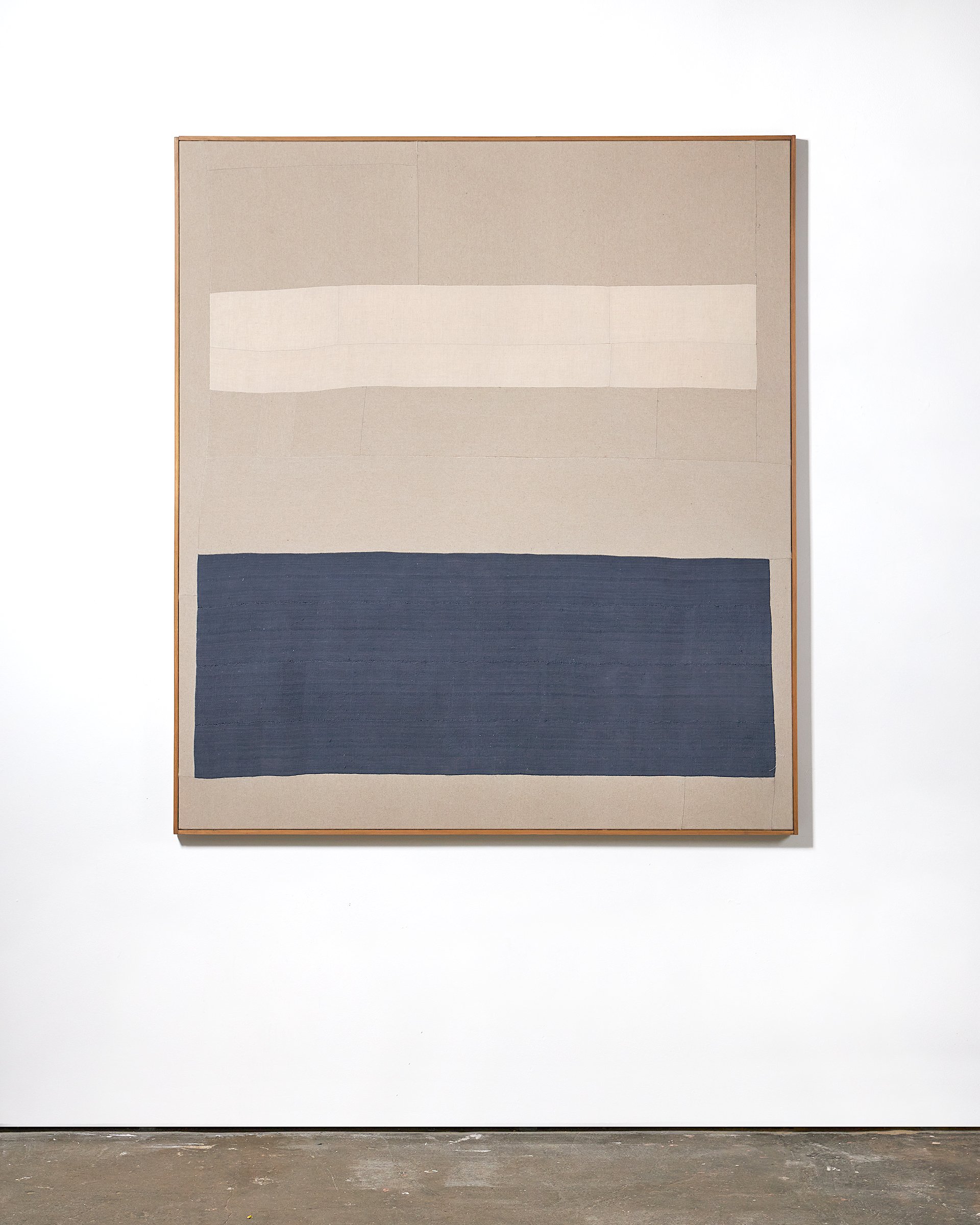
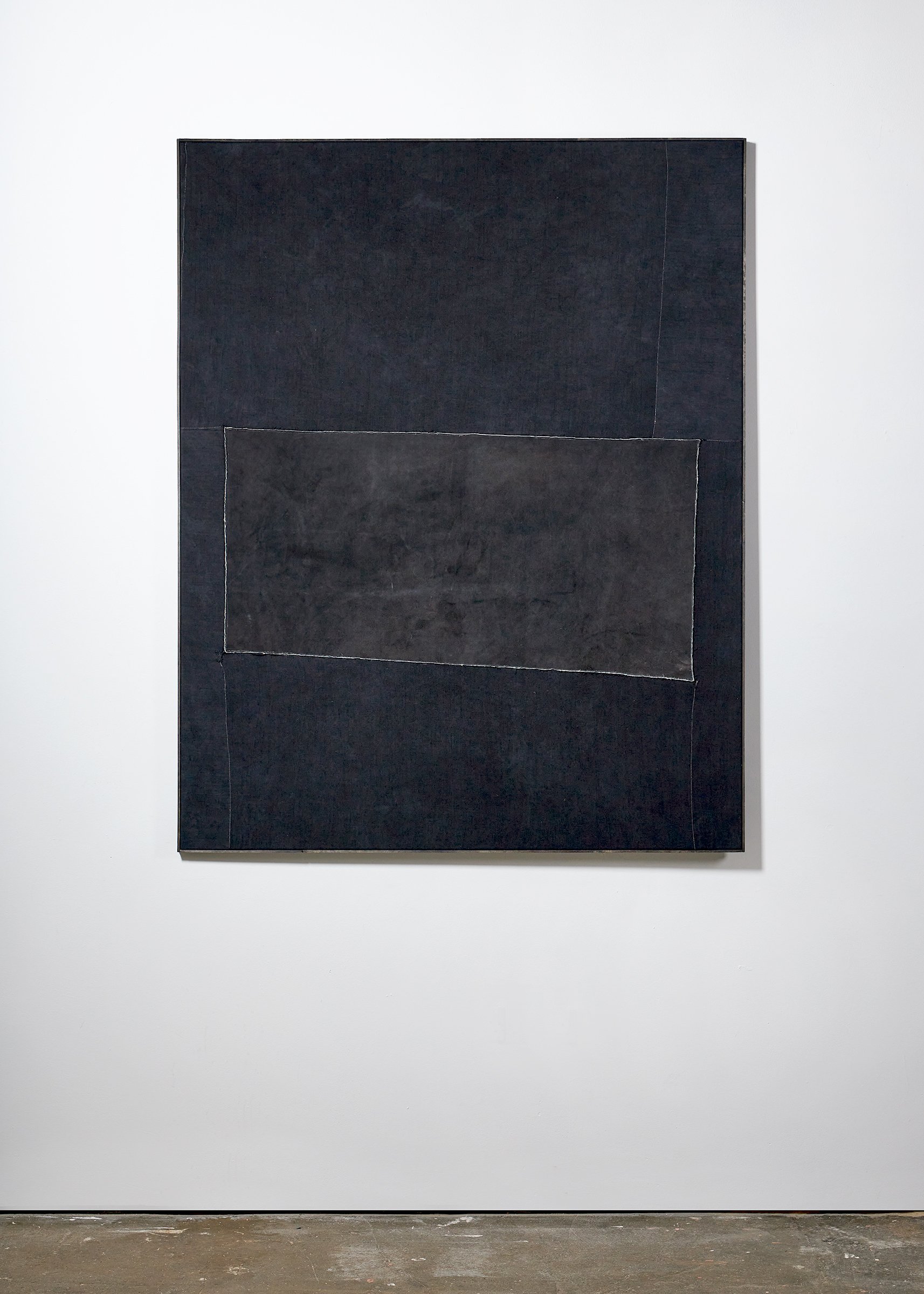
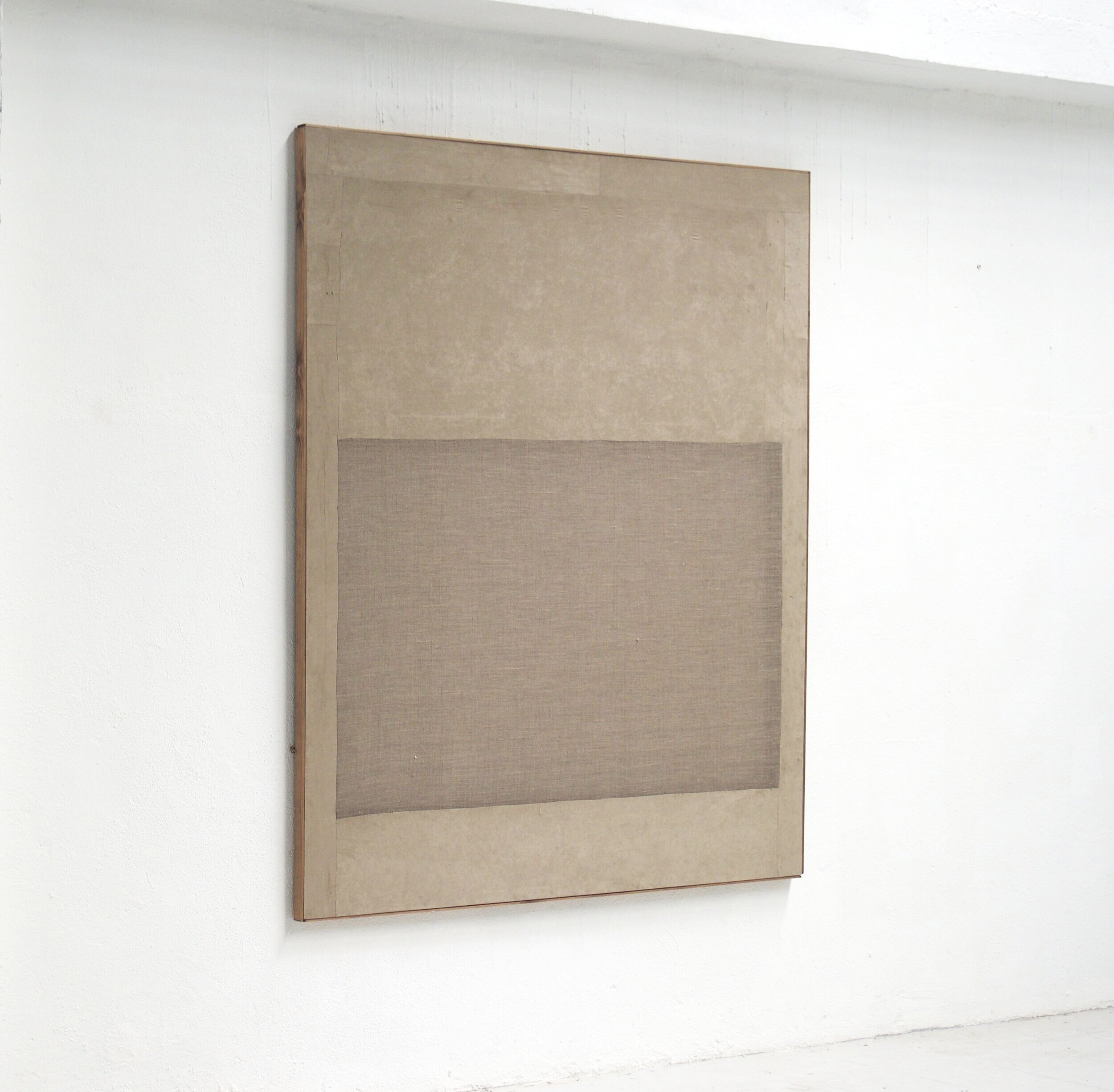
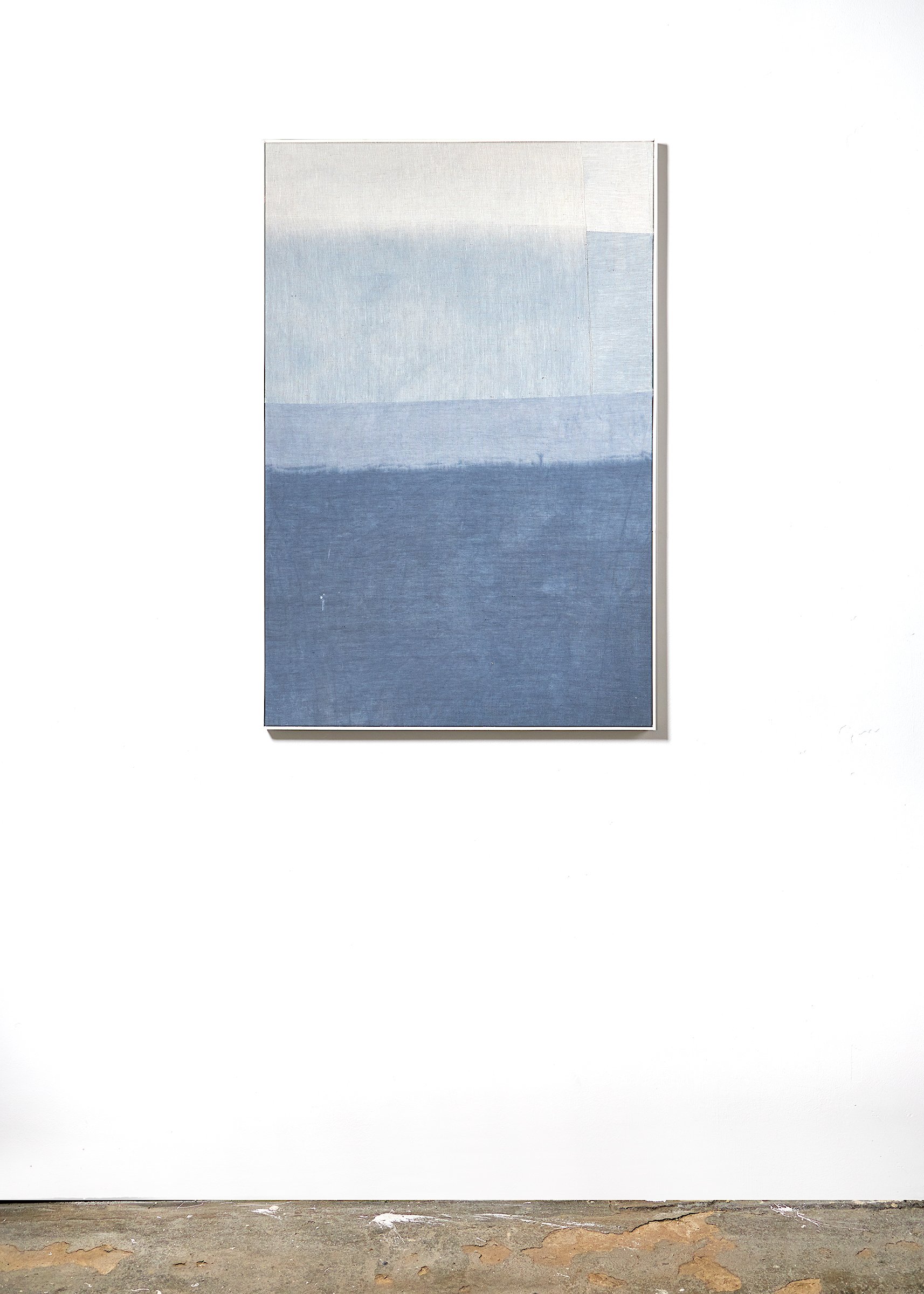
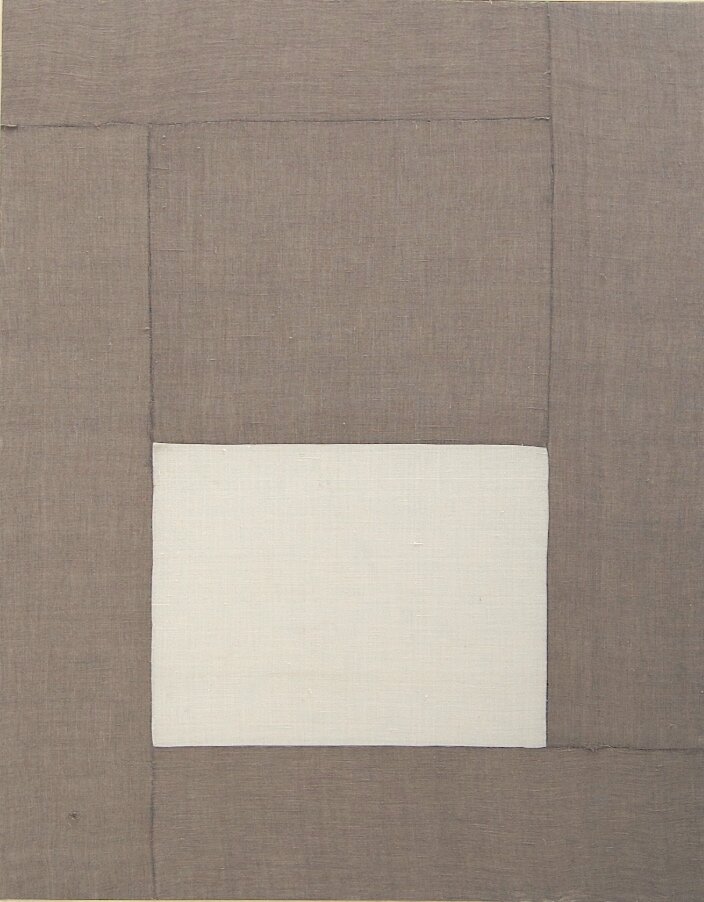
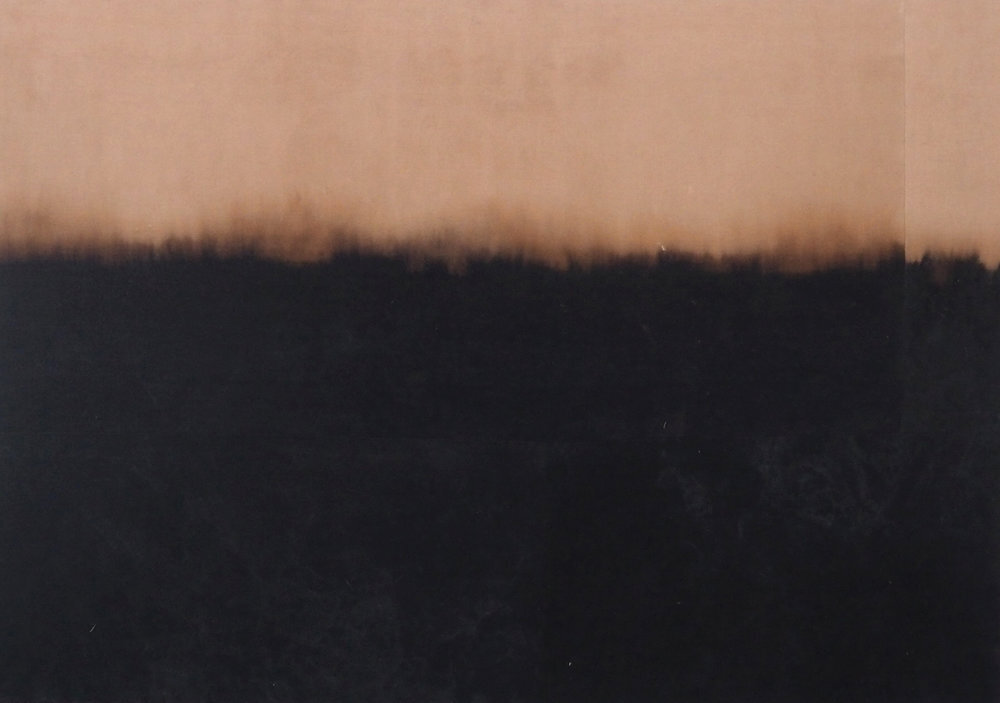
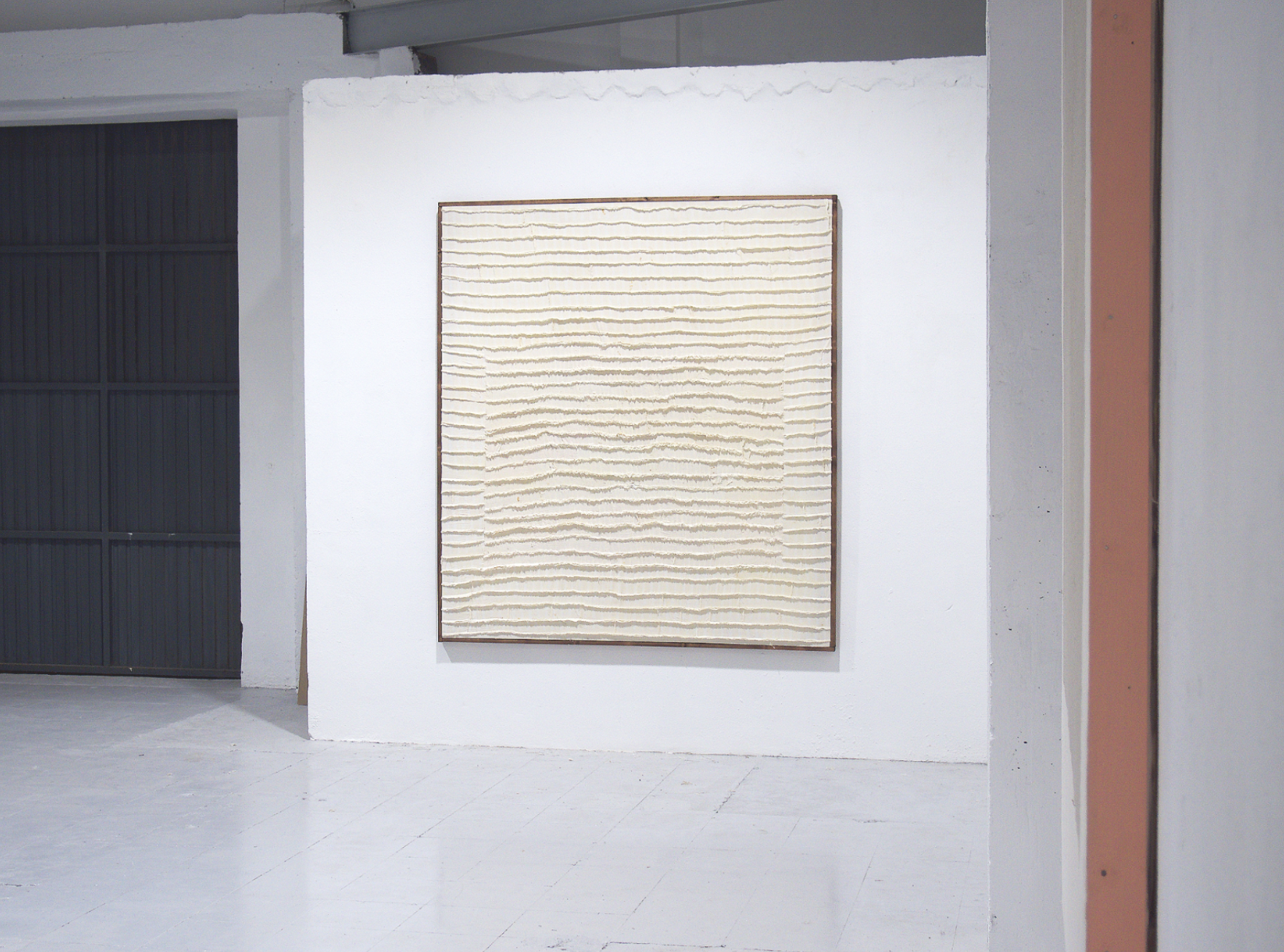
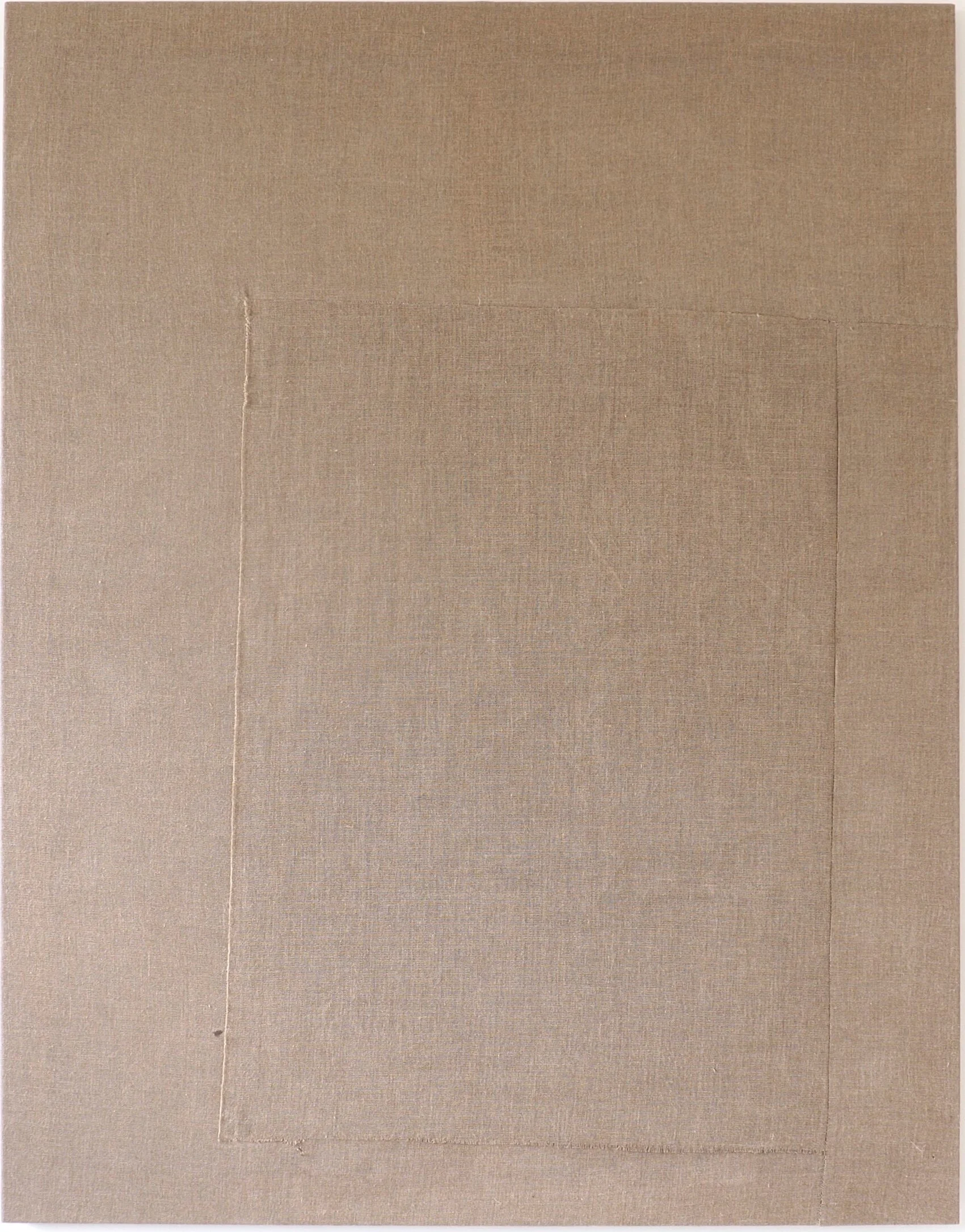
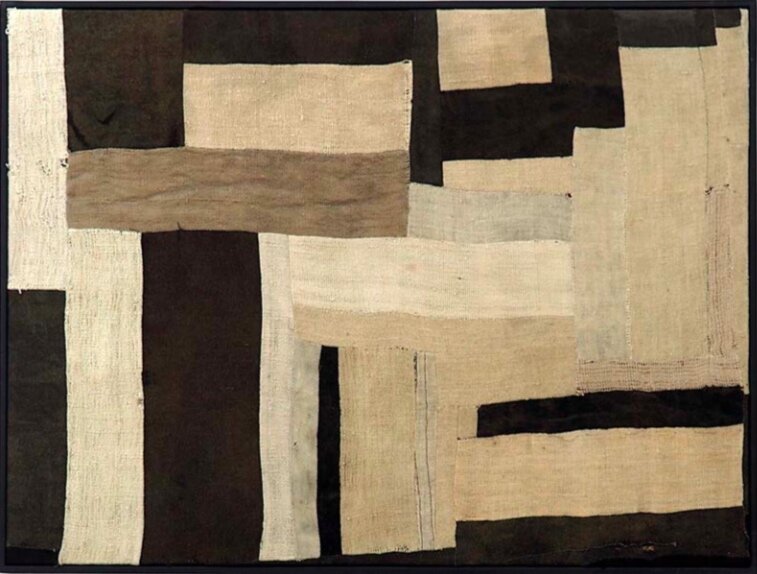
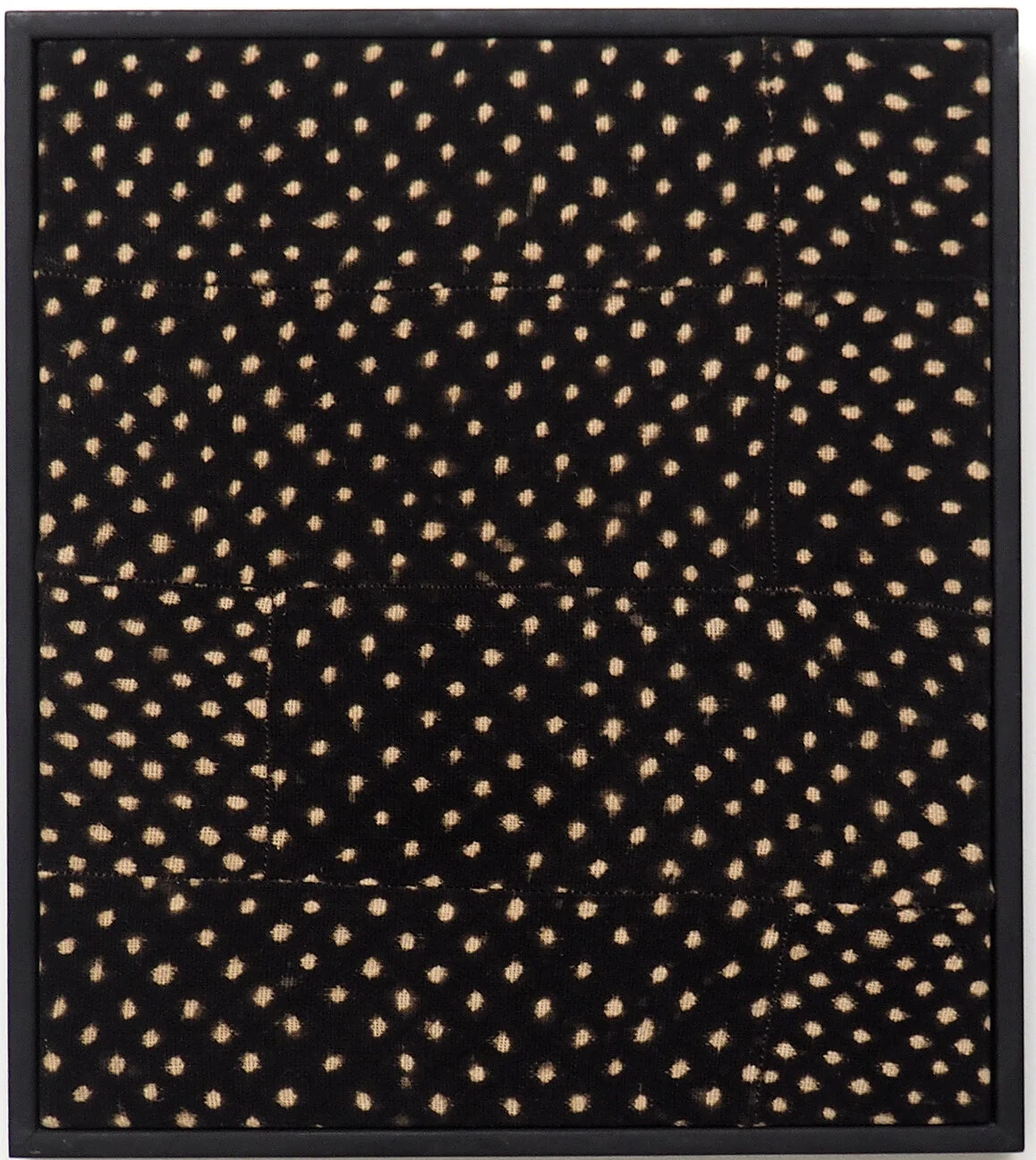
Working primarily with linen, cotton, wool, and other natural fibres, Calver sources fabrics that bear traces of prior use—often worn, repaired, or weathered—and reconfigures them through processes of stitching, dyeing, bleaching, and staining. These gestures are neither purely additive nor transformative; rather, they operate as a means of attending to the material’s existing conditions. In selected works, this process extends to the use of natural pigments, including textiles dyed with mud sourced from Suffolk. Here, material and place converge, embedding a specific geography within the surface while reinforcing the work’s underlying concerns with origin, memory, and transformation.
Calver’s compositions are typically restrained in palette, favouring muted, earthen tones that emphasise variation in texture, density, and weave. His works unfold slowly, inviting close viewing and an awareness of subtle shifts across the surface. While abstract in form, they often evoke spatial or topographical associations without resolving into fixed imagery.
Underlying the practice is a consideration of time—how materials register duration, use, and exposure, and how these histories persist within contemporary arrangements. By bringing together disparate fragments, Calver constructs works in which temporalities overlap, allowing the past to remain active within the present.
Calver has undertaken numerous international residencies, including Fondation CAB (France), Cape Town Art Residency, Banditto Residency (Italy), Simchowitz (Los Angeles), and PADA (Lisbon). His work has been exhibited widely in Europe, the United States, and beyond, including with De Brock Gallery.
Although rooted in textile processes, Calver’s work aligns with a broader contemporary re-evaluation of abstraction—one that emphasises material sensitivity, sustainability, and the poetic potential of the everyday.
Indonesia project , 2019
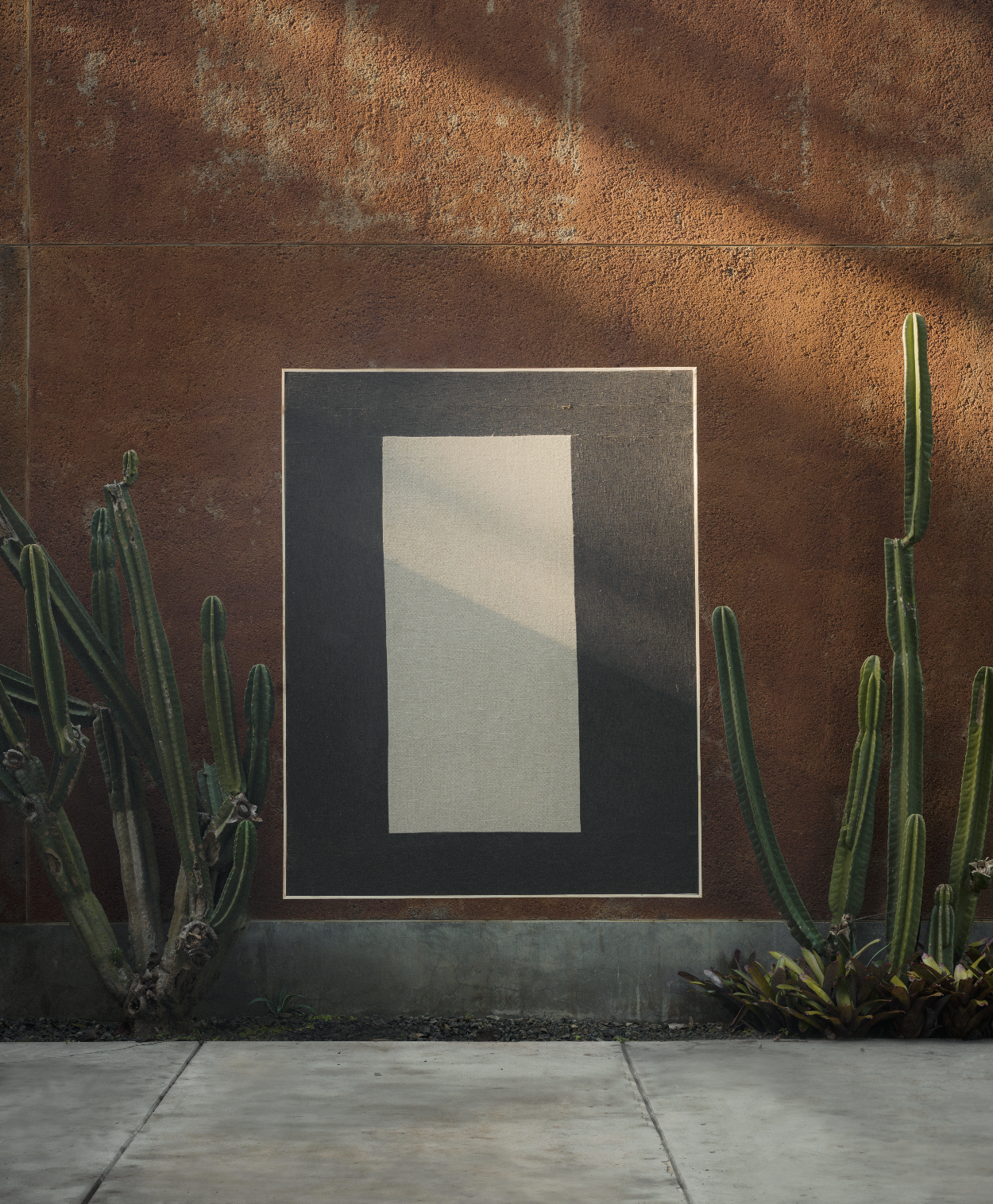
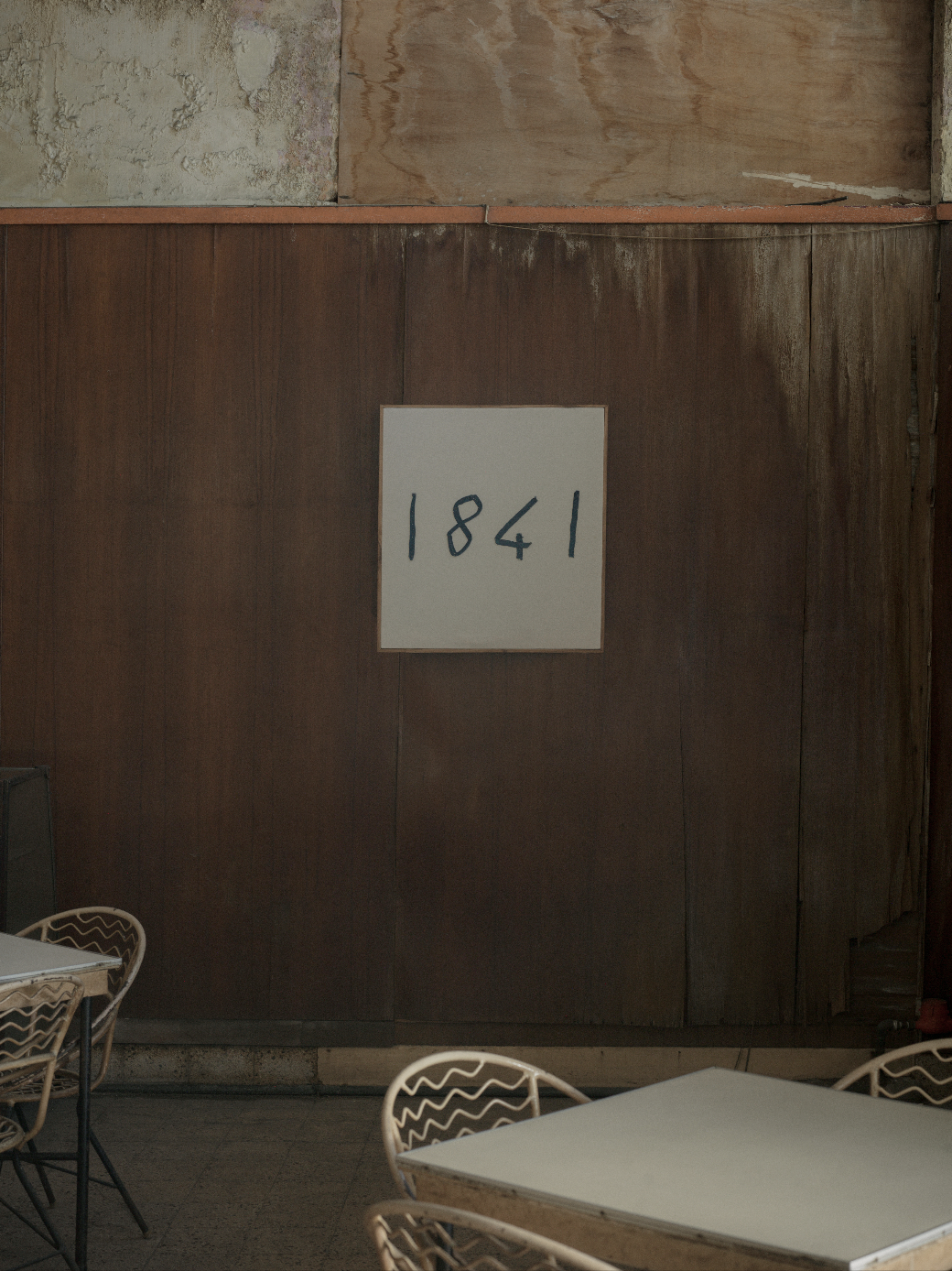
“In May 2019 I took 14 artworks with me to Indonesia to be photographed on location as part of an artist catalogue. I took the works folded in my suitcase and rebuilt them once in Indonesia. Doing a project like this would have been very difficult or even impossible in many parts of the world, but staging the production in Indonesia was very doable was achieved on a very low budget. We had very little structure for the project other than to find the right locations to compliment the 14 artworks that I had brought with me. The intention behind creating the catalogue was simply to create a more concise context to my work. I have always considered my works to be architectural in their making process, and in content, but I wanted to create a clearer understanding of how they are also architectural in their very nature as physical objects. By photographing the works situated on location created a dialogue between the works and the space that they inhabited. It created a clear impression of the scale, the tones and textures, and the organic nature of the works. The shapes, lines and forms suddenly share a strong resemblance to their environment. The catalogue has allowed me to explore in visual form, the intentions behind my own work. It is not simply an endeavor to photograph my works in an unconventional space, but instead to put the works back into a context that is relatable to the initial process of how they are made.
The main location was an 18th century building in the city of Jogja. It is a city on the Indonesian island of Java known for its traditional arts and cultural heritage. Other locations were found along the way and were approached with an open mind. The use of spontaneity and chance play a fundamental role in my work, and I think that by approaching the production of the catalogue with the same attitude, it shows in the images and gives the images a strong sense of authenticity. Another location was the old bakery in Bandung, it is over 100 years old, and very little has changed since the 1920s from the furniture down to the trays and utensils. It seemed fitting to show the work titled ‘1841’ to open up a transient dialogue between the work and its environment. The largest work ‘untitled’ was shot in the entrance to a tofu factory. The ageing and worn effect of the wall shared a strong resemblance to the energy of the artwork. Even the chalk handwriting on the wall draws on similarities from previous works. The production of this catalogue has created a much clearer direction for my practice in the relationship between my work and the environment in which it is situated. I now realise that this is something that can be pre-meditated, and that the works can be directed by the space that they inhabit.”
To receive a full catalogue of available artworks please contact gallery@richeldisfineart.com