
JOAQUIM CHANCHO
Joaquim Chancho (b. 1943, Riudoms, Tarragona) is a renowned Spanish artist celebrated for his significant contributions to abstract painting. He began his formal artistic education at the Escola del Treball in Reus in 1960, continuing at the Escola Superior de Belles Arts de Sant Jordi in Barcelona from 1962 to 1967. During this period, his work transitioned from figurative compositions with constructive elements to abstract explorations influenced by informalist techniques.
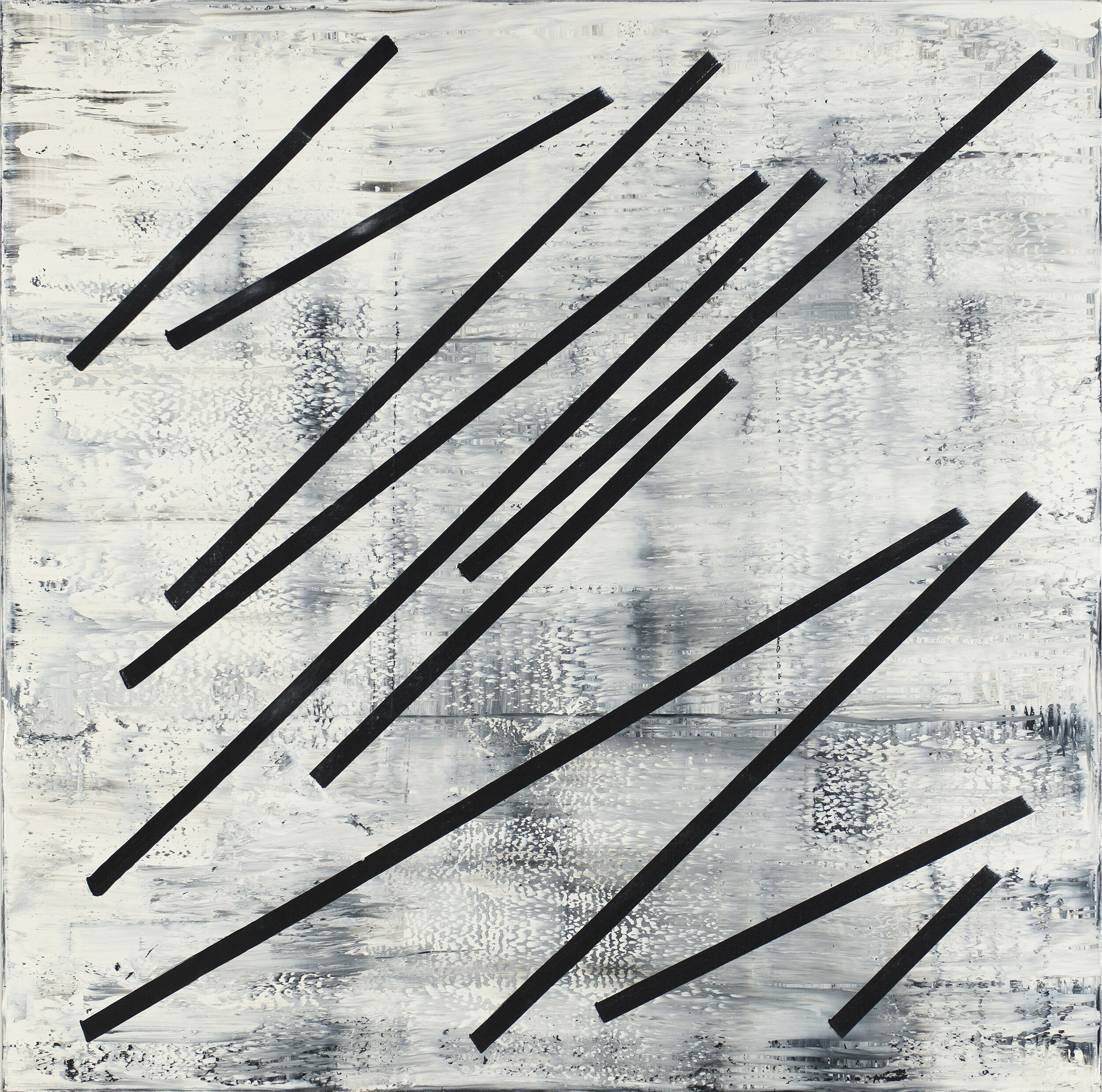
In 1970, Chancho was awarded a scholarship from the Castellblanch Art Foundation, allowing him to study in Paris, where he began to incorporate gestural approaches into his geometric compositions. In 1973, he received a scholarship from the Juan March Foundation in Madrid, further refining his artistic practice by integrating linear transformations and calligraphic elements. Chancho later became a Professor of Painting at the University of Barcelona's Faculty of Fine Arts, where he played a pivotal role in fostering the next generation of artists. His work is characterized by a meticulous investigation into geometry, composition, and the interplay of colour and space. Often employing sequences of signs and calligraphic forms, Chancho's paintings embody a deep commitment to abstraction and minimalism.
Joaquim Chancho’s work is featured in several prestigious public collections, including the Stedelijk Museum, Amsterdam, Museu d’Art Contemporani de Barcelona (MACBA), Fundación Juan March, Madrid, Centro Atlántico de Arte Contemporáneo, Las Palmas de Gran Canaria, and Fundació "la Caixa," Barcelona. His extensive exhibition history, encompassing both solo and group shows, affirms his position as a pivotal figure in contemporary Spanish abstraction.
Joaquim Chancho
El Pla de Santa Maria
|Le refuge de l’artiste
et la partition visuelle
Exhibition Text, Emma Richeldis North, Director.
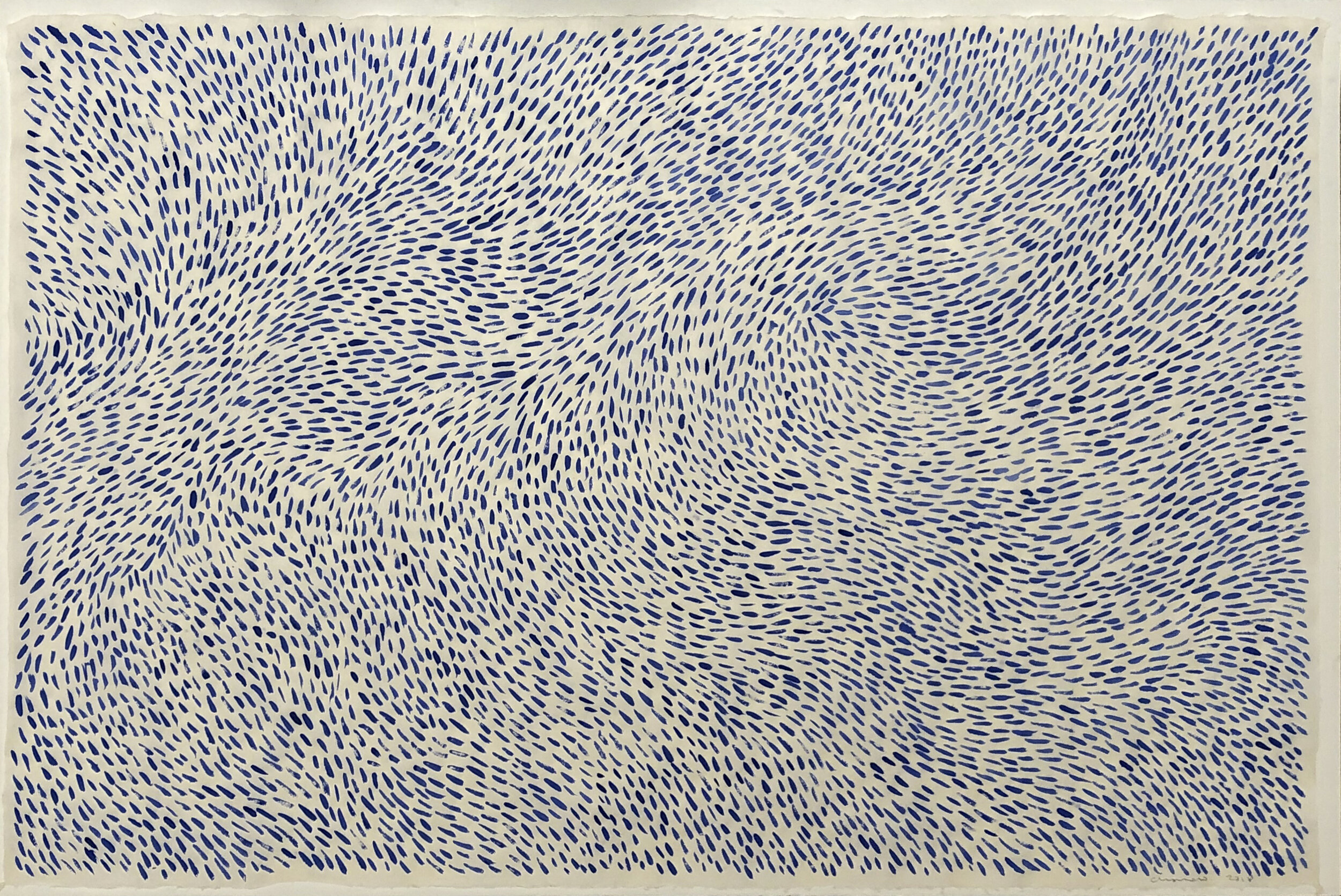
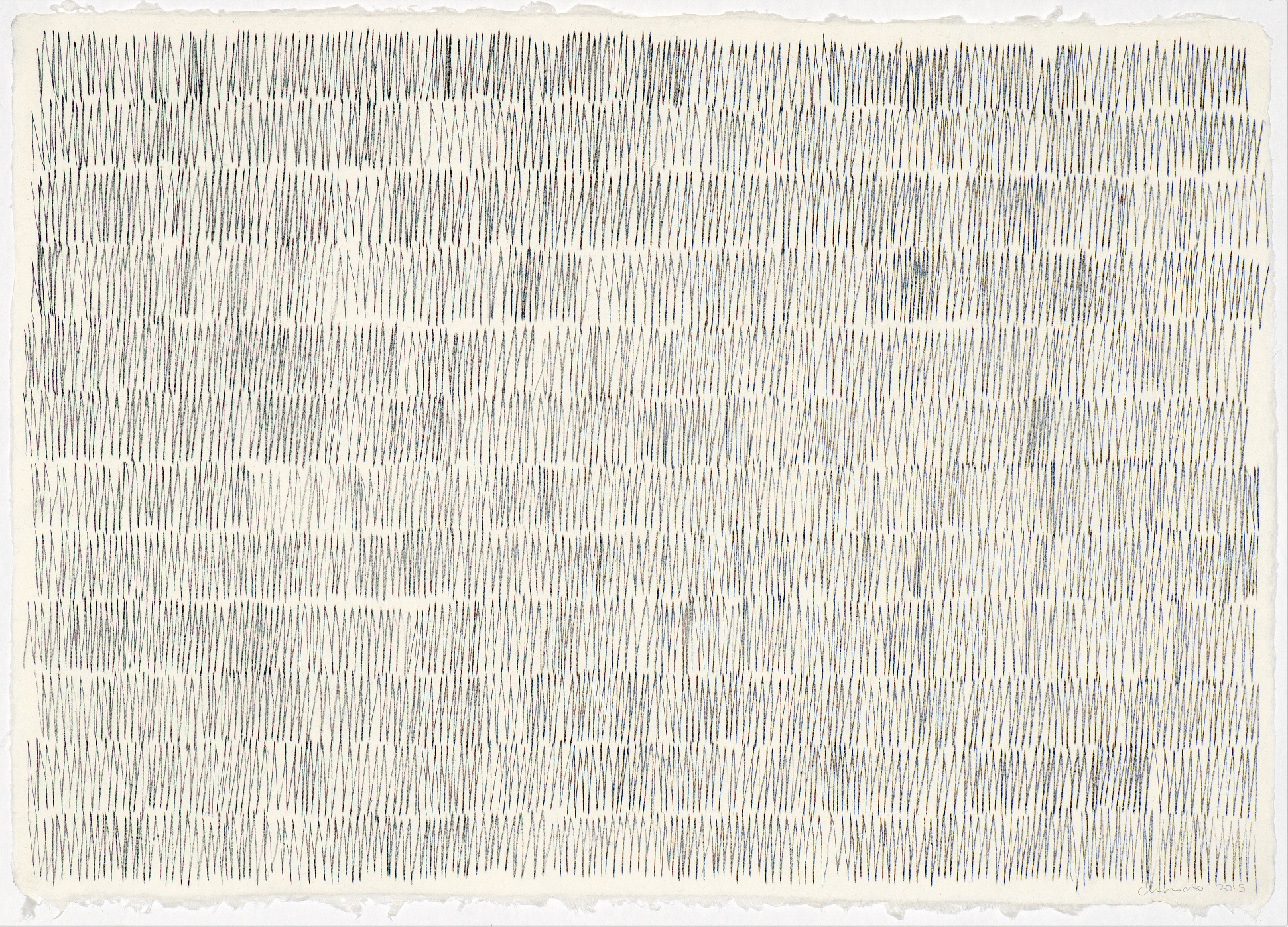
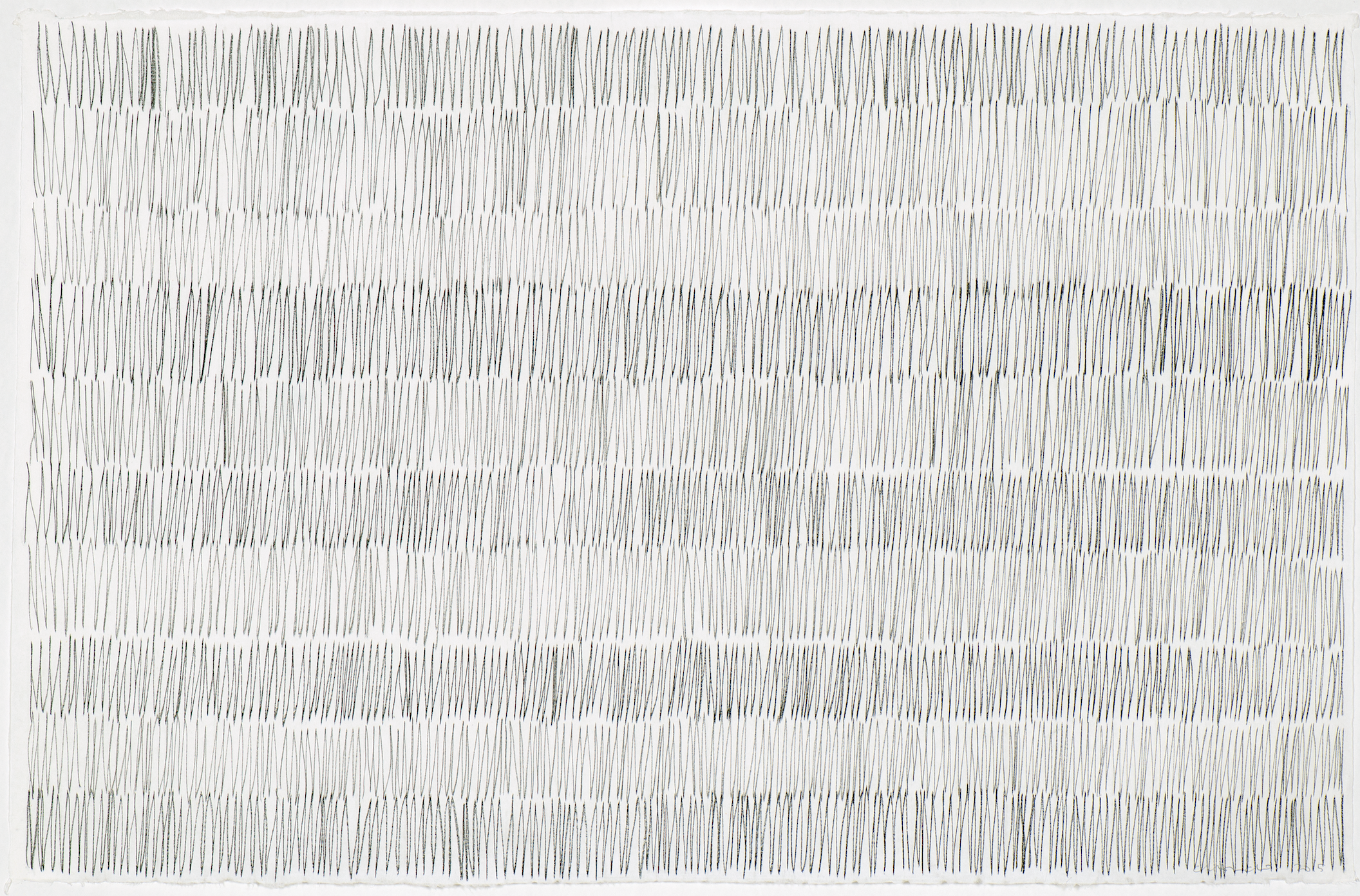
In 1992, Joaquim Chancho built his studio and refuge in El Pla de Santa Maria, a space of solitude, where his practice could exist in harmony with the rhythms of land and light. The building itself is embedded in its environment, its walls formed from red terracotta soil, absorbing the surrounding landscape and shifting light. It does not impose but settles—much like the. repetition in Chancho’s drawings, where form is not declared, but emerges through the accumulation of marks, one after the other, tethered to rhythm, loosened by silence. The house was conceived and designed in collaboration with the architect Patricio Vélez, whose work integrates elements of Eastern architectural philosophies—notably in the presence of a ‘tsuboniwa’ or Japanese inner courtyard garden —where nature is framed but left to unfold freely.
Inside, the studio holds rows upon rows of archived works—decades of paintings and drawings stored like a library of visual language. Blocks of pure, softened colour—pastel yet precise—paired with natural wood surfaces that temper the geometry with warmth, an. atmosphere like stepping inside a Mondrian painting. The studio is a place of stillness and structure, where light, materials, and repetition dictate the pace of work.
In close proximity to his studio stands the Monastery of Santa Creus, an extraordinary example of Cistercian architecture. Its measured repetition of cloisters—each arch an echo of the last—forms a spatial rhythm that resonates with the order and variation in Chancho’s work. Though built in the 12th century, its clarity and restraint feel startlingly contemporary, a reminder of how fundamental principles of structure, repetition, and silence transcend time. The monastic approach—removing distraction, focusing entirely on the act—finds its own quiet parallel in Chancho’s daily rhythm, as he works only by northern light, until it fades.
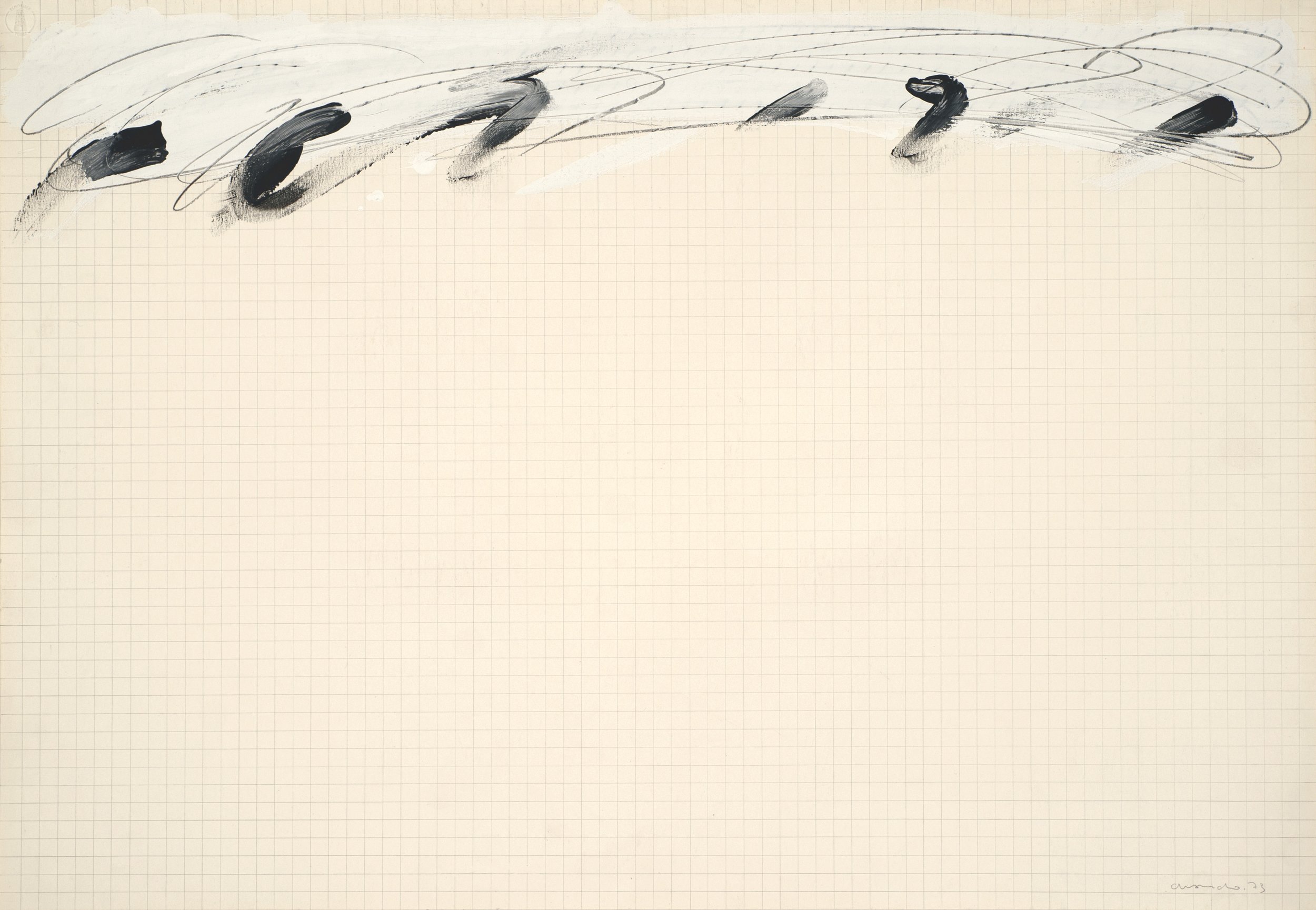
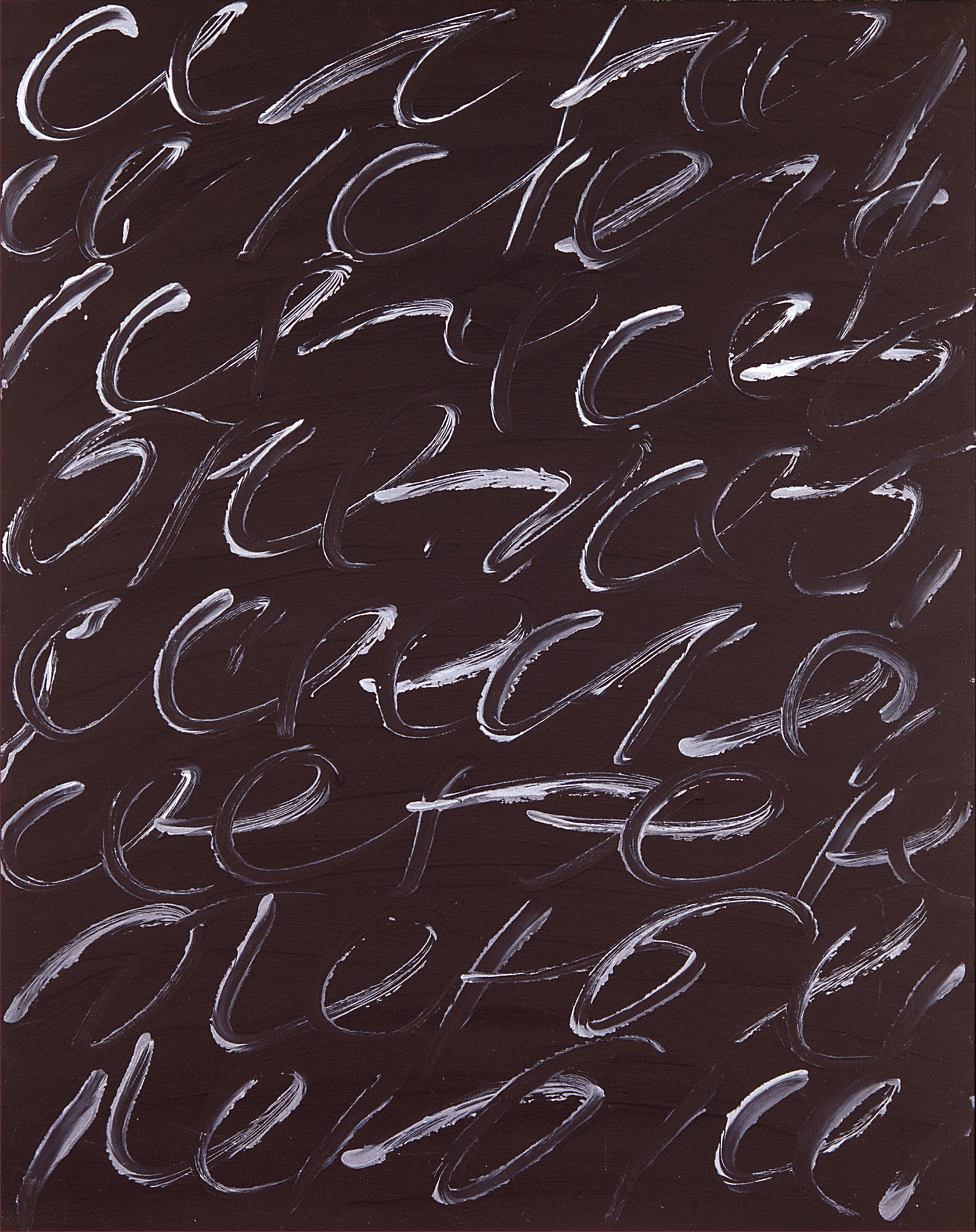
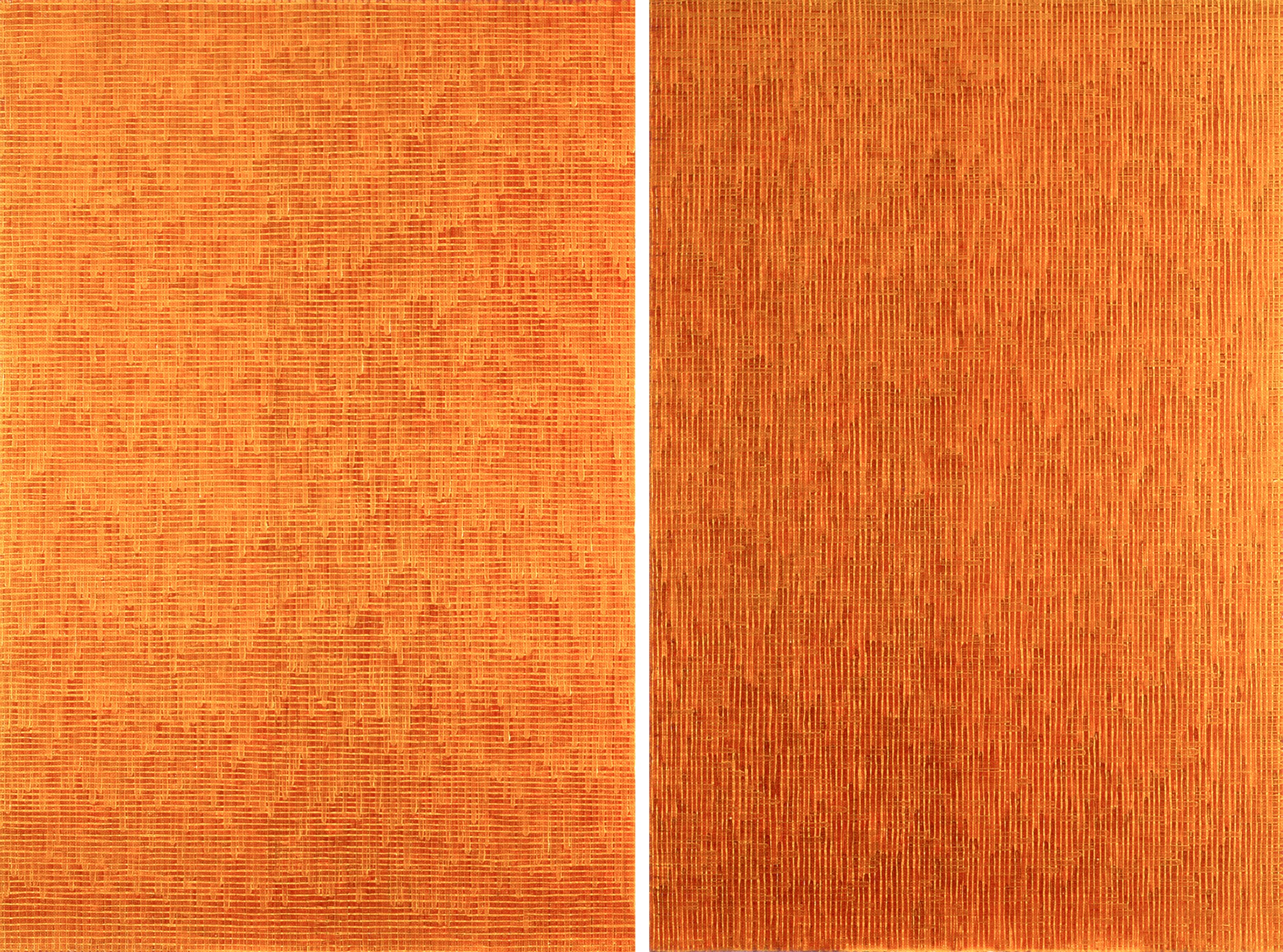
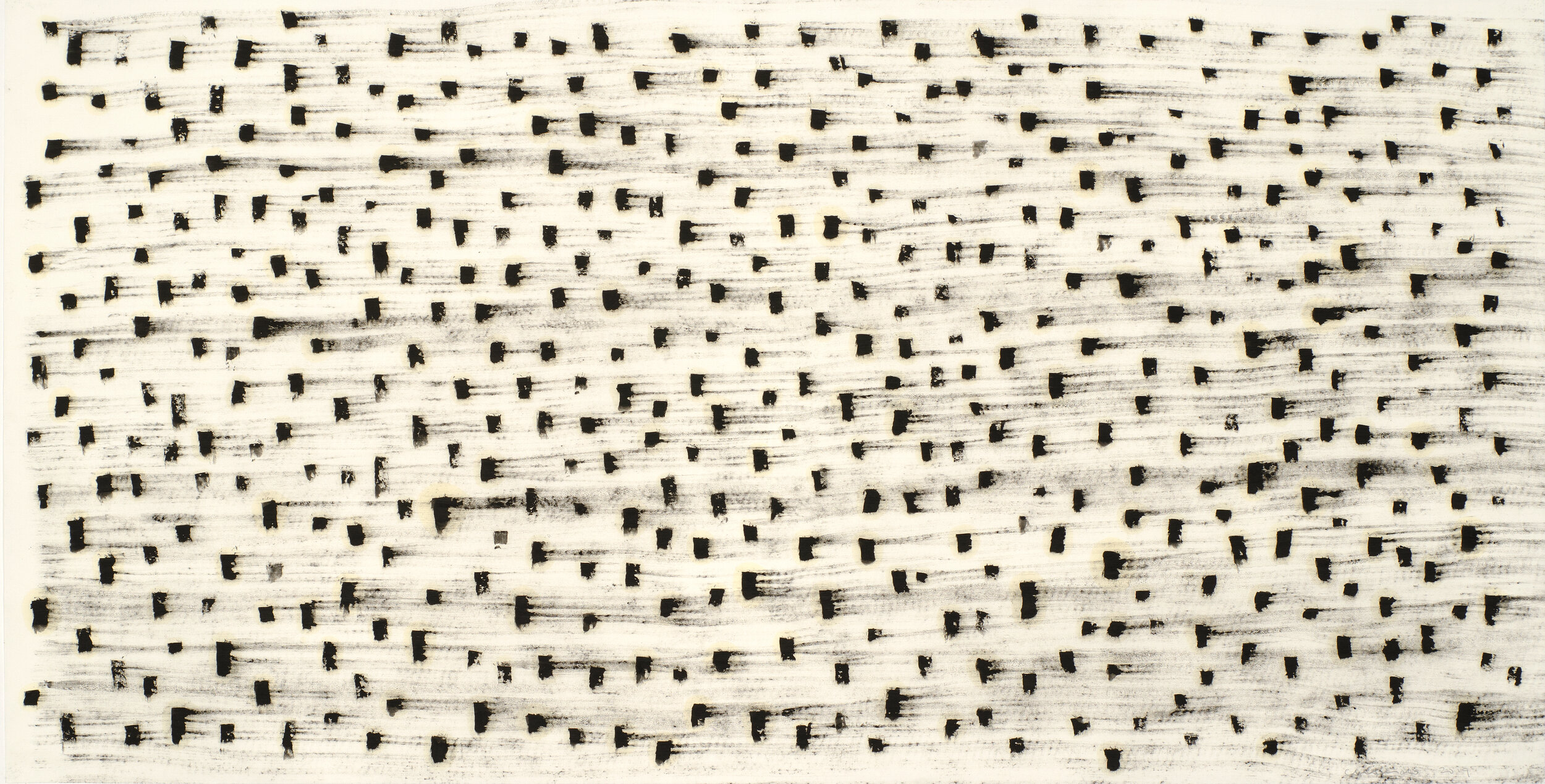
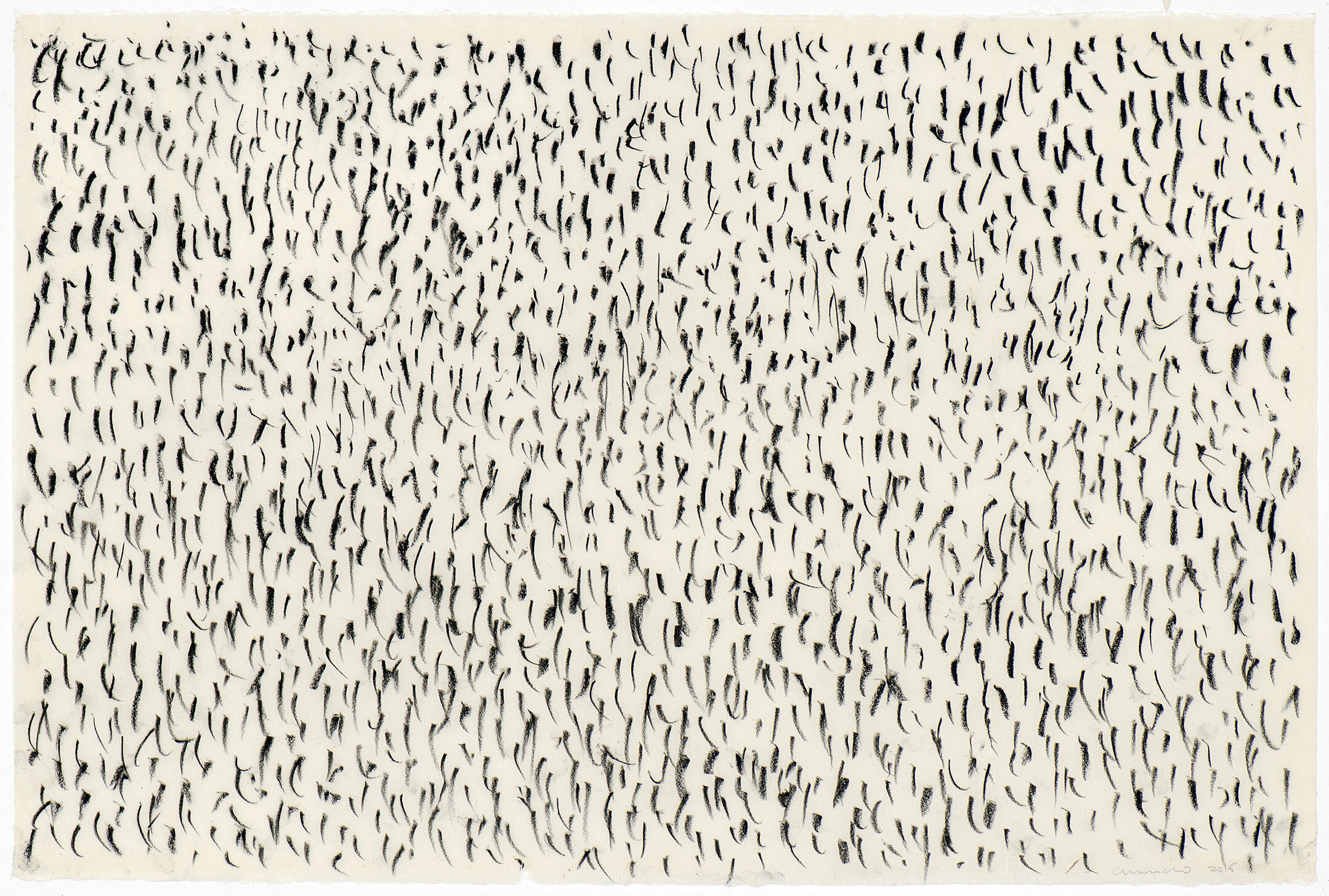
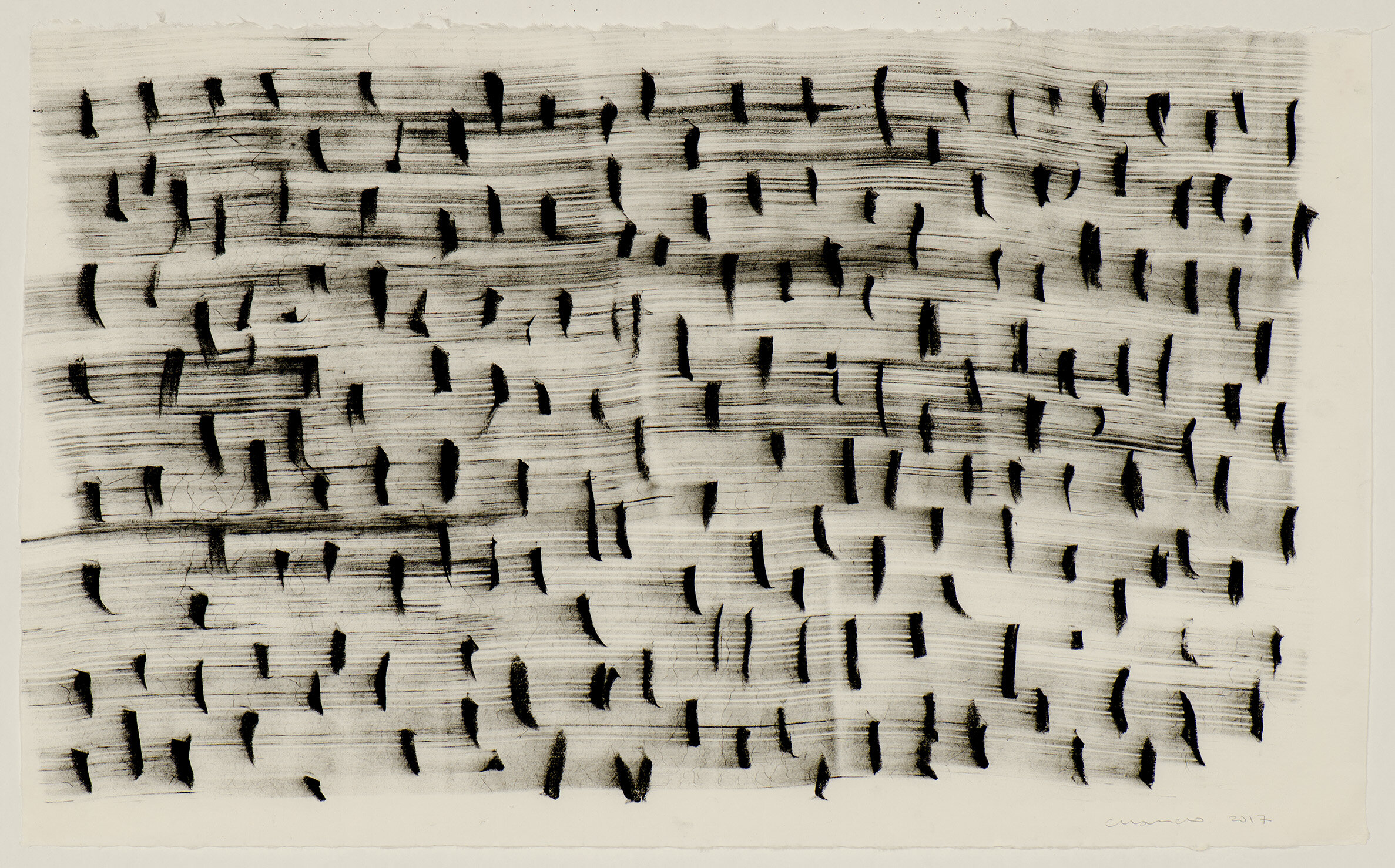
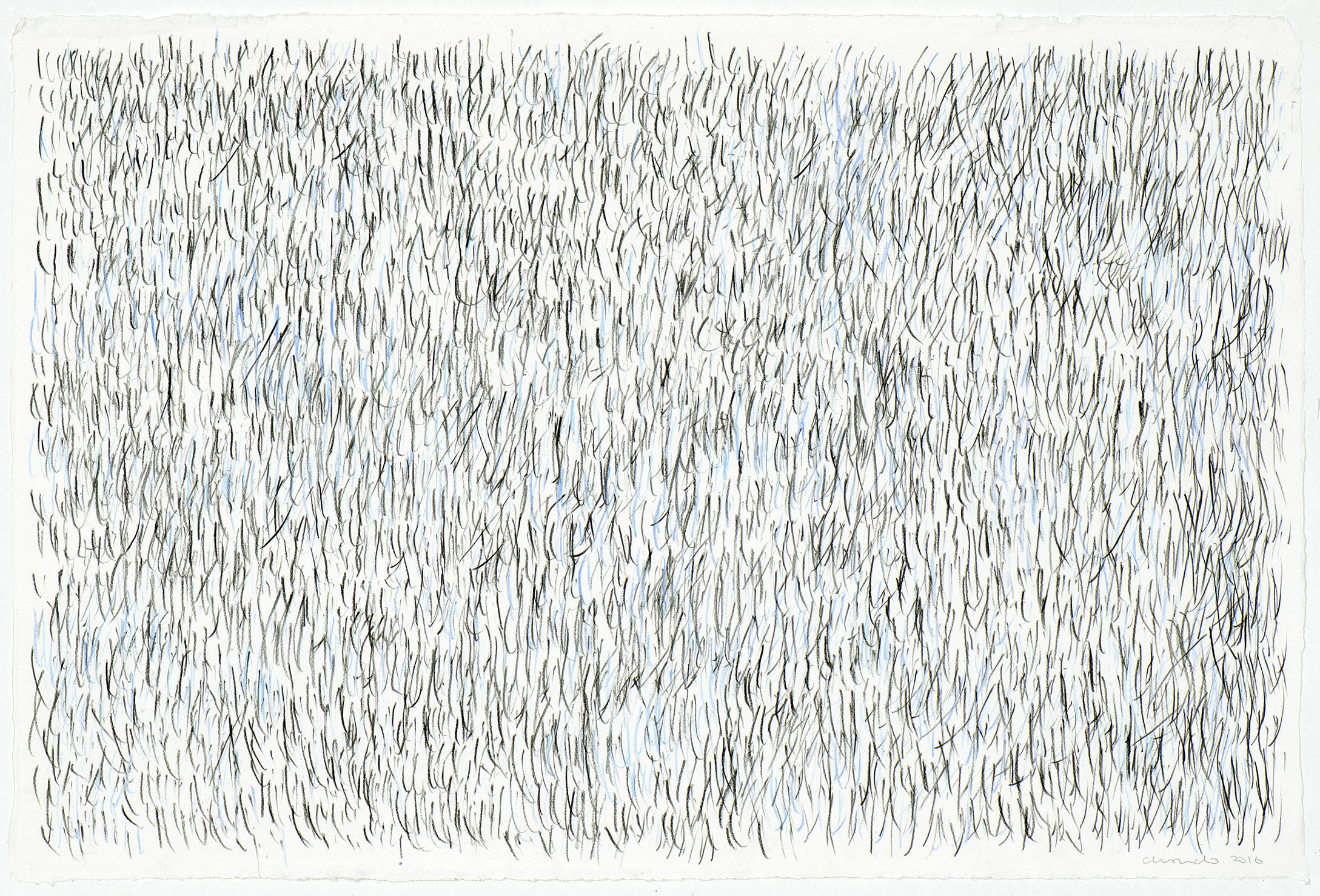
Rosa Queralt, in her insightful analysis of Joaquim Chancho’s work, draws on this idea to explore how an artist’s environment—particularly one shaped by rural life—can leave a lasting imprint, not as a direct reference but as a structuring force. Chancho does not depict nature, and yet nature is integral to his work—absorbed, processed, and reflected in the structure of his compositions. Queralt describes his practice as carrying unmistakable traces of his origins in the Baix Camp farmlands: “Elements such as the cycle, constantly feeding back into itself and becoming a method and a source of knowledge; the wealth and fertility that stem from limited resources; the determination to remove all hurdles in the pursuit of the essential; the notions of effort and perseverance, in an endless back and forth; the predisposition towards all that is real and physical; or the tool used as an extension of the hand—the hoe, the pruner, the shears, and the saw from the past are replaced by pencils, brushes, and other implements that are used for and have an effect on the act of painting and drawing.” This understanding of material as an extension of the body—of work as a process bound to repetition, endurance, and structure—defines Chancho’s artistic language. His paintings and drawings are not compositions in the traditional sense, but accumulations, built slowly through a rigorous process of layering and refinement. Chancho’s home and studio hold a lifetime of collected natural forms—like a trawler moving slowly across the ocean floor, his collecting is an act of quiet discernment—dragging through time, sifting through remnants that hold a certain resonance and necessity. His selection is not arbitrary but deeply attuned to material, history, and the delicate balance between permanence and impermanece, each object chosen, not in isolation, but as part of an evolving rhythm. Ten stones flecked with a vivid yellow lichen rest beside fragments of sun-bleached bark, brittle shells, and slender, wind-scoured branches worn smooth by time. A row of earthen pots juxtapose delicate birds nests, their woven forms once sheltering smooth, pale eggs, now empty, reduced to structure and trace. Each element is collected with intent, forming a quiet index of material and time - Chancho’s collections, much like his works on paper, are not about accumulation but about the structure and patterns that emerge through recurrence. There is an inherent musicality in Chancho’s work. Quoting Joan Bufill: “Latent painting. Long, tense silences. Low and high notes with long resonances. This use of musical terms is not arbitrary. Chancho’s painting makes you feel the music of colour, the vibration of a note repeated softly, intensely, in an orderly way.” His practice echoes principles found in minimalist and experimental music, where sustained rhythms and gradual transformation are central. As in music, the interplay of rhythm, structure, and variation in Chancho’s work is not about mechanical repetition, but an unfolding experience—one that invites the viewer to get lost inside the murmuration of the work and listen to its silence and unexpected dips and swells—an orchestrated flux that is both measured and alive. Now in his eighties, Chancho’s practice endures, though time has inevitably altered its course. The physical exertion he once sustained has softened, and the quiet passing of years—marked by loss, by absence—has left its imprint. Yet the impulse to return remained. His work is not something he departs from; it is something he steps back into, a continuum rather than a revival, a rhythm that never truly ceases, only quietens before it begins again. This focused and recent intimate body of work will be exhibited for the first time in Paris, Spring 2025—a season of budding renewal, where what has been dormant resurfaces, fragile yet full of quiet force. These drawings, created between 2017 and 2022, each mark accumulating, shifting, carrying echoes of all that came before. Rendered on Japanese paper, the works possess a delicate, natural fragility—the material itself absorbing oil and pencil with an organic pull, each stroke settling into the fibers, rather than resting on the surface. The drawings are not merely images, but imprints, the paper holding each line as the land holds time—layered, absorbed, enduring.
Chancho continues the cycle. Always returning, always drawing.
Joaquim Chancho (b. 1943, Riudoms) is a leading figure in postwar Catalan abstraction. Trained in Barcelona, his early work evolved from figuration to a distinctive fusion of geometry and gesture during a formative stay in Paris in 1970. From the 1970s onward, he developed a rigorous visual language grounded in seriality, sign systems, and process. In the 1980s, Chancho challenged traditional formats with his Table Works, emphasising materiality and horizontality. He later became a professor at the University of Barcelona, contributing significantly to contemporary art education. His work is held in major public and private collections, including the Stedelijk Museum (Amsterdam), MACBA (Barcelona), Fundación Juan March (Madrid), la Caixa Foundation, and Banc Sabadell Foundation, as well as numerous private collections globally.
PUBLIC COLLECTIONS AND MUSEUMS
MACBA. Museu d’Art Contemporani de Barcelona. Espanya
Museu de Pamplona. Ayuntamiento de Pamplona, Espanya
Museu de Arte Contemporáneo. Patio Herreriano Valladolid, Espanya
Museu de Montserrat. Espanya
Museu d’Art i Història. Reus, Espanya
Museu d’Art Modern. MAMT. Tarragona, Espanya
Museu de Valls. Tarragona, Espanya
Museu de Villafamés. Castelló, Espanya
Museu d’Historia de l’Hospitalet. Espanya
The Sackner Archive of Visual and Concrete Poetry. Miami, Estats Units.
Stedelijk Museum,. Ámsterdam, Holanda
Universitat de Barcelona. Espanya
Universitat Rovira i Virgili. Tarragona, Espanya
Ajuntament de Palma. Espanya
Biblioteca Nacional. Madrid, Espanya
Centre de Lectura. Reus, Espanya
Centro de Arte Caja Burgos. CAB. Burgos, Espanya
Centro de Arte Contemporáneo. Las Palmas de Gran Canaria, Espanya
Collecció Fundació “la Caixa”. Barcelona, Espanya
Collecció Testimoni de “la Caixa”. Barcelona, Espanya
Comunidad de Madrid. Madrid, Espanya
Fundació Banc de Sabadell. Barcelona, Espanya
Fundació Caixa de Catalunya. Barcelona, Espanya
Fundació Caixa Girona. Girona, Espanya
Fundación Juan March. Madrid, Espanya
Fundació Suñol. Barcelona, Espanya
For a full catalogue of available artworks and price-list please email gallery@richeldisfineart.com