GARY KUEHN & MORGAN STOKES
9th October - 4th December
Gary Kuehn (b. 1939, New Jersey, USA) stands as a seminal figure in the history of post-minimalism. Since the 1960s, his work has explored the point at which form begins to break down - where geometry buckles, surfaces rupture, and material asserts its own logic.
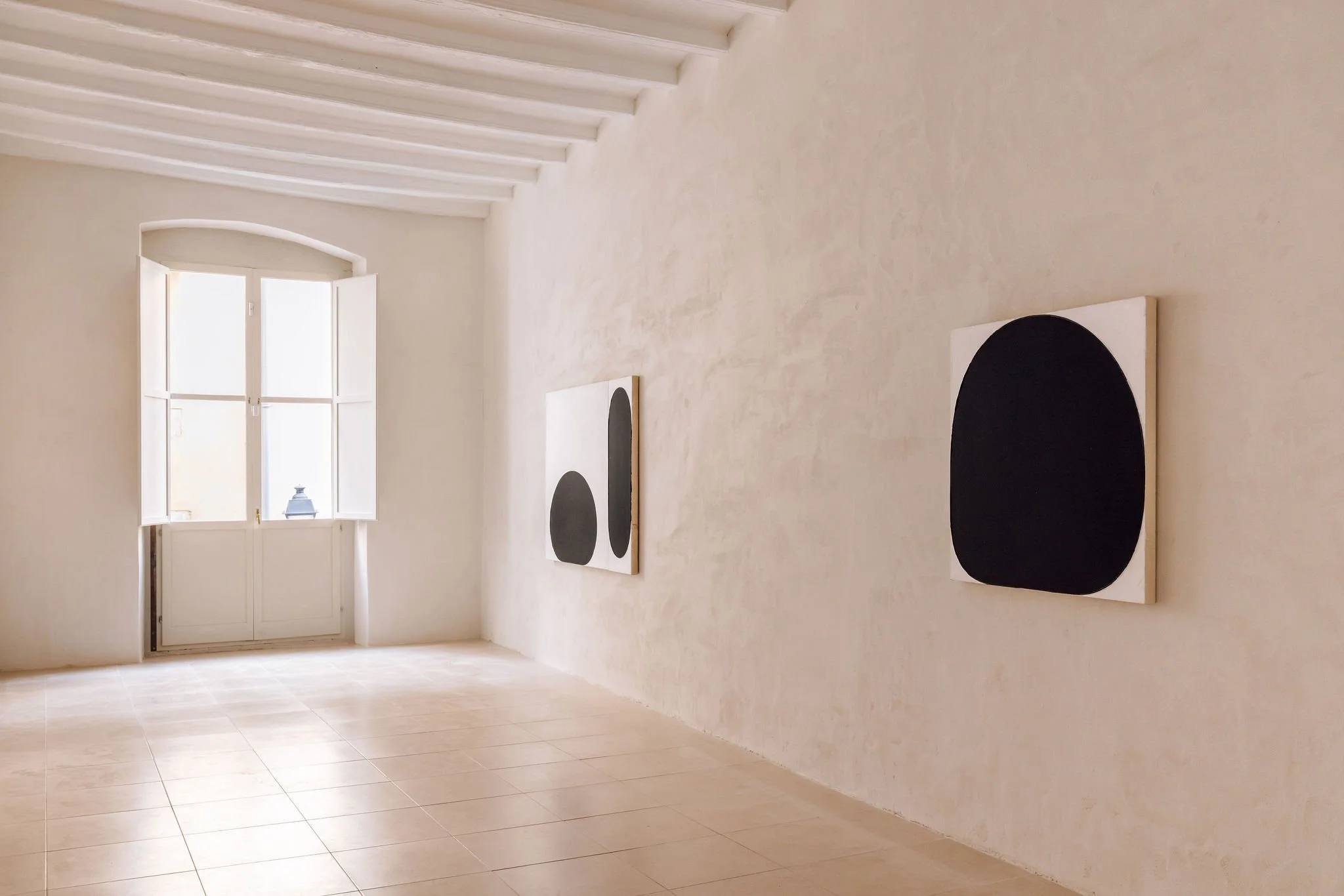
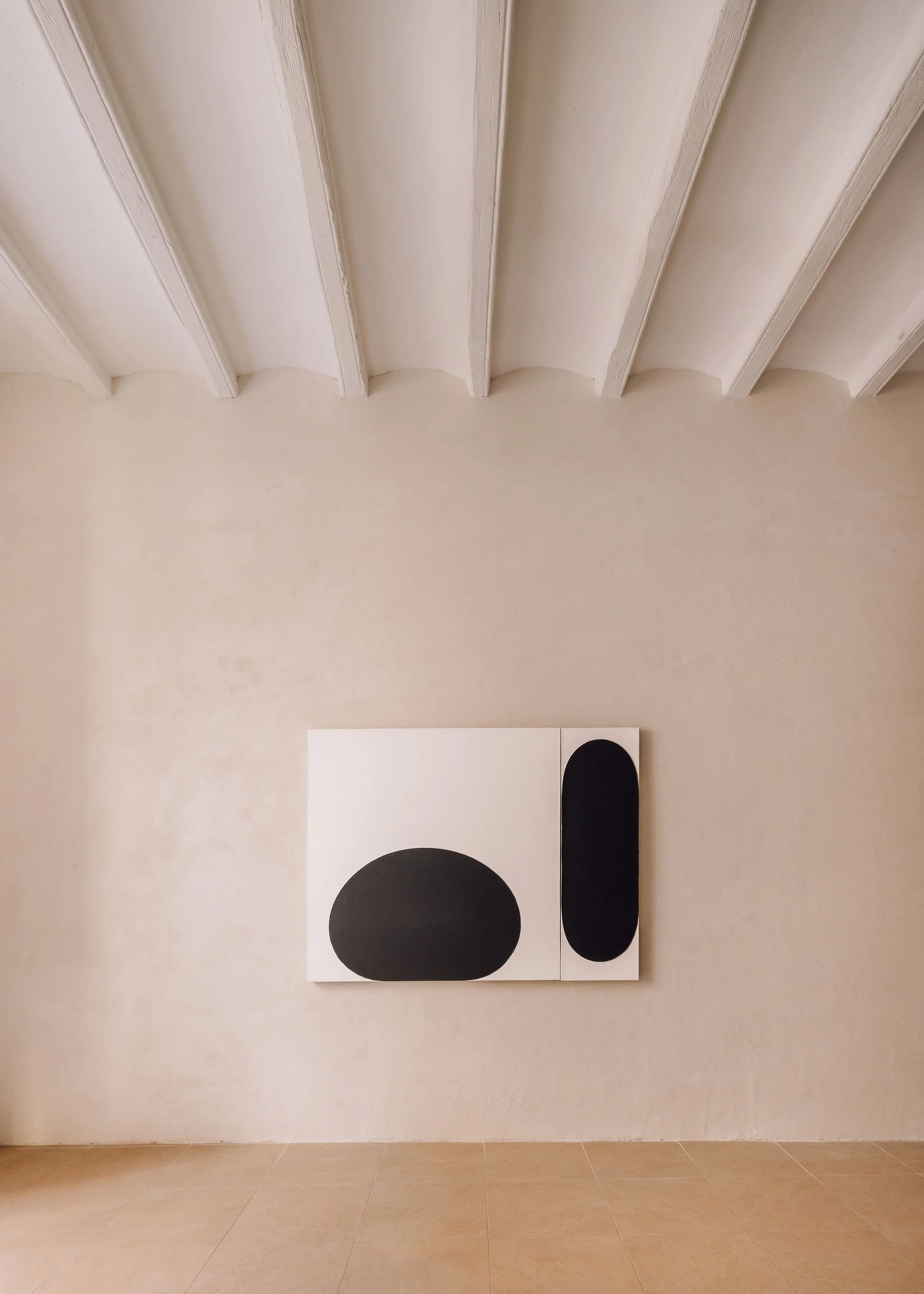
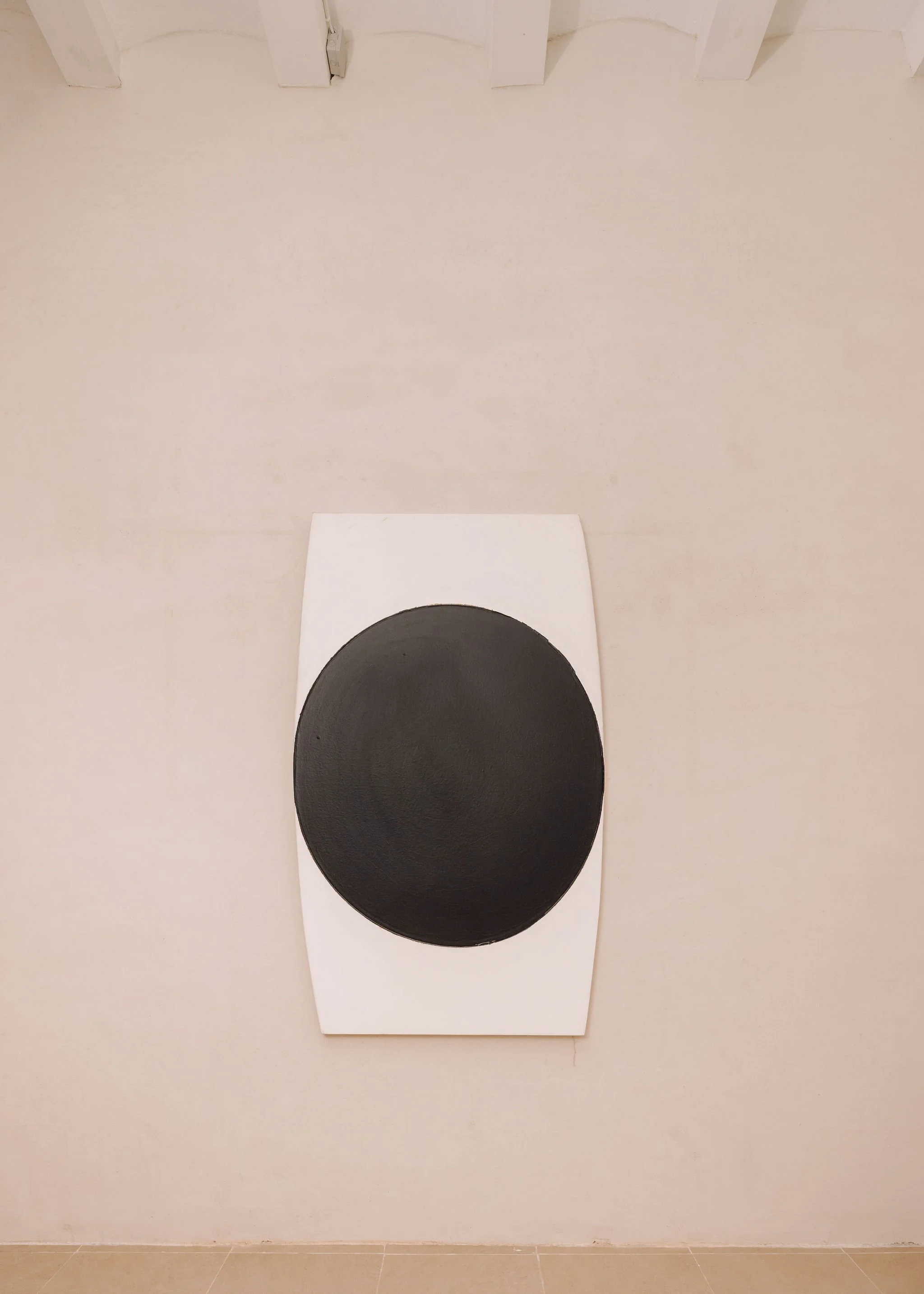
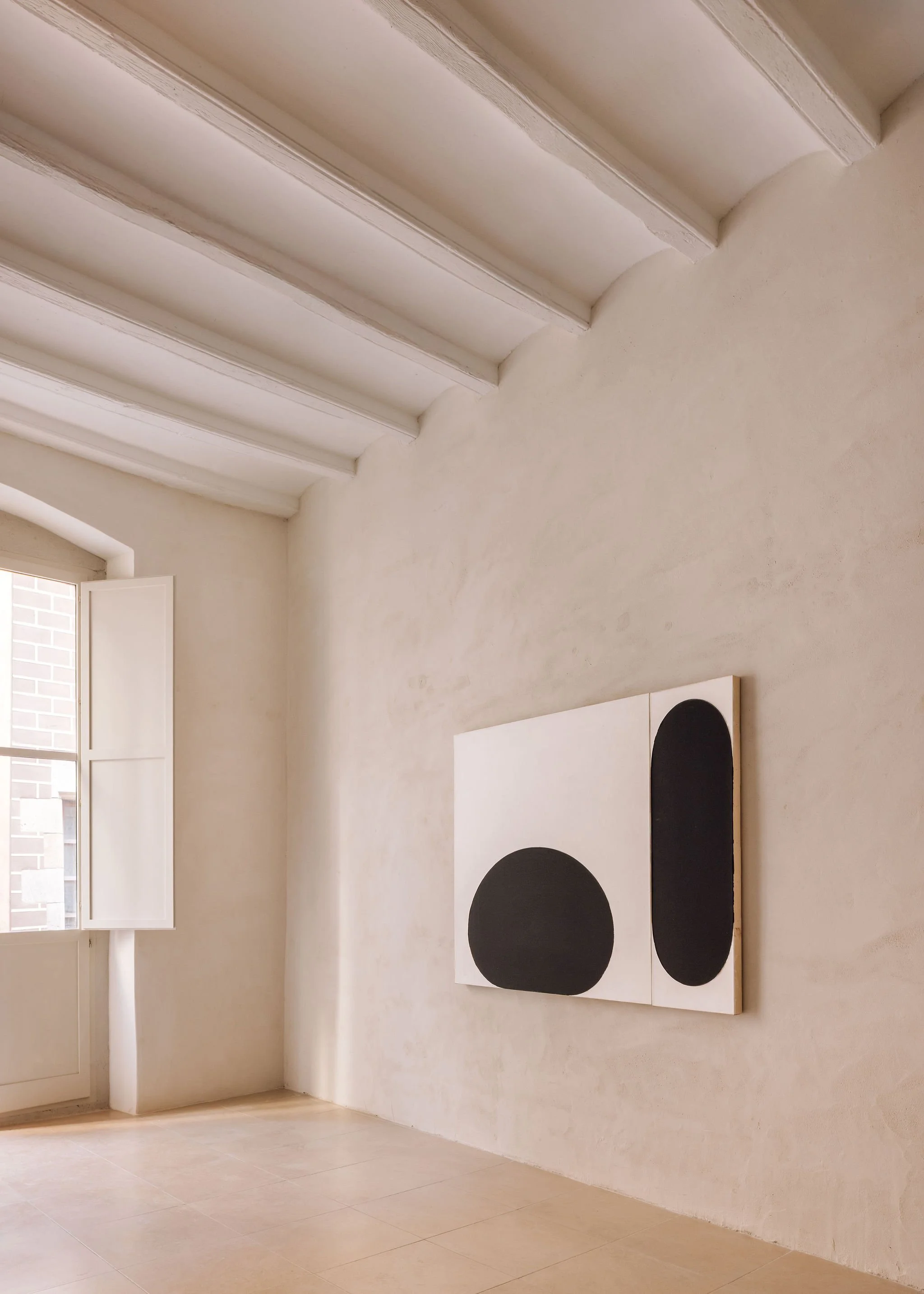
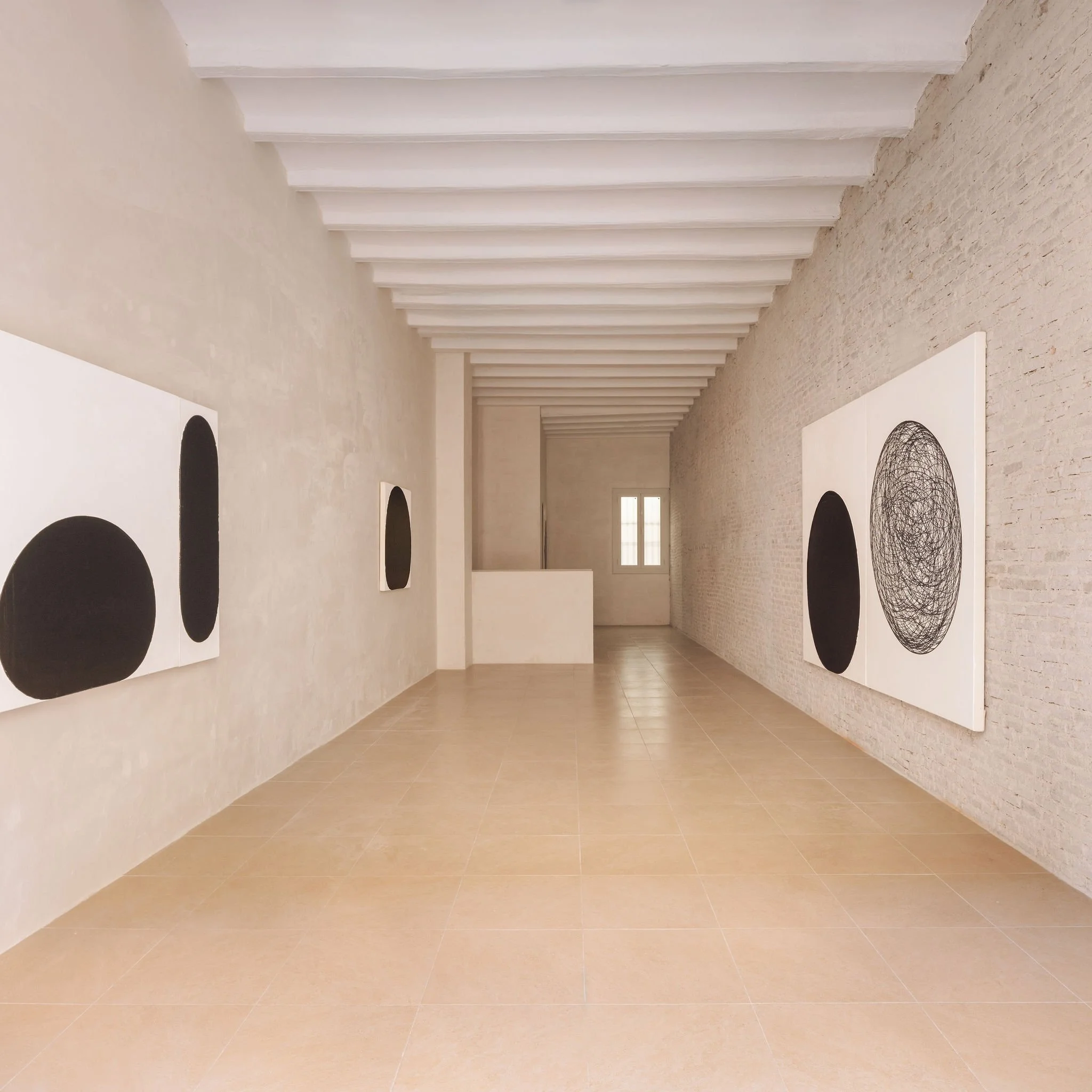
We are honoured to present a group of Gary Kuehn’s Black Paintings, a stark and distilled body of work that he first began in 1969 and continues to this day. Thick, forceful gestures of black pigment confront the white ground, extending Kuehn’s sculptural language into two dimensions. These works reveal a distinctly sculptural approach to painting, in which the canvas is treated, in Kuehn’s words, as a “container to be filled in a procedural way.” Just as in his sculptures, a focal accent lies on the physical nature of materials: the paintings are “made rather than painted,” originating from the inherent qualities of acrylic pigment itself.
Acrylic paint is poured into predetermined, irregular circular shapes, creating relief-like surfaces where the density of the paint asserts its own structure. The circular stencils are distorted and squeezed against one another, pressing into the outer limits of the canvas. Each element must adjust to the next, its form governed by the strict authority of the format itself. Typical of Kuehn’s oeuvre, these paintings combine a strong physical presence with a metaphoric dimension. The compressed forms become emblems of the tension between freedom and control, collapse and containment - a subject that has coursed throughout his practice from the late 1960s to the present.
As Kuehn wrote in his Notes to Myself Regarding the Black Paintings (1974):
“One aspect of the recent paintings involves the idea of space-as-container, which can be filled in a procedural way. Thus, whatever the canvas can accommodate within a given predetermined system is the contents of the painting. The space of the paintings to date breaks down into two types. The first is a kind of human space mainly defined by a sense of horizon and accompanying gravity; there is no sense of lateral restriction, the landscape could continue beyond the actual edges of the canvas. The second type of space, far more interesting to me, involves the idea of the canvas as a container, the edges of the canvas being the inner dimensions of a receptacle. How the contents adjust themselves to their container is the obvious subject of this type of painting. My attention is attracted to objects that accommodate themselves to the space, forms which will not bend or change shape to allow for more units or more compact packing. This is a radical departure in appearance from the less rigid forms; however, the underlying logic is the same.”
Kuehn was included in such defining exhibitions as Eccentric Abstraction (1966) and When Attitudes Become Form (1969), and his work has long been associated with the radical material experimentation that reshaped the boundaries of sculpture and painting in the late 20th century. His works are held in major public and private collections worldwide. His influence continues to be felt in contemporary practices that privilege process, resistance, and the agency of matter. Collections include: The Museum of Modern Art (MoMA), New York; Whitney Museum of American Art, New York; Centre Pompidou, Paris; Kunstmuseum Liechtenstein; Hamburger Bahnhof – Museum für Gegenwart, Berlin; Museum Ludwig, Cologne; Stedelijk Museum, Amsterdam; Albertina Museum, Vienna; MMK Museum für Moderne Kunst, Frankfurt am Main; Staatsgalerie Stuttgart; Kröller-Müller Museum, Otterlo; Kunstmuseum Wiesbaden; Wadsworth Atheneum, Hartford; and the Denver Art Museum.
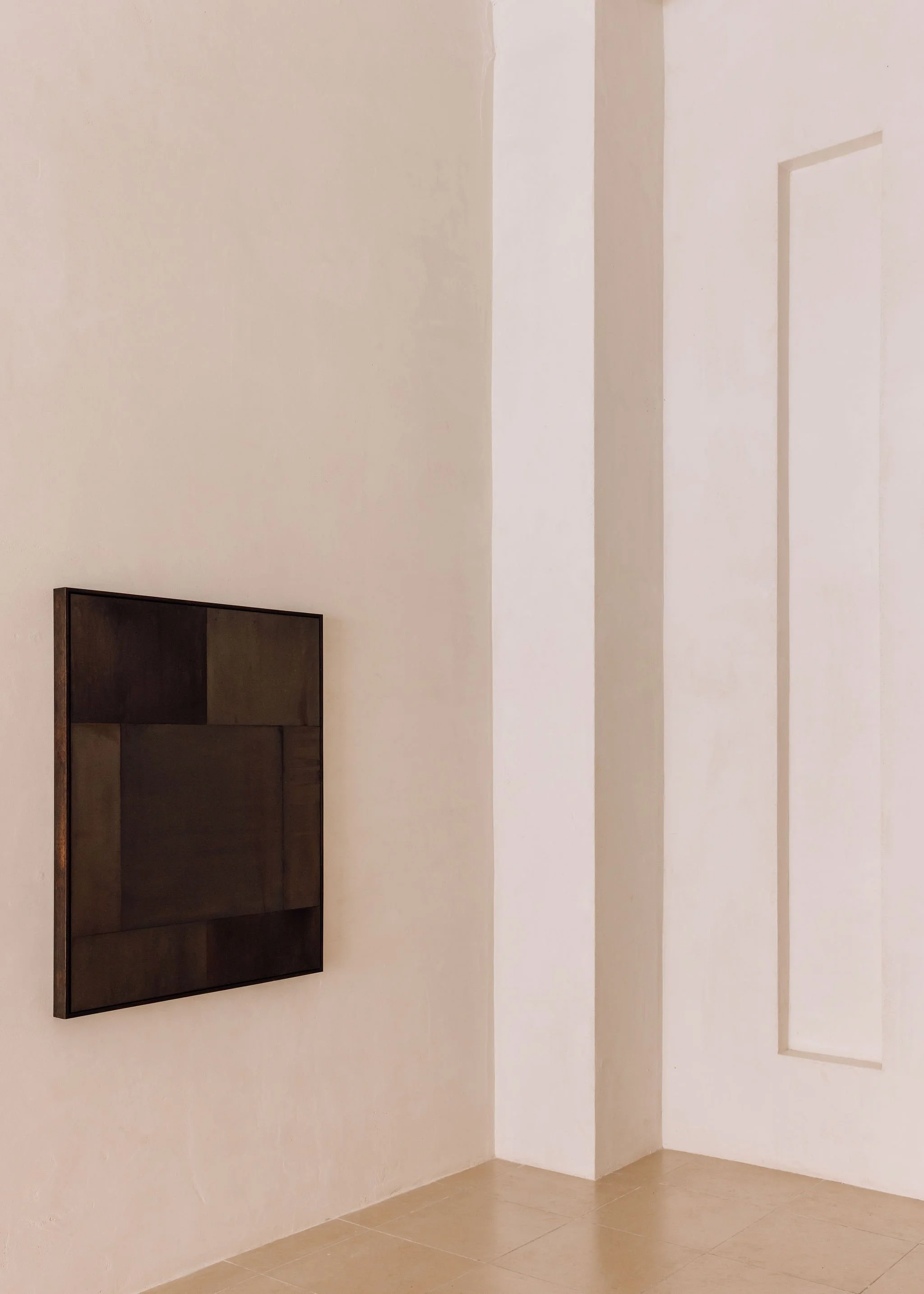
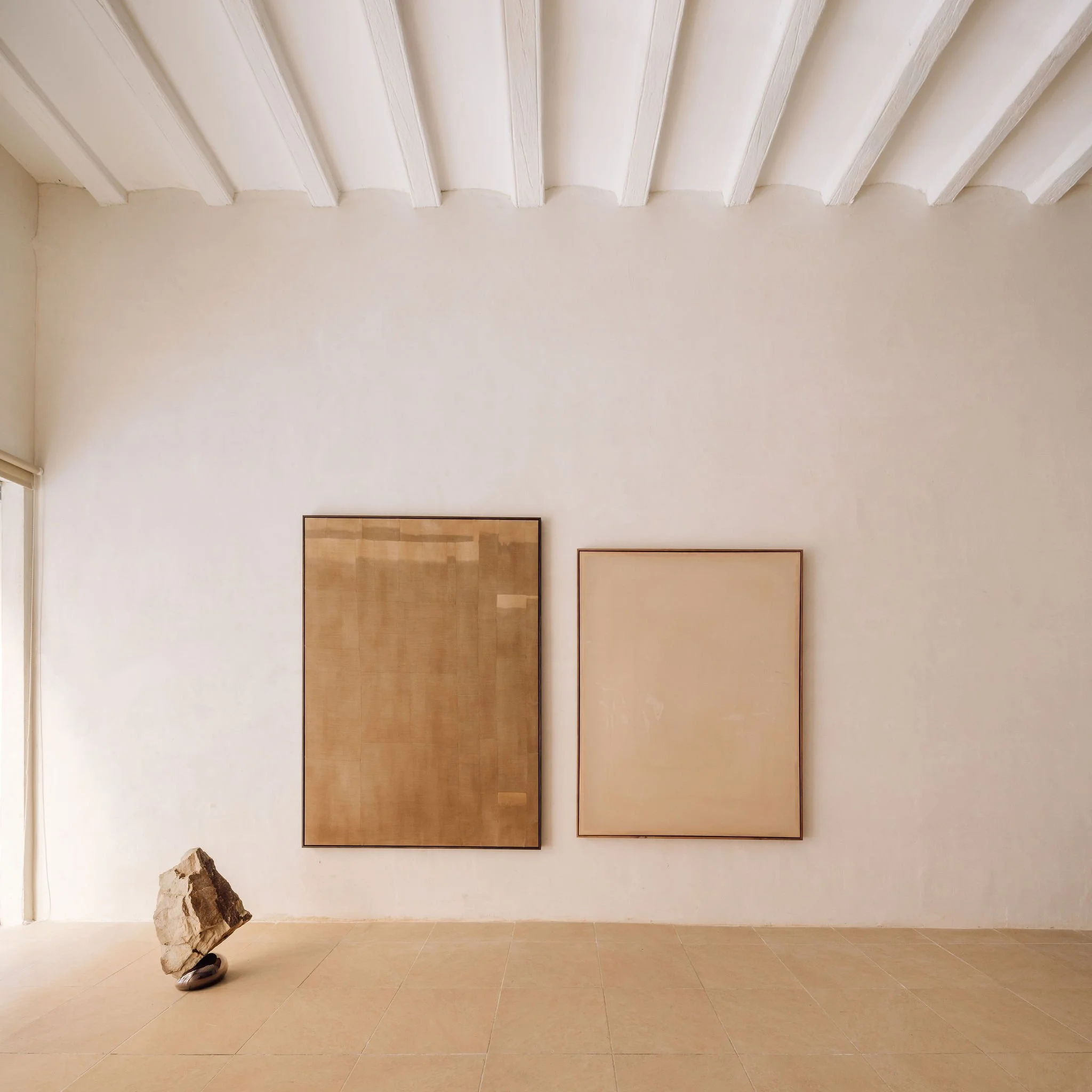
Morgan Stokes (b. 1990, Sydney, Australia, on Darug/Kurringgai land) is an emerging artist based in Sydney/ Gadigal land. His practice moves between painting and sculpture, often deconstructing these mediums to their fundamental elements - pigment, cloth, stretcher bars, stone - before reassembling them into forms that question their very conditions of possibility.
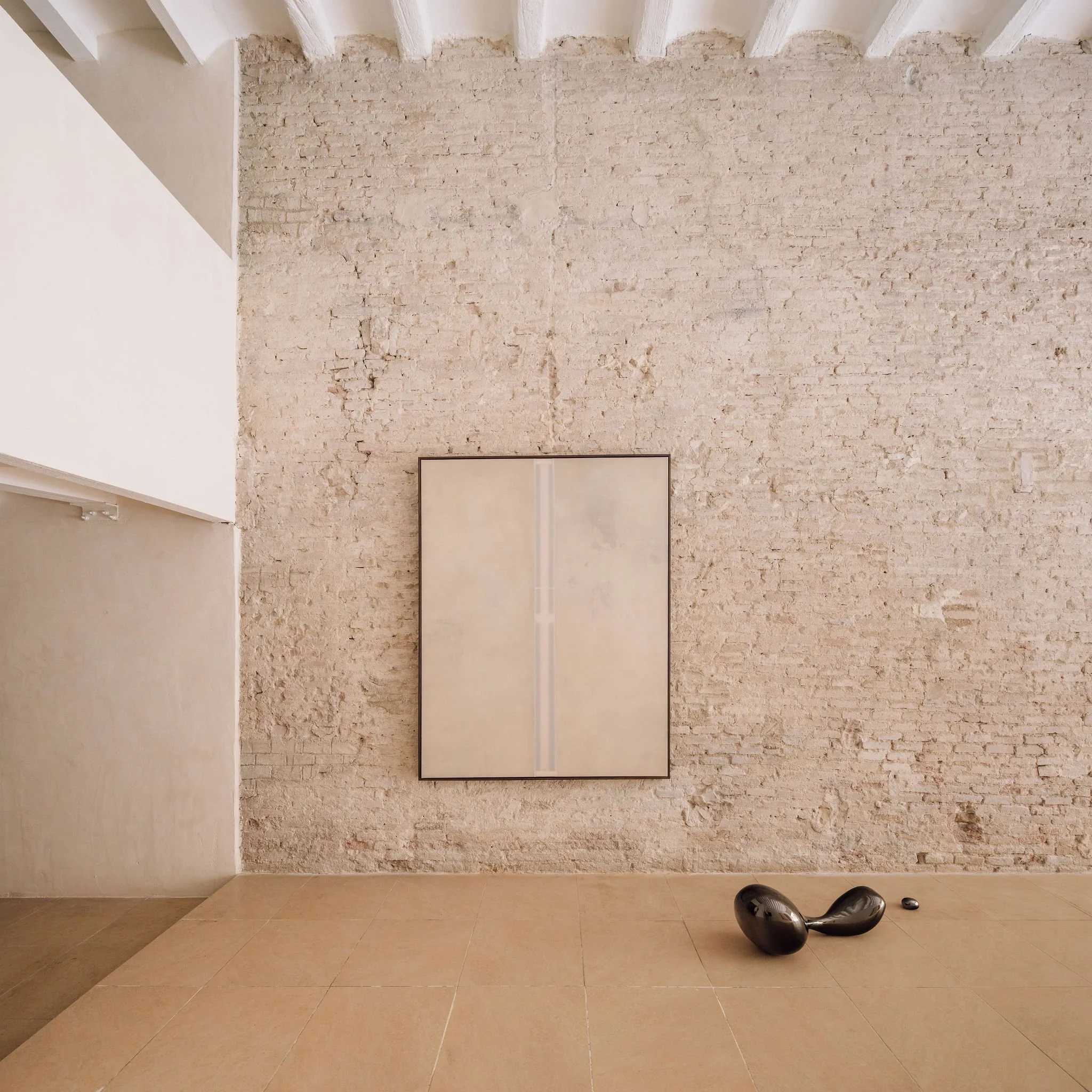
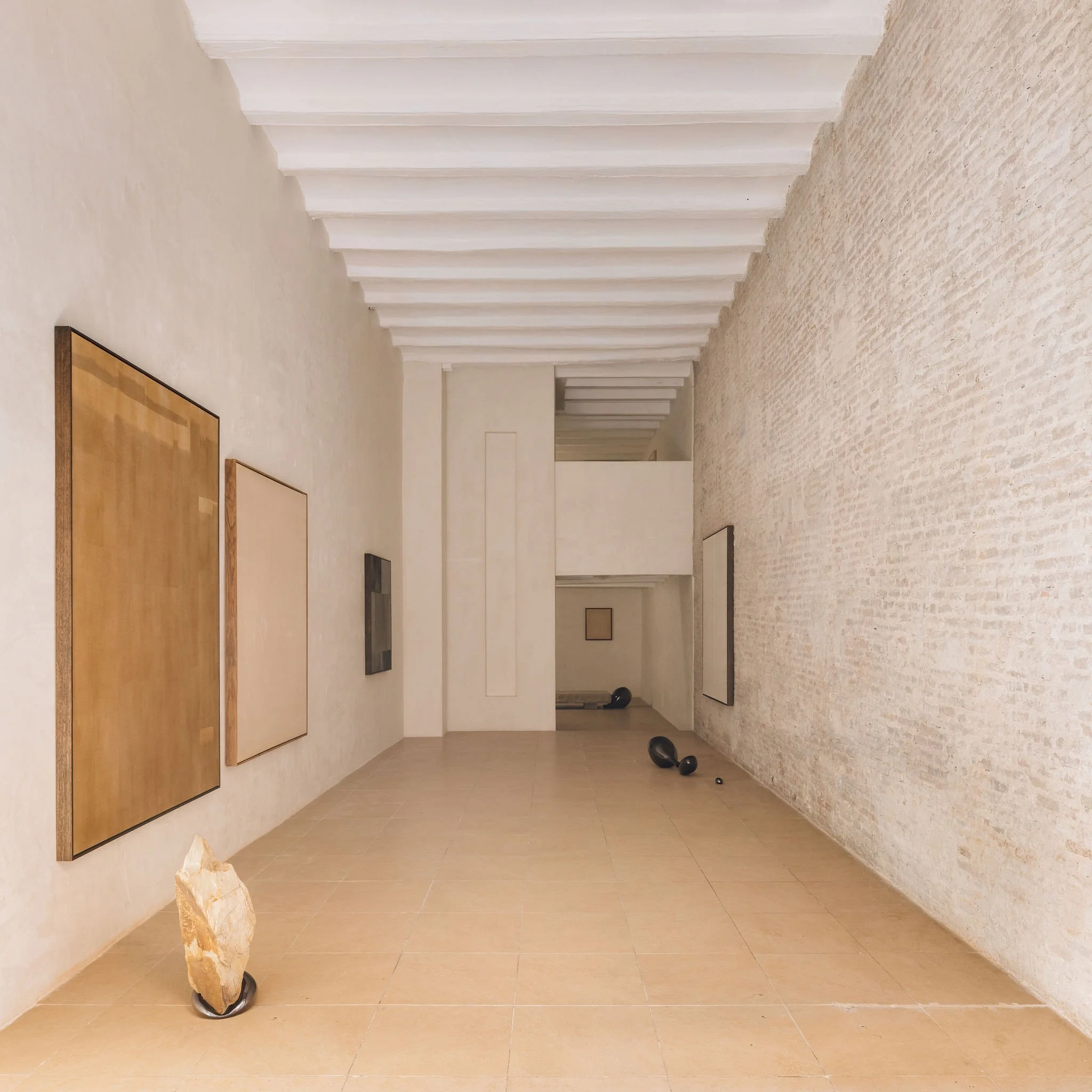
By dismantling the conventional hierarchies of medium and support, Stokes interrogates the supposed value of each part and its role within the widely understood formula of what makes an artwork. Central to his work is the notion of the “virtual gaze”: the shifting mode of perception that emerges in a world increasingly mediated by screens. In this light, the painting is never just an object but an image endlessly circulated, flattened, and reframed in the digital sphere. Stokes positions painting as a metaphor for personhood - always at risk of distortion, yet charged with the possibility of reconstruction. Coupled with this conceptual inquiry, his practice engages with the sculptural possibilities of painting, producingworks that oscillate between object and image, surface and support, material presence and virtual illusion. In recent works, this has taken the form of dense, black nickel sculptures that appear like amorphous blobs, spreading across the gallery floor in ways that resist containment. These forms suggest a material agency that exceeds their boundaries, as if the work itself were leaking into the space of the viewer. Alongside these works, Stokes has extended his inquiry into installation, where the plinth - traditionally a structure of support and elevation - becomes part of the artwork itself, growing upward and folding back on its function. This quiet but insistent subversion offers a conceptual echo of Gary Kuehn’s legacy: questioning where form begins, and where it might give way.