STRATA
13th august - 20th october
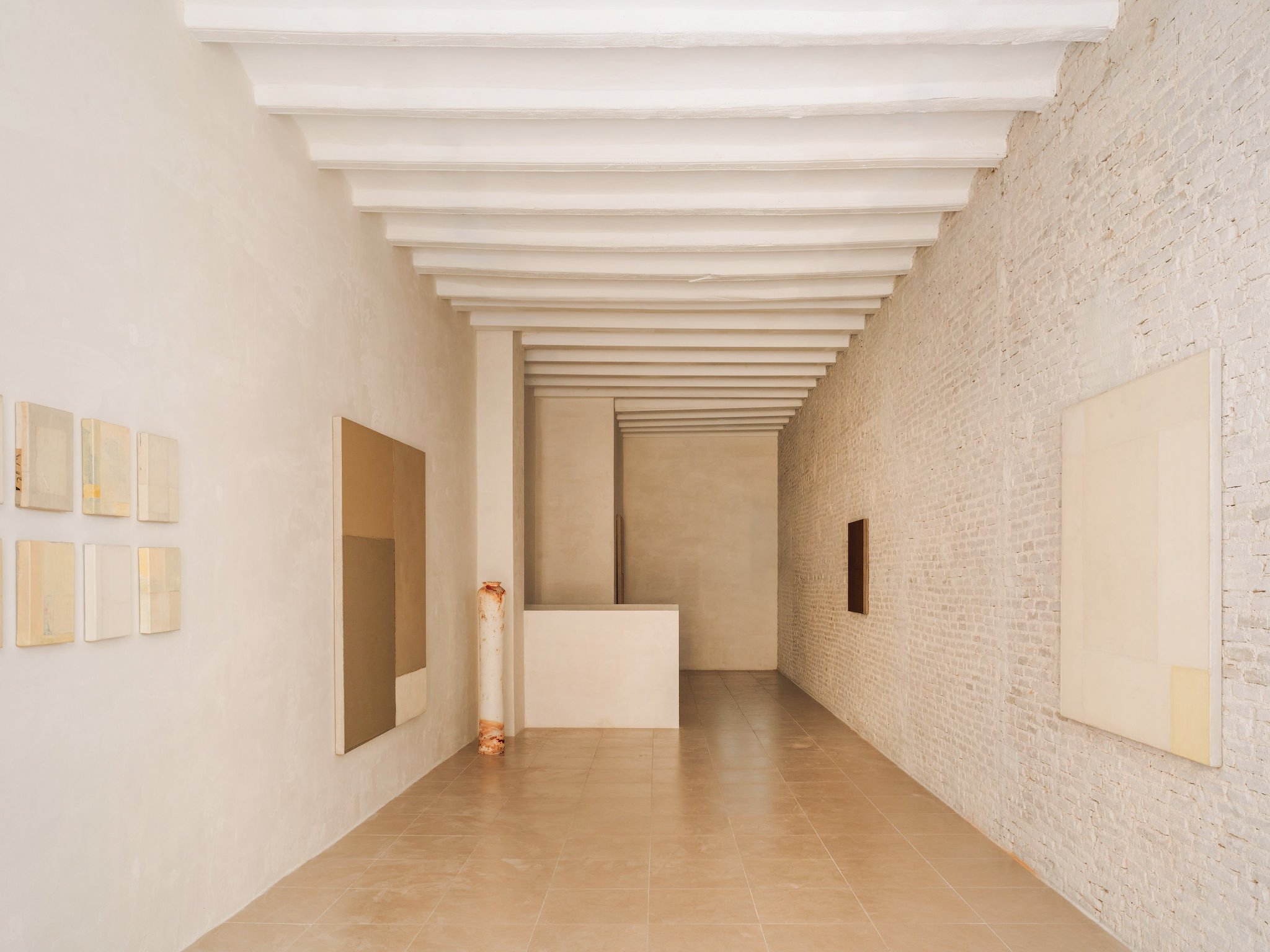
Richeldis Fine Art presents Strata, an exhibition bringing together six intergenerational women artists whose practices are united by a profound engagement with material, landscape and time.
Spanning textiles, painting, sculpture and ceramics, the exhibition features Ane Henriksen (b. 1951, Denmark), Emma Zhang (b. 1982, Wuhan, China), Terri Brooks (b. 1958, Australia), Dakyo Oh (b. 1991, Busan, South Korea), Rhian Jones (b. 1993, Wales) and Marea Hildebrand (b. 1989, Switzerland).
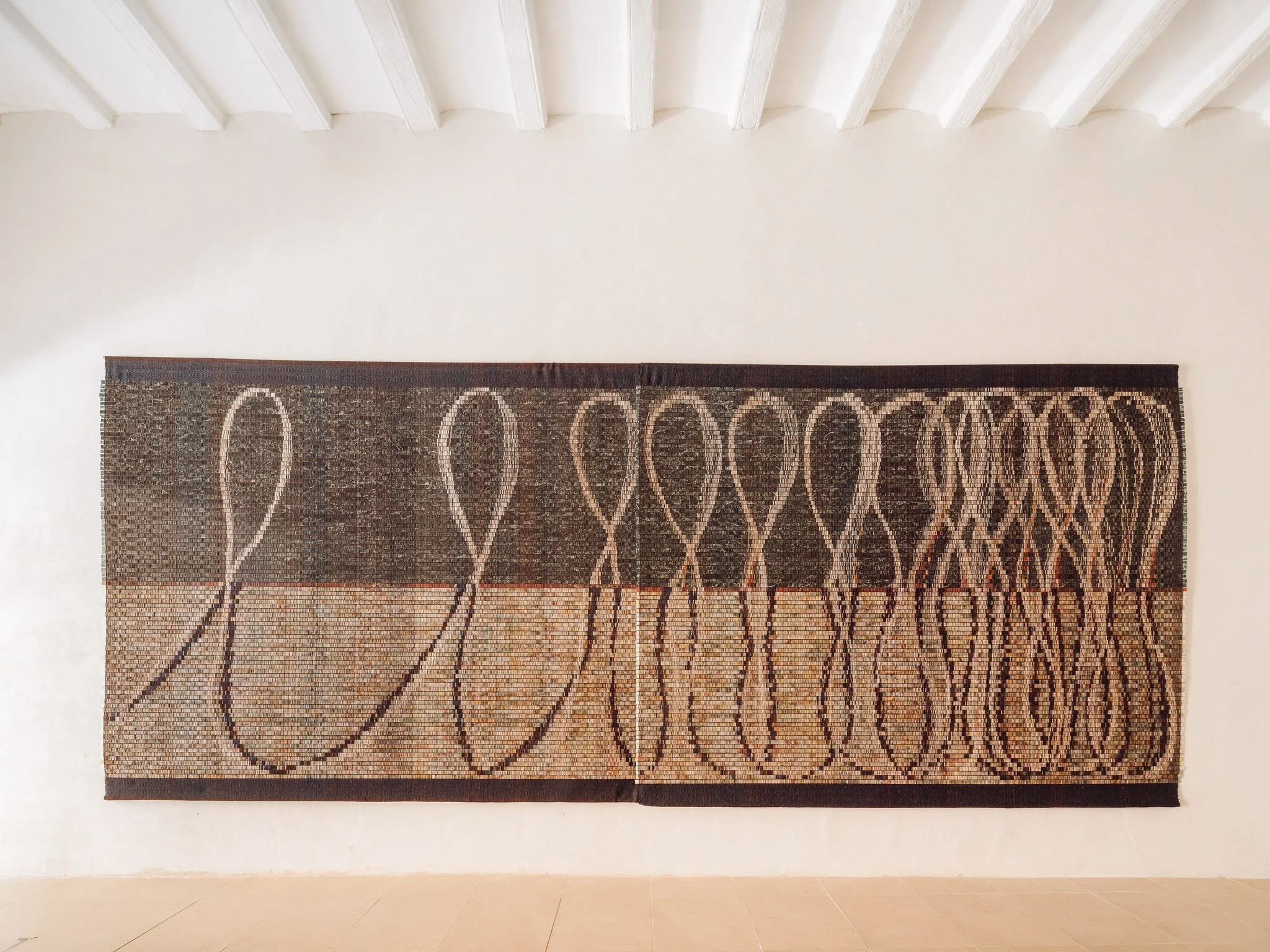
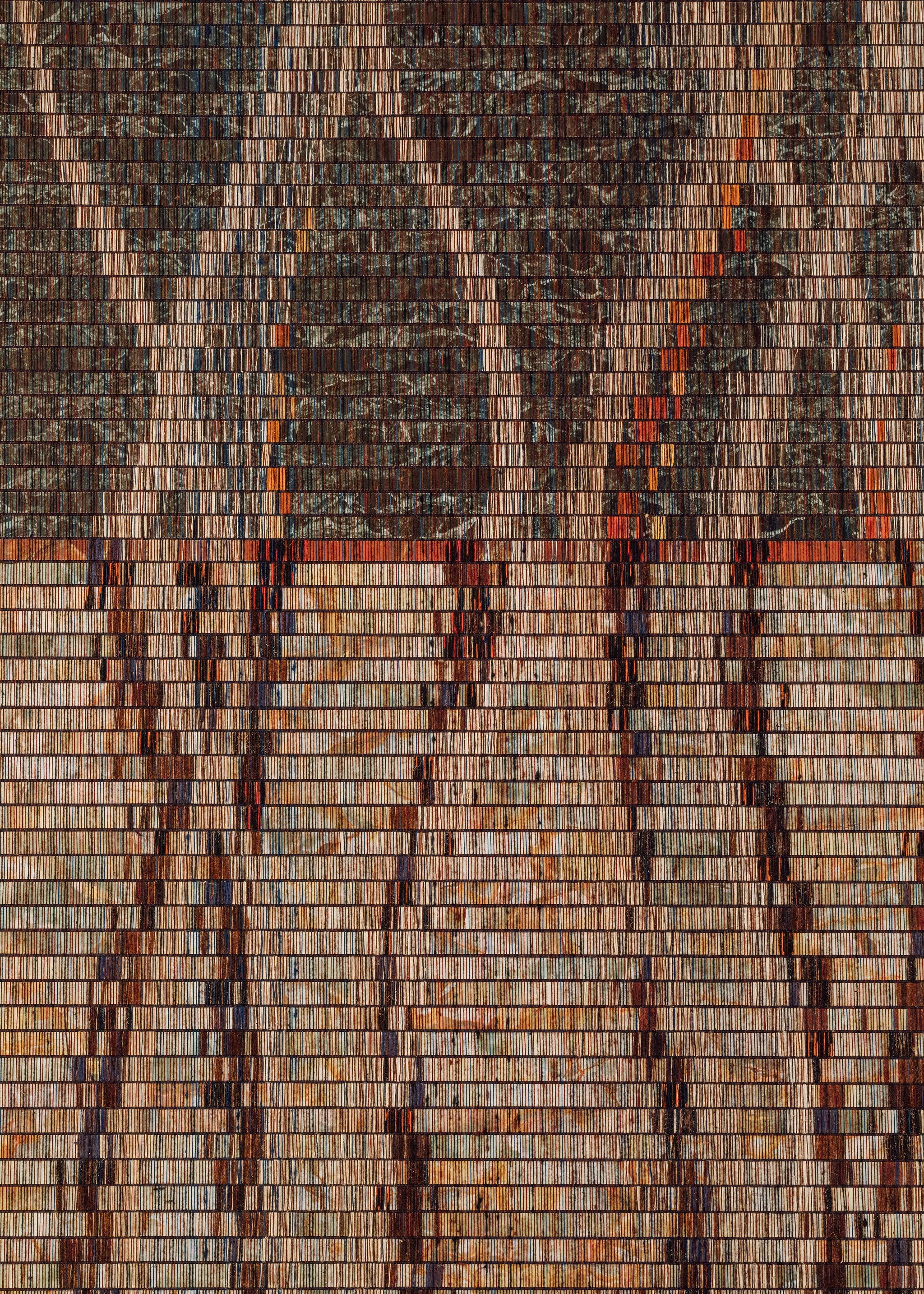
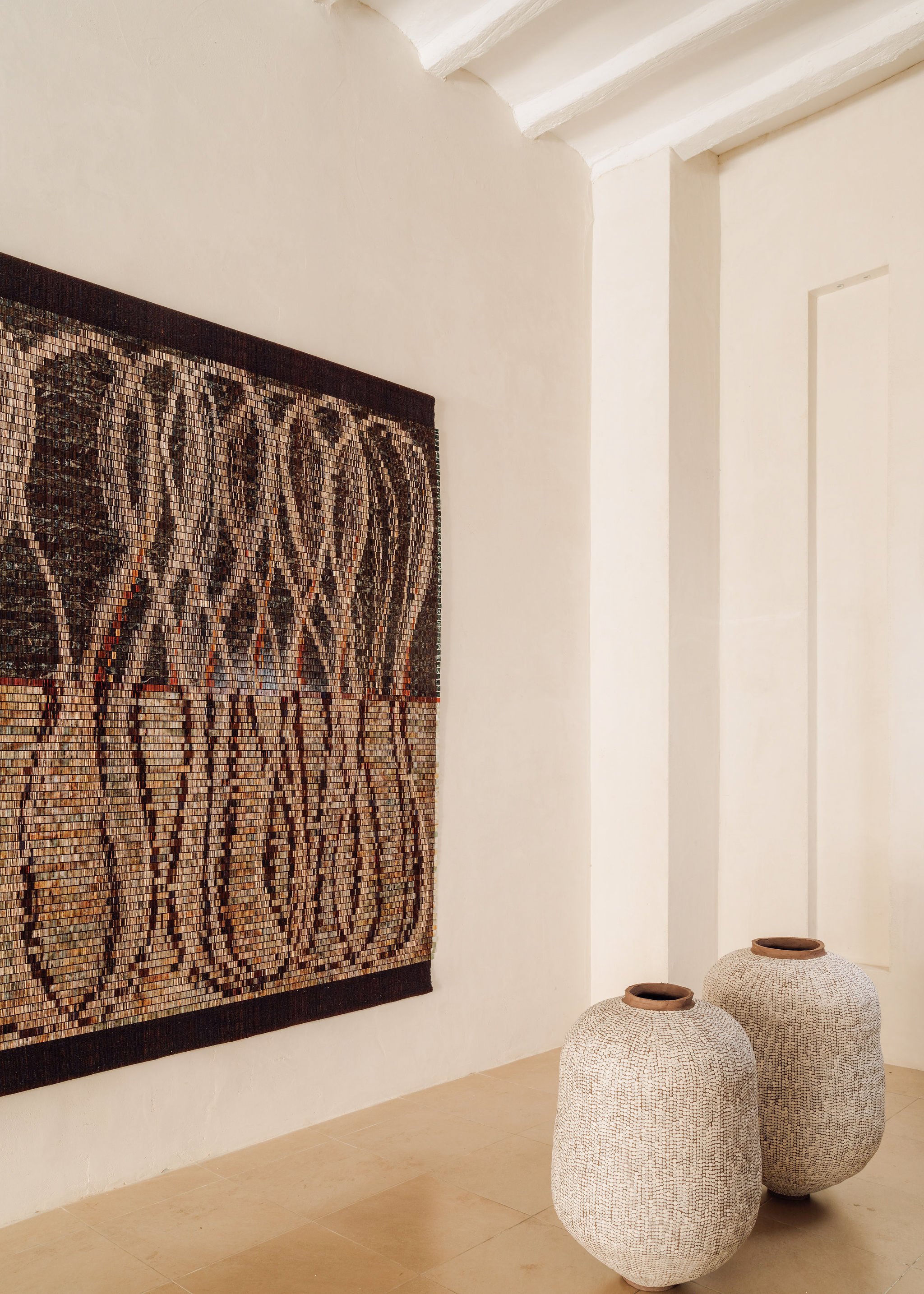
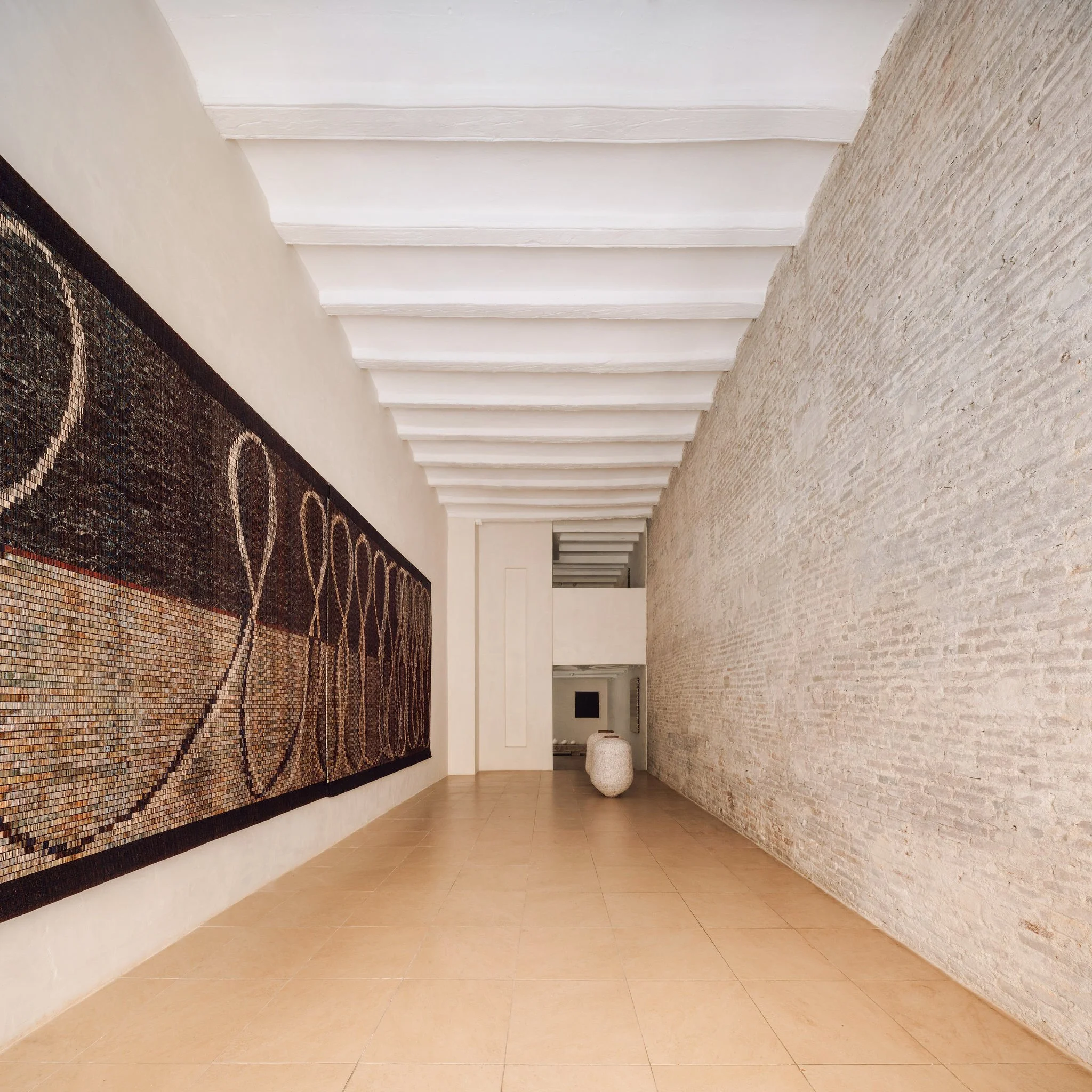
Borrowed from archaeology and geology, the title Strata refers to successive layers through which time becomes physically embedded. Across woven fibre, paper, earth, mineral pigment, clay and sculpture, the exhibition explores material not simply as a medium, but as a repository of memory. Through accumulation, reduction, erosion and transformation, each artist reveals how surfaces retain the traces of history, labour and lived experience. The exhibition is anchored by Set Going (1990), a monumental woven work by Danish artist
Ane Henriksen (b. 1951, Denmark), which received the Outstanding Award at the 1992 International Textile Fair at the Museum of Kyoto, Japan. Working at the intersection of textile, politics and memory, Henriksen employs a medium traditionally associated with comfort and protection to address questions of conflict, vulnerability and the human condition. Through subtle disruptions of the woven surface, cloth becomes both object and witness. Set Going forms part of a seminal body of works produced during the late 1980s and early 1990s, including the World Blankets / Winding Sheets series, in which cloth becomes both witness and memorial, carrying the traces of conflict, mourning and collective memory. As Henriksen writes, "I shout quietly"—a phrase that encapsulates the tension at the heart of her practice. Henriksen has exhibited internationally, including at Designmuseum Danmark, Dallas Contemporary and the Hermitage Museum, while her work is held in major public collections including Designmuseum Danmark, the Danish Arts Foundation and the Musée Jean Lurçat et de la Tapisserie Contemporaine, Angers.
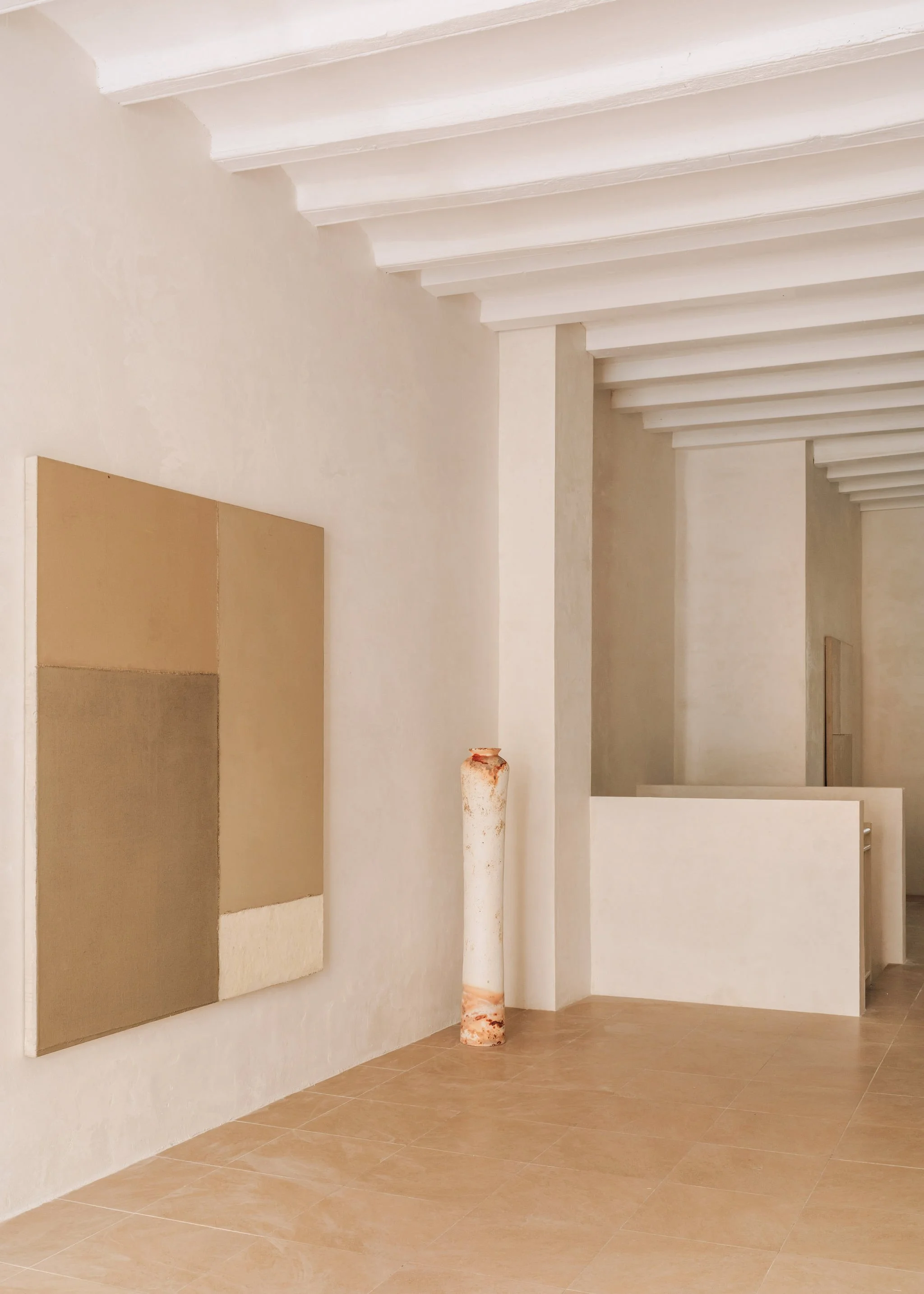
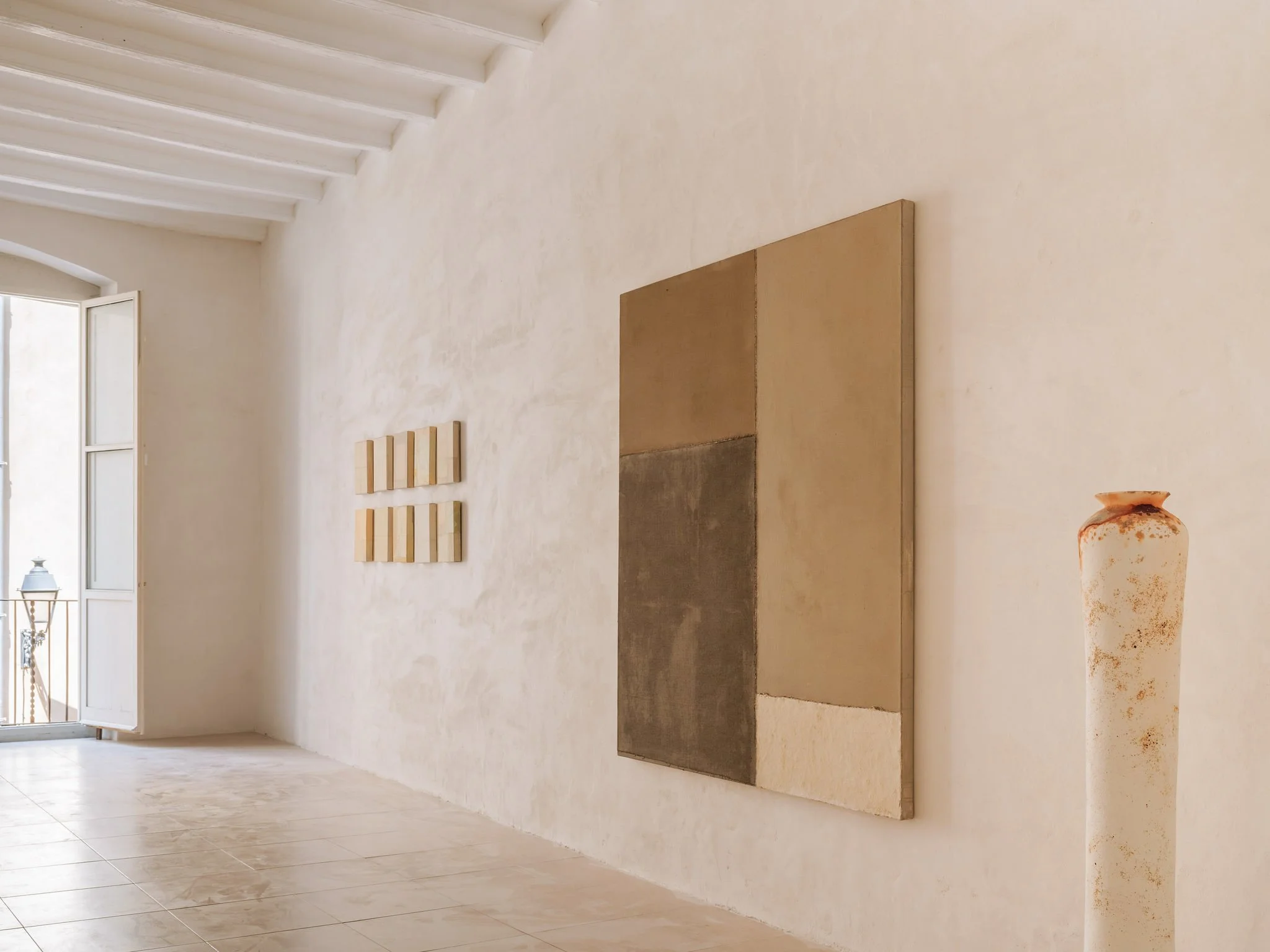
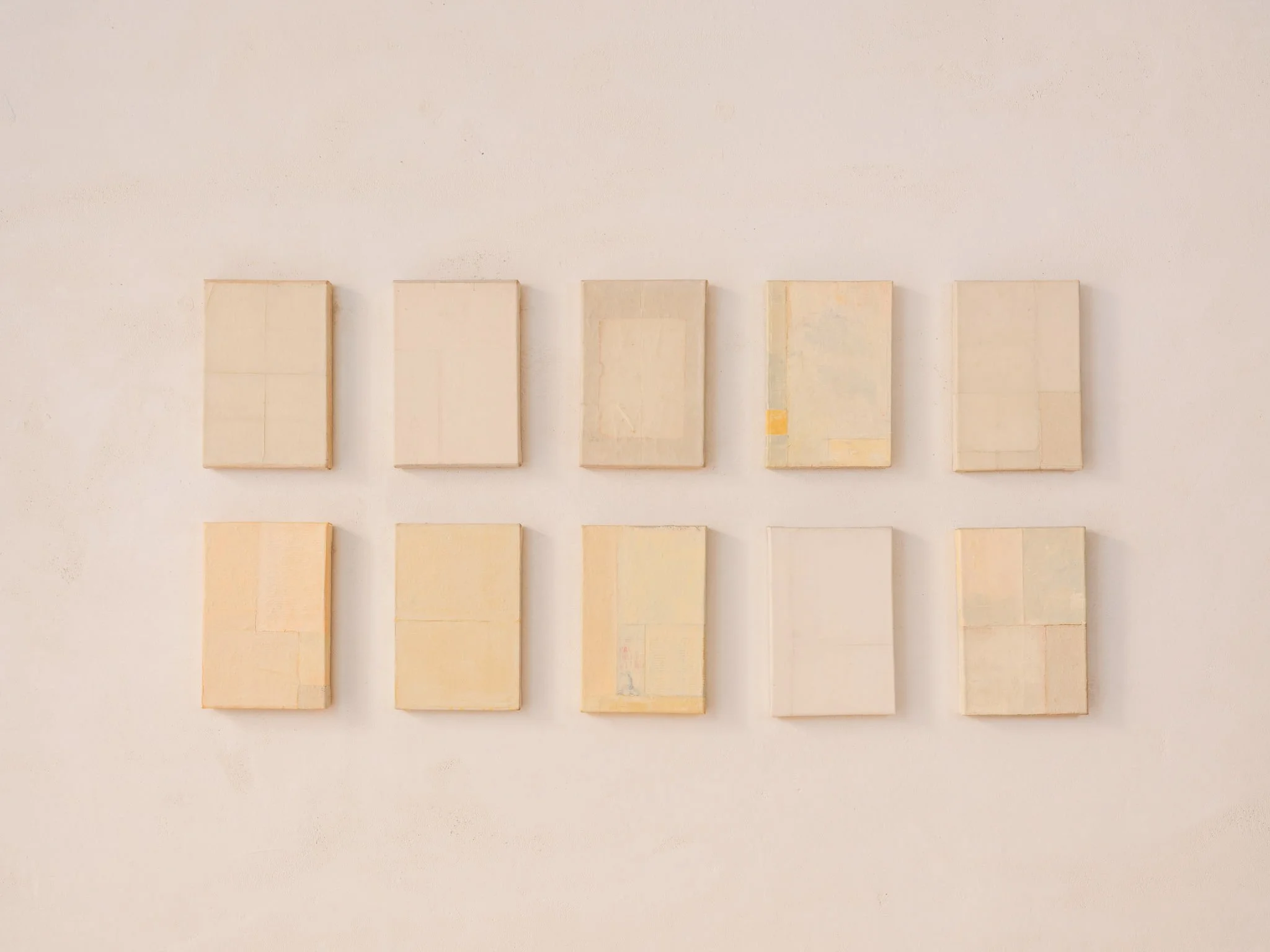
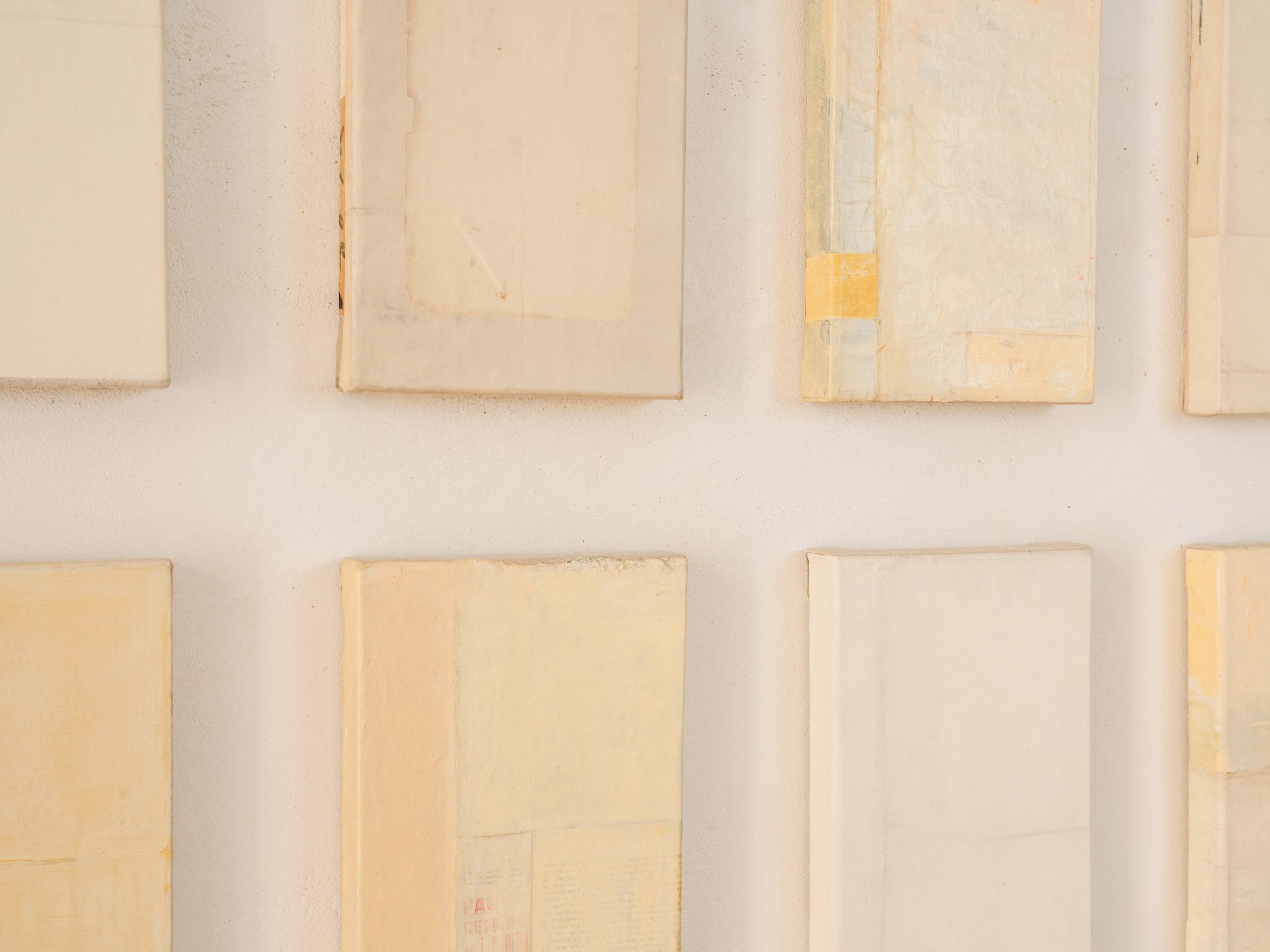
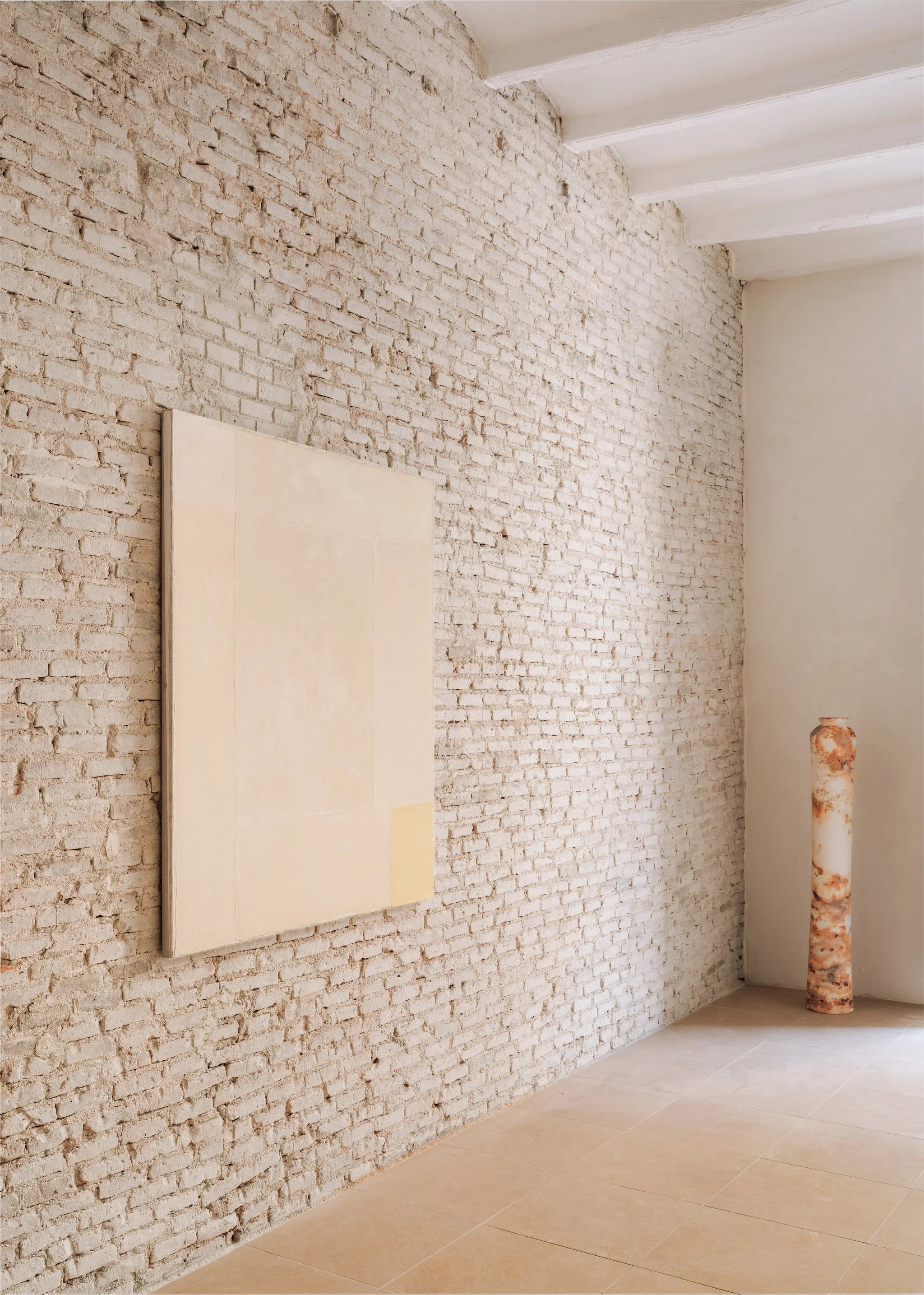
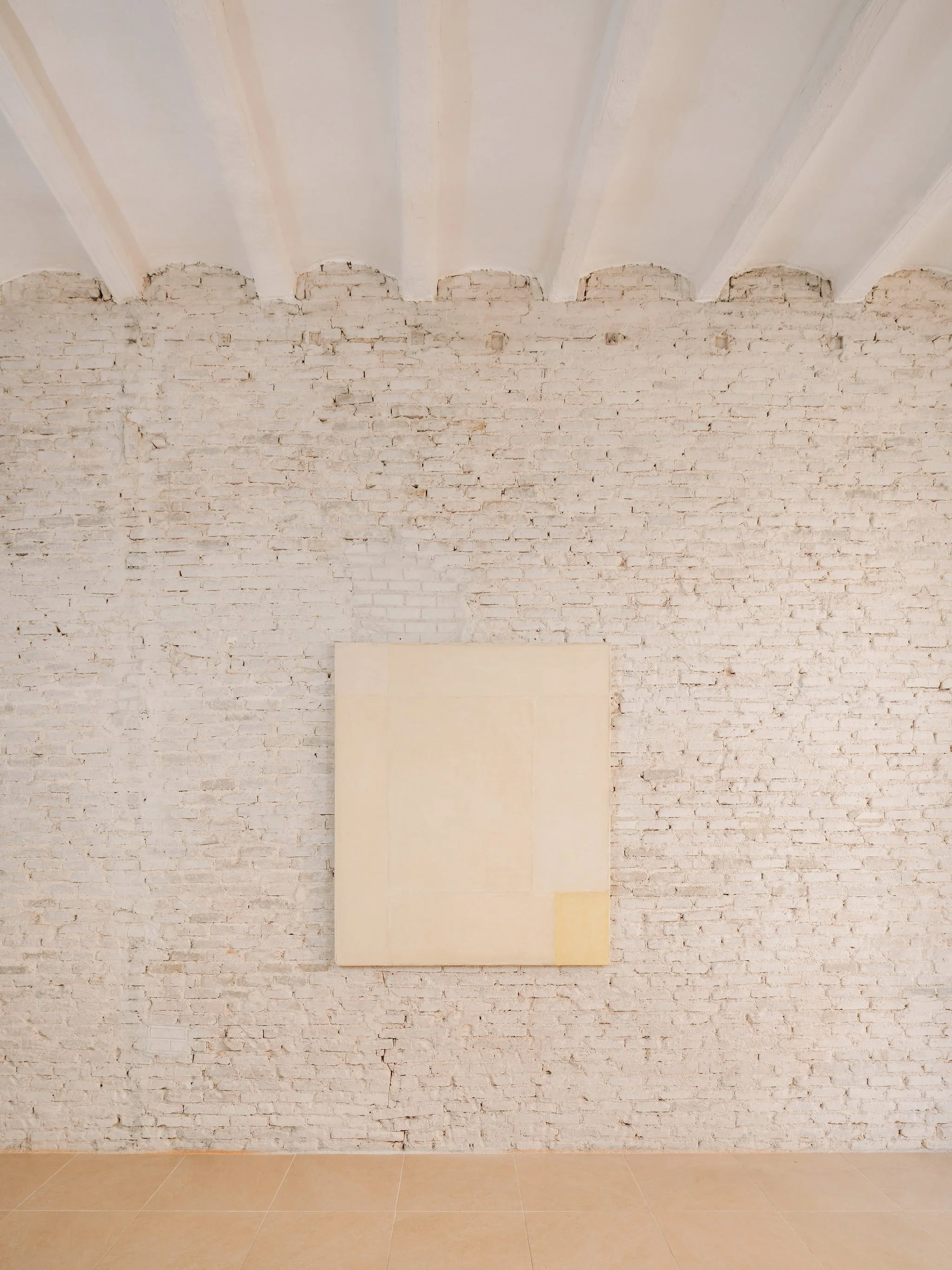
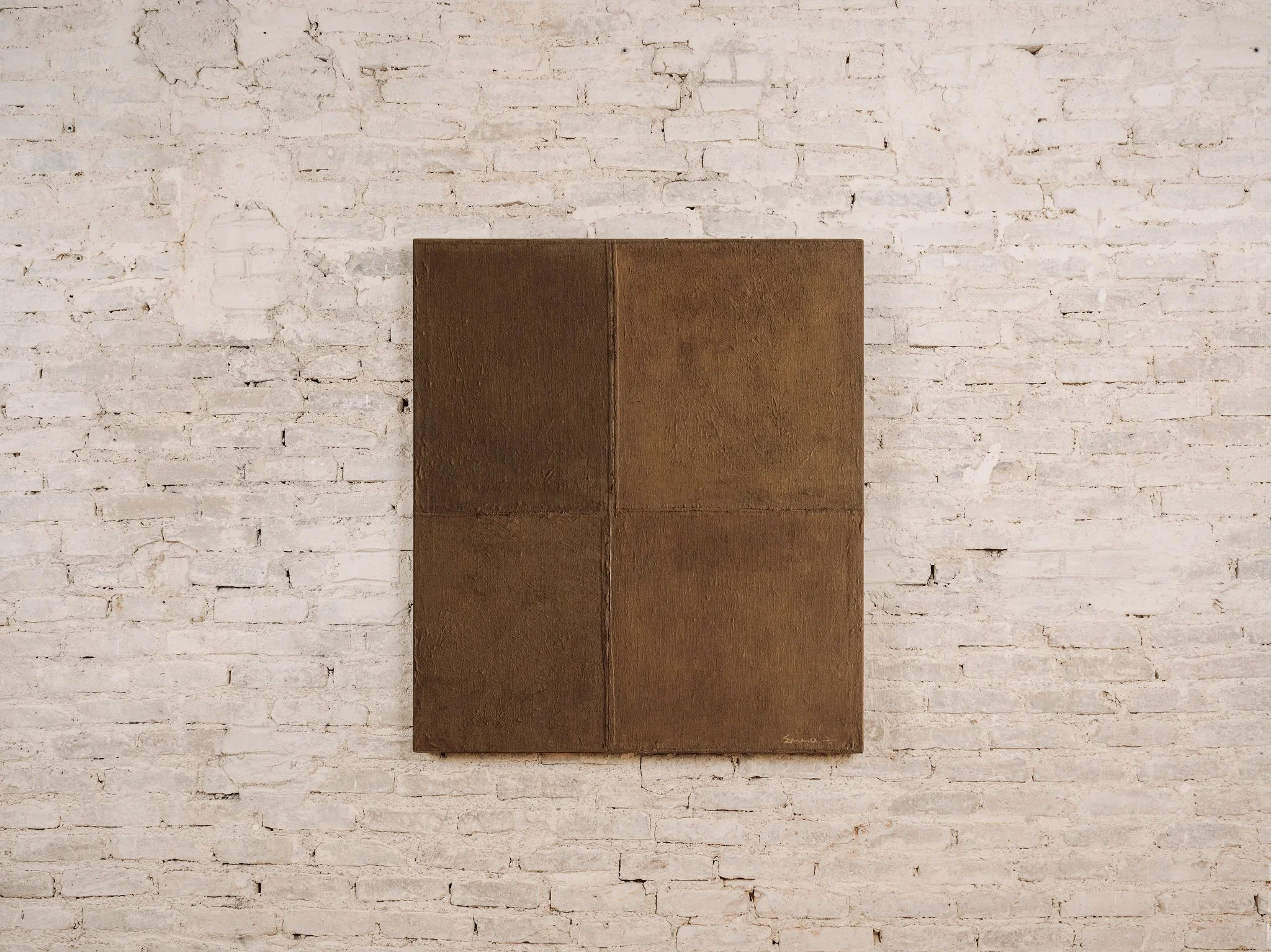
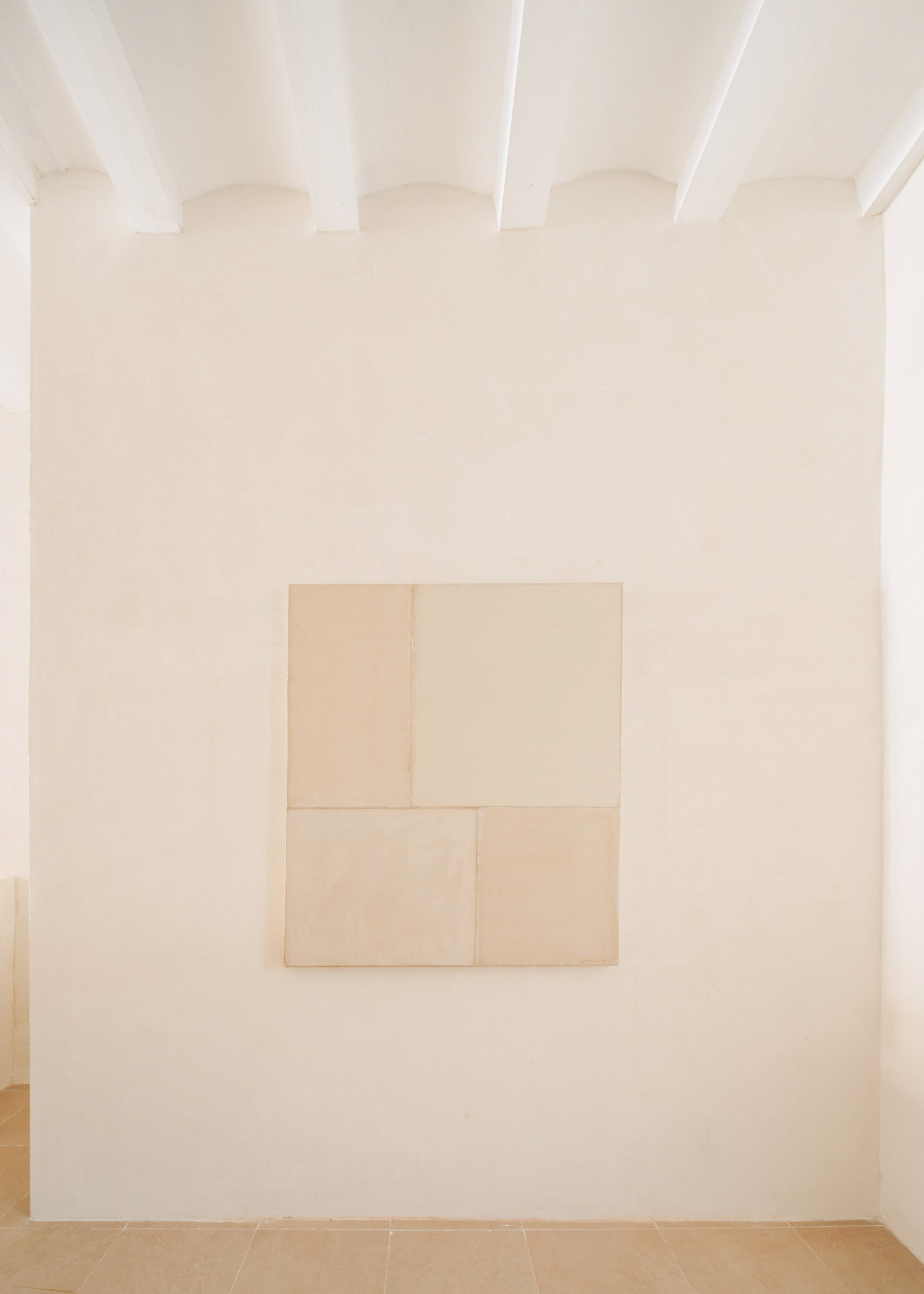
Marking her first major European presentation, Emma Zhang (b. 1982, Wuhan, China) transforms found books, archival documents and handmade paper into luminous, layered works that dissolve the boundaries between painting, sculpture and artefact. Rejecting overt narrative and resisting the imposition of fixed meanings, Zhang pursues an increasingly reduced visual language in which material itself becomes the primary subject. Built through painstaking accumulations of paper, each work evolves through cycles of layering, abrasion and concealment, allowing fragments of text, fibre and history to remain embedded beneath the surface.
At first encounter, the works possess an effortless stillness, their restrained palettes and reduced compositions appearing almost weightless. It is only through sustained looking that their complexity gradually reveals itself. Layers of handmade paper, fragments of typography, subtle tonal shifts and traces of previous lives begin to emerge, inviting the viewer to move beyond the image and into the material itself. Rather than constructing illusion, Zhang creates surfaces that reward prolonged attention, where meaning unfolds slowly through observation.
Working with antique books, weathered papers and discarded textiles, Zhang does not erase the histories contained within her materials but quietly absorbs them into new compositions. Inspired by the muted palette of earth, stone and weathered architecture, she reduces painting to its essential elements. Her compositions are less concerned with image than presence, where history is held within material rather than illustrated upon it. Through acts of concealment, recovery and reduction, each work exists in quiet tension between what is revealed and what remains hidden, transforming the painted surface into a place where memory is embedded rather than represented.
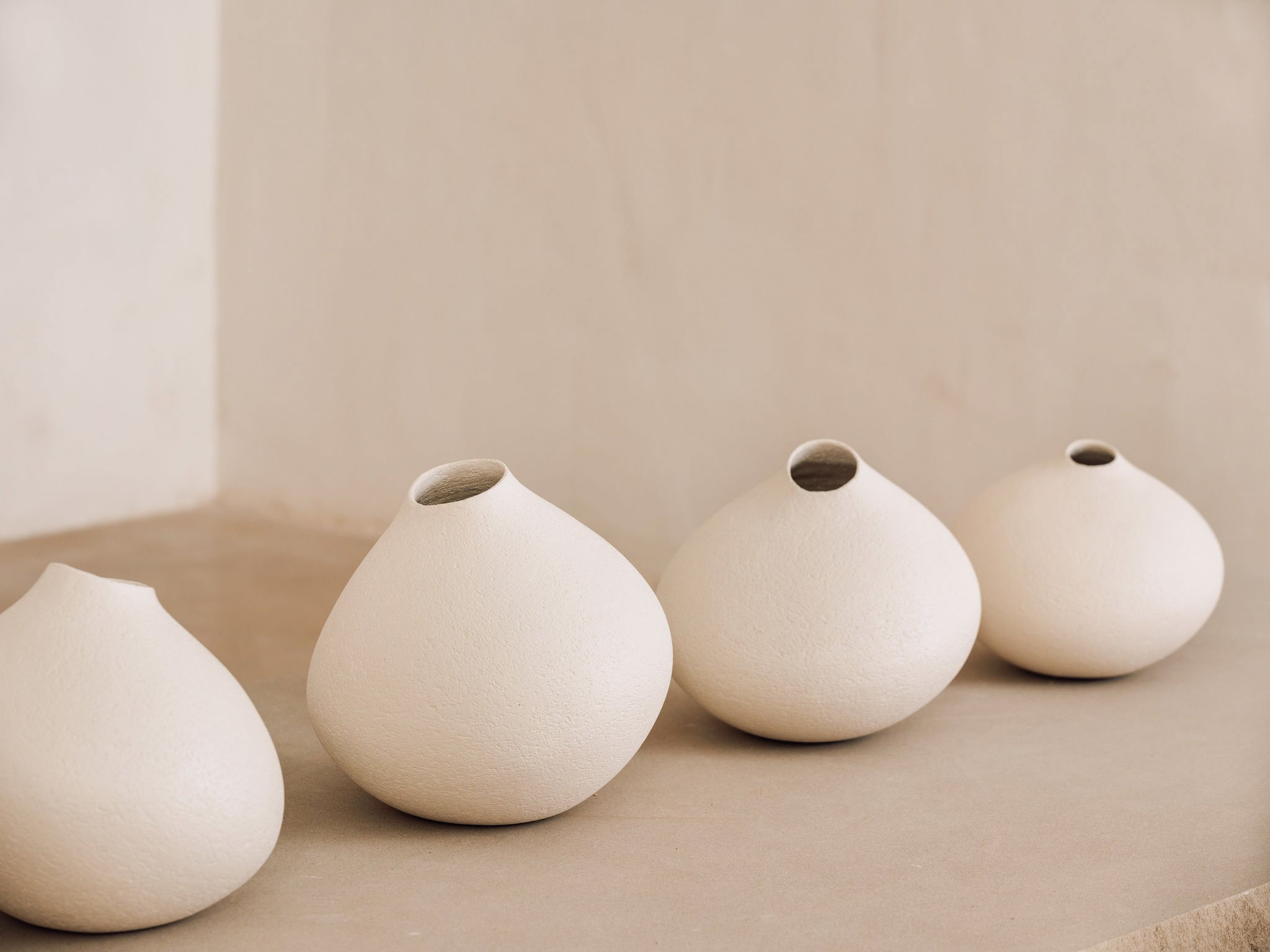
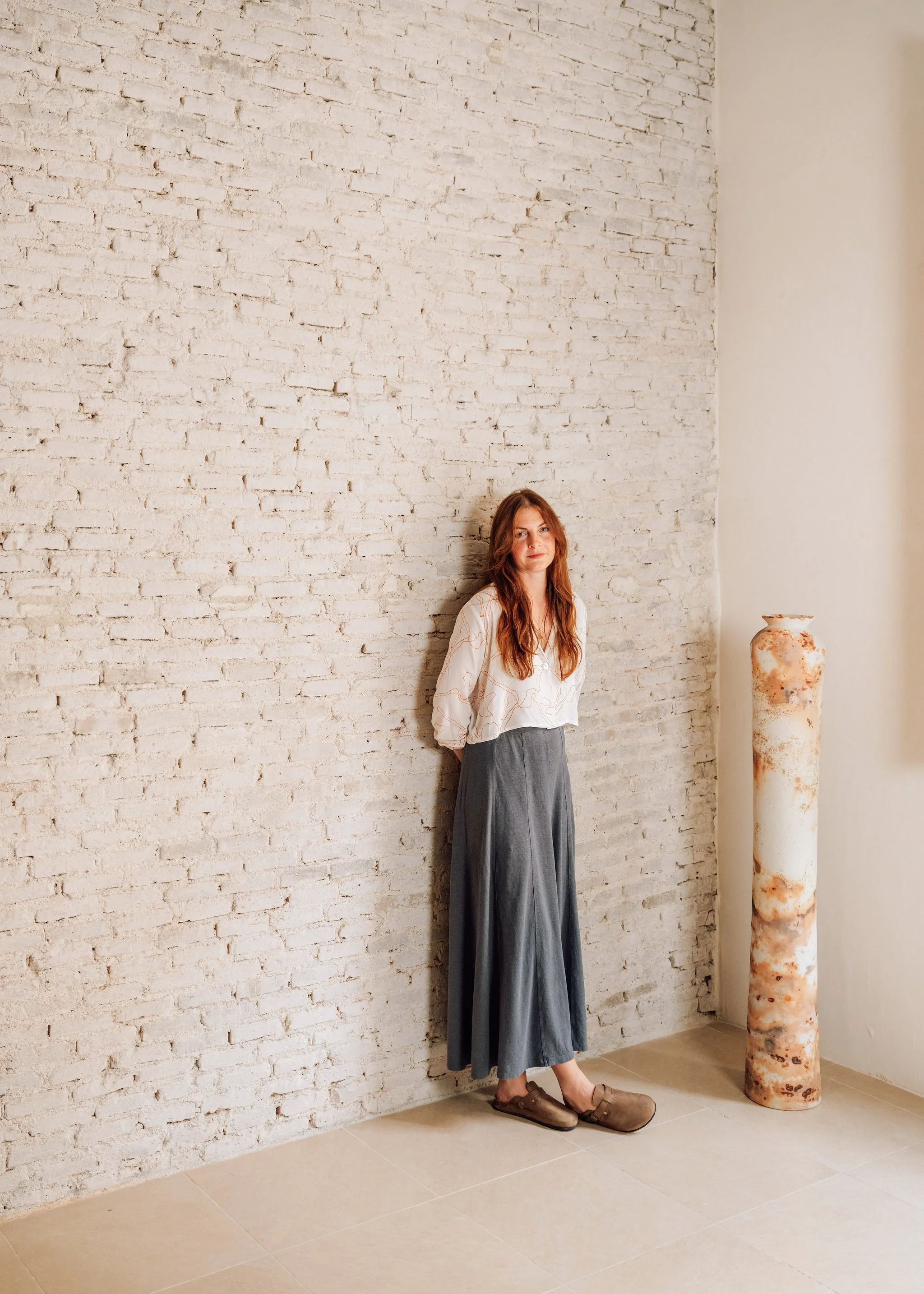
Rhian Jones (b. 1991, Wales) extends the exhibition’s exploration of material through an intensely physical ceramic practice rooted in the landscape surrounding her home in Llanelli, an industrial coastal town in South Wales. Her vessels are saggar fired in the kiln, where colour and surface emerge through gathered seaweed, wild vegetation, ash and the unpredictable chemistry of fire itself. Slow, labour-intensive and deeply attuned to natural cycles, her process embraces the dialogue between maker, material and fire, allowing transformation to unfold through collaboration with the elements rather than the imposition of control.
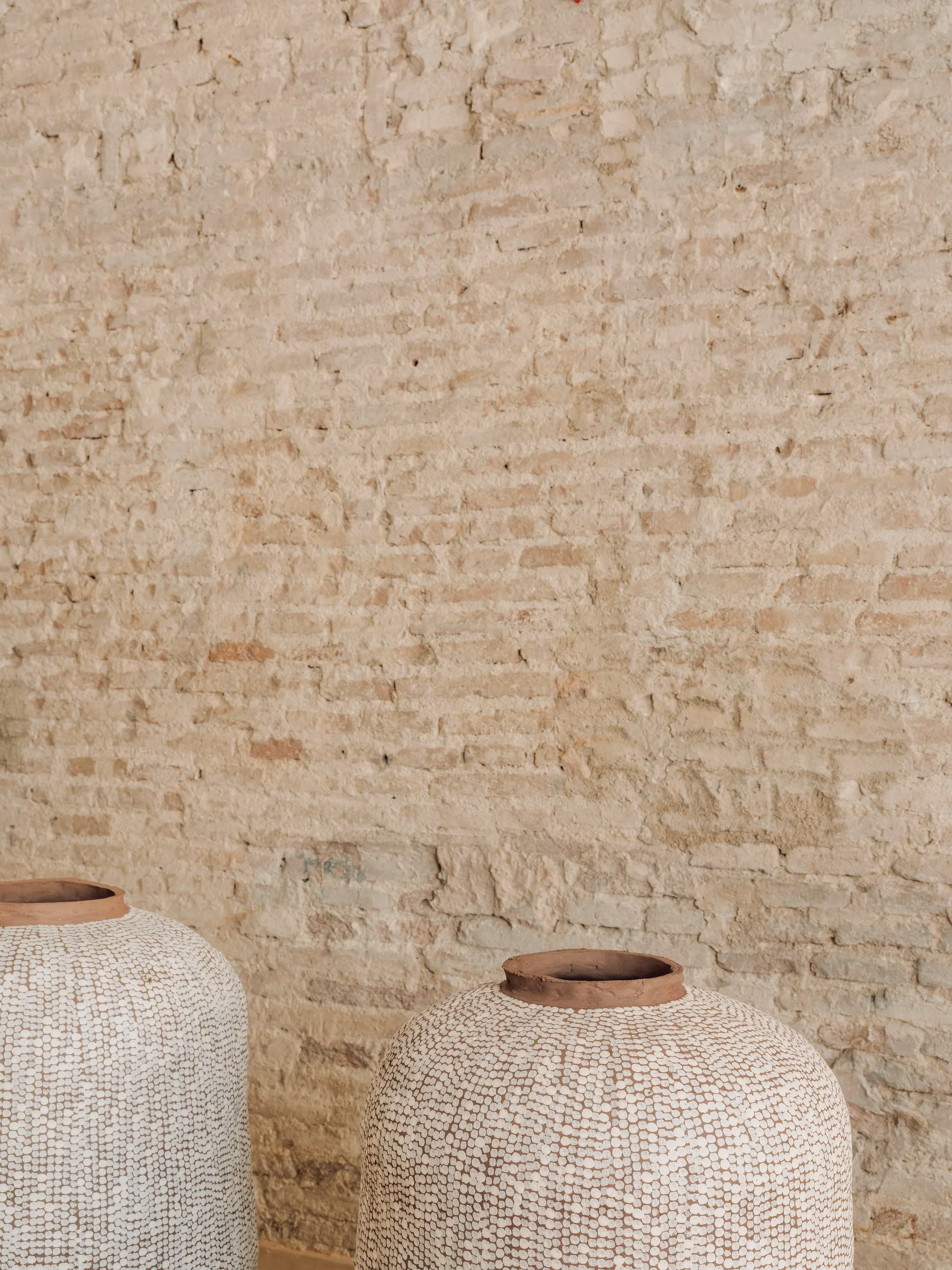
Produced during a period of mourning, Bare is a body of work that explores grief through absence, vulnerability and material transformation. The title reflects the feeling of being emotionally stripped back and exposed in mourning, while the restrained whiteness of the vessels gives visual form to this state of rawness. Their whiteness is neither symbolic nor decorative but material: a deliberate reduction that allows contour, surface and the traces of fire to carry their emotional weight. Smoke, ash and mineral deposits accumulate across each form like geological strata, recording the passage of the firing process as much as the artist’s hand.
Installed as a contemplative field, the works assume an almost architectural presence, existing somewhere between memorial and domestic ritual.
The exhibition includes a series of monumental hand-coiled vessels—Tall Vessel III, IV and V—their elongated forms recalling the enduring language of ancient vessels and archaeological fragments. Weathered through smoke, ash and mineral deposits, they possess the quiet authority of objects recovered from the earth rather than newly made.
Rooted in the Welsh landscape and shaped through an intimate, responsive relationship with natural materials, Jones’ vessels stand as enduring records of touch, labour and transformation—where the artist’s hand remains inseparable from the elemental forces that complete the work.
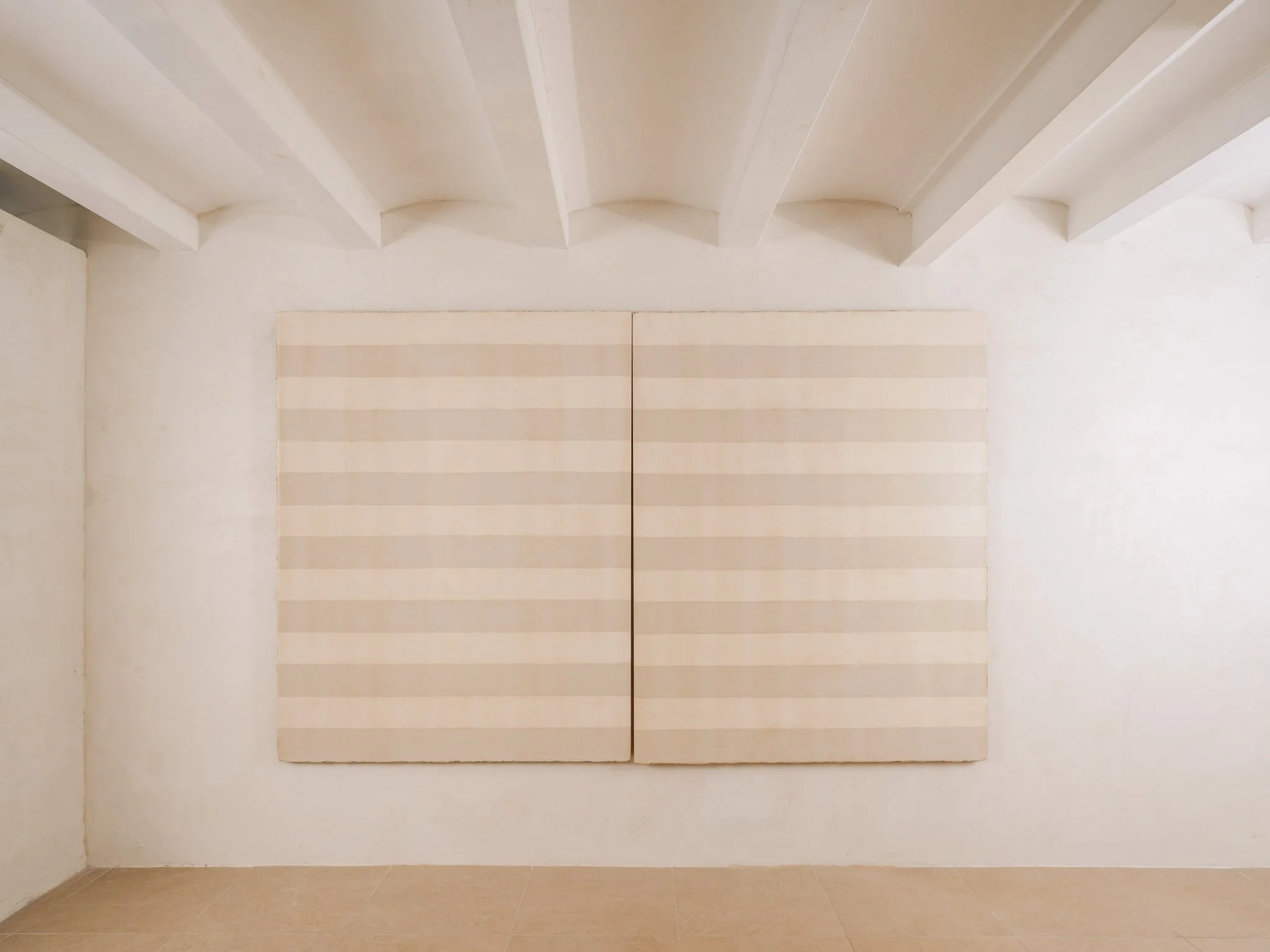
Terri Brooks (b. 1958, Australia) has spent more than three decades developing a practice rooted in the landscape surrounding Melbourne’s Yarra River and Merri Creek. For Brooks, painting begins with walking. Sustained encounters with place are distilled into a radically reduced visual language, where the line becomes less a descriptive device than a record of movement, orientation and repeated encounter with the landscape. The conceptual origins of Brooks’ Line Marker series can be traced to Richard Long’s A Line Made by Walking, where the line is understood not as representation but as the physical trace of an embodied encounter with place. Rather than depicting landscape, Brooks constructs an equivalent experience of it through rhythm, restraint and the measured discipline of the line.
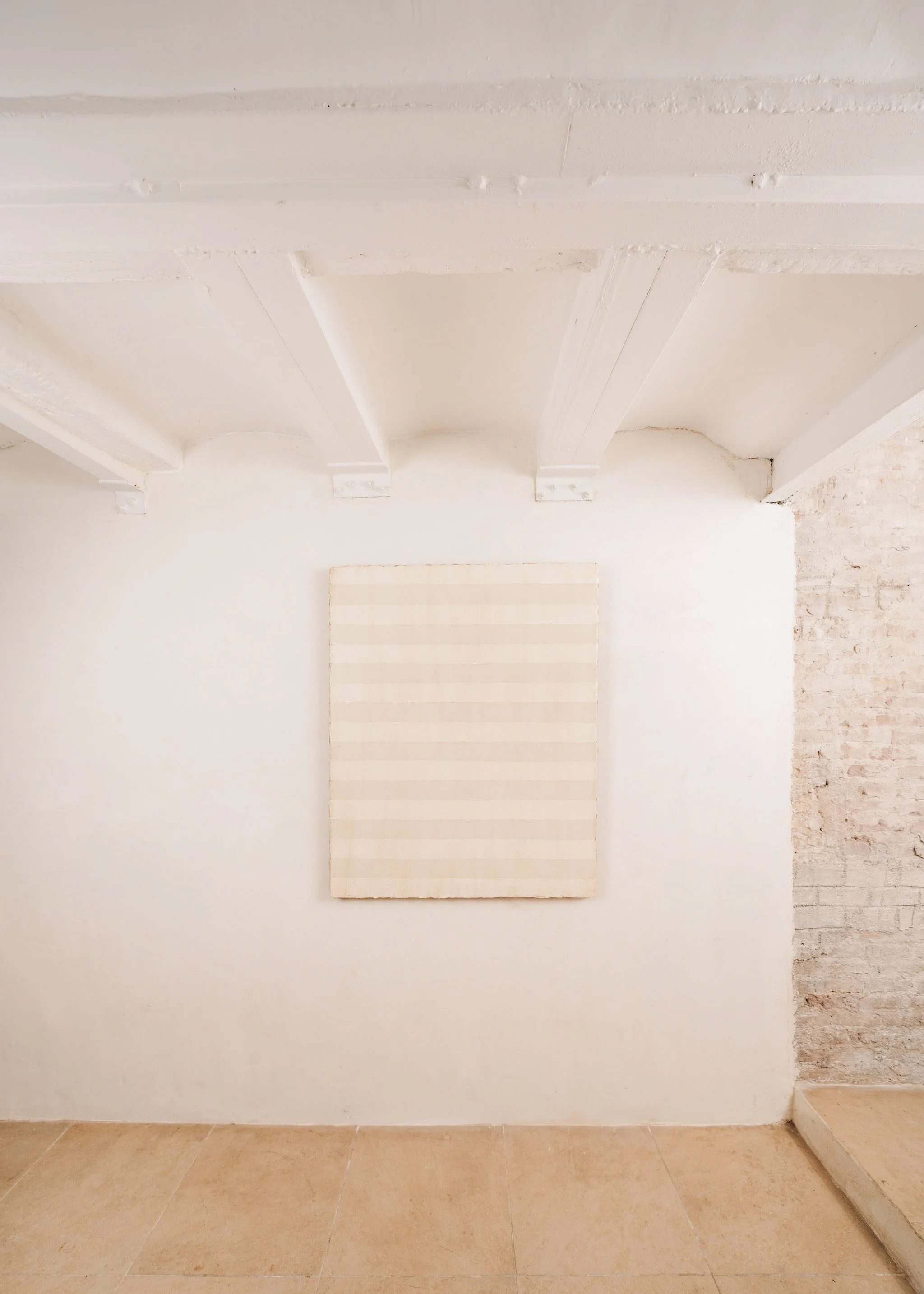
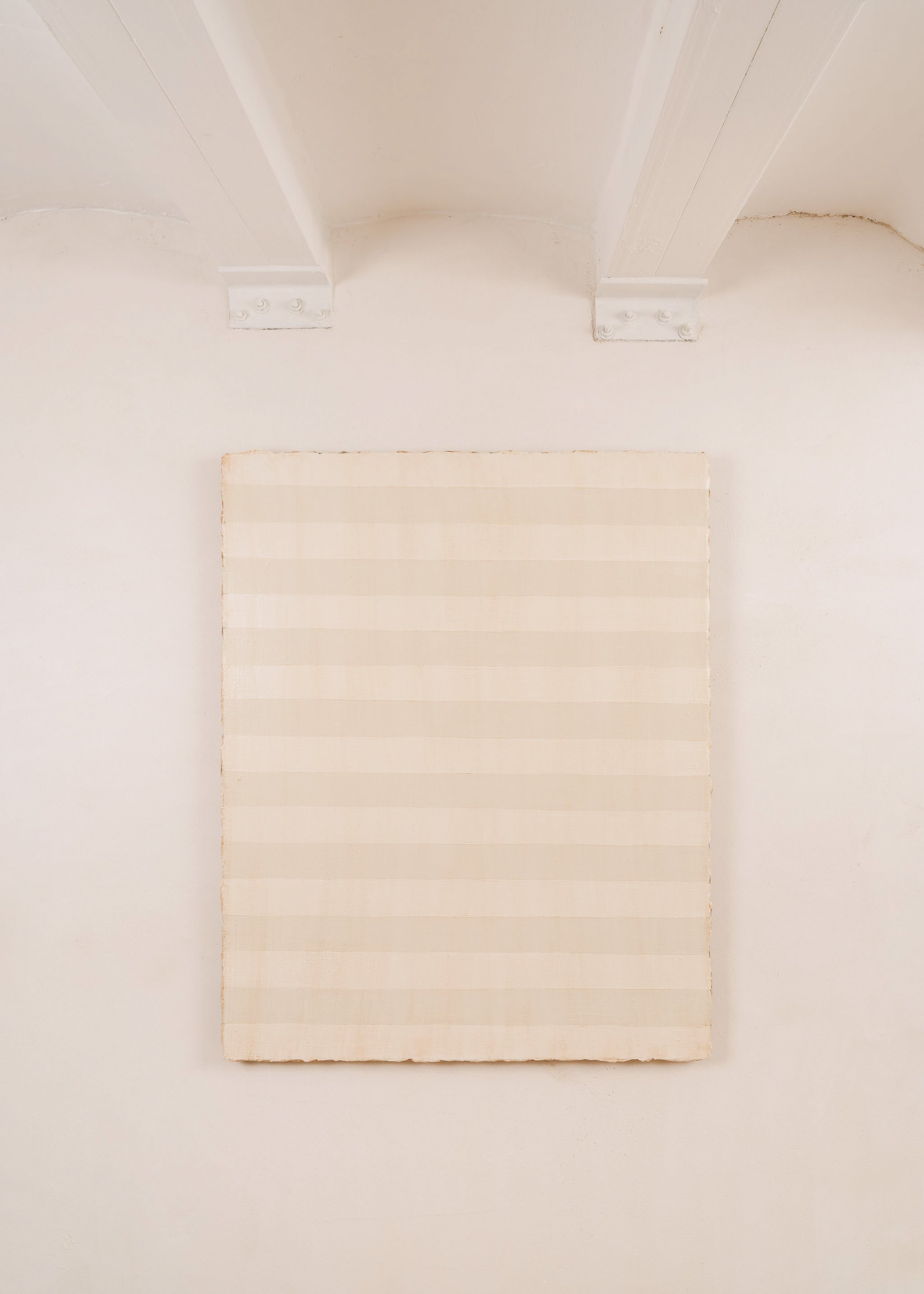
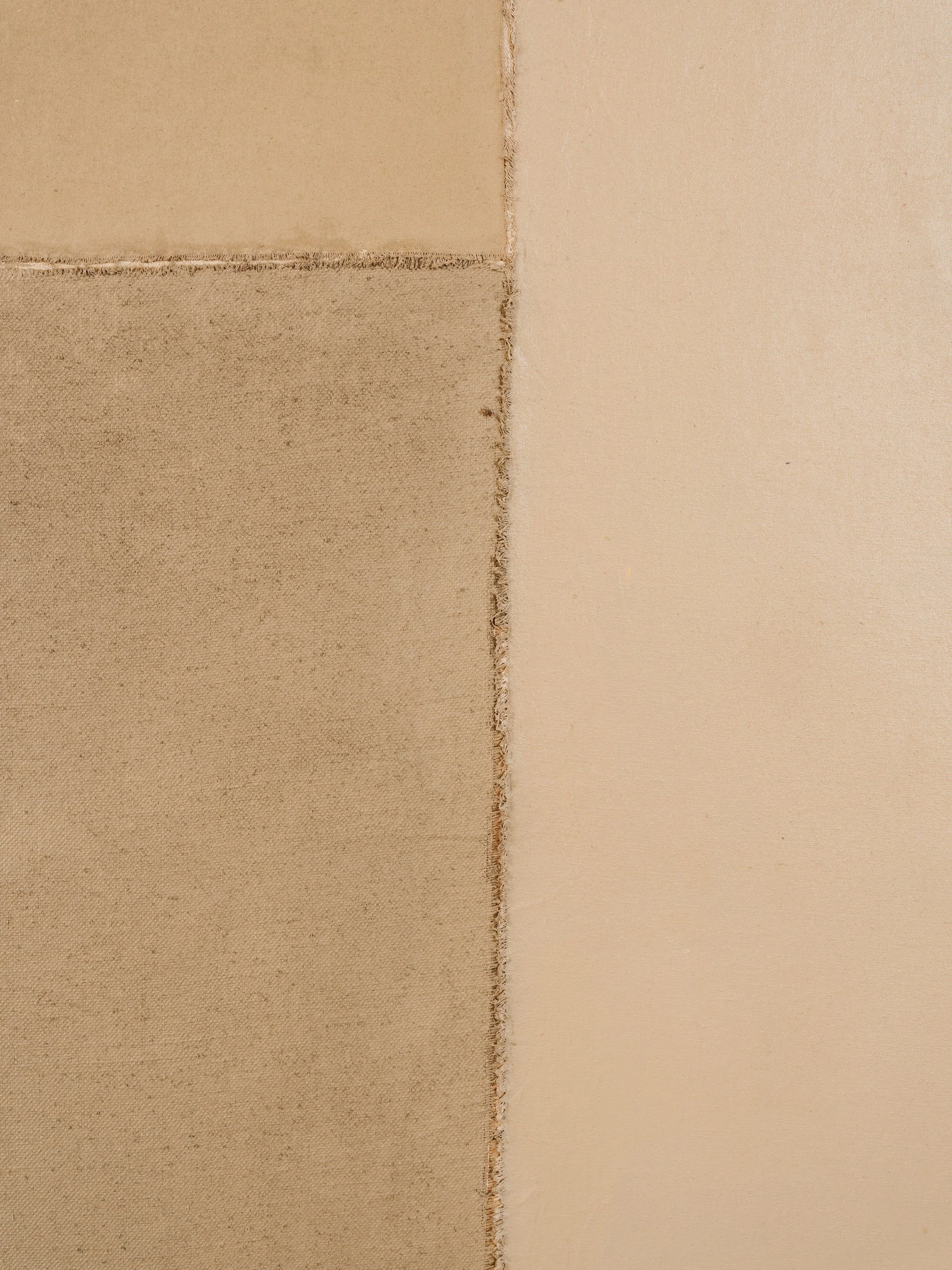
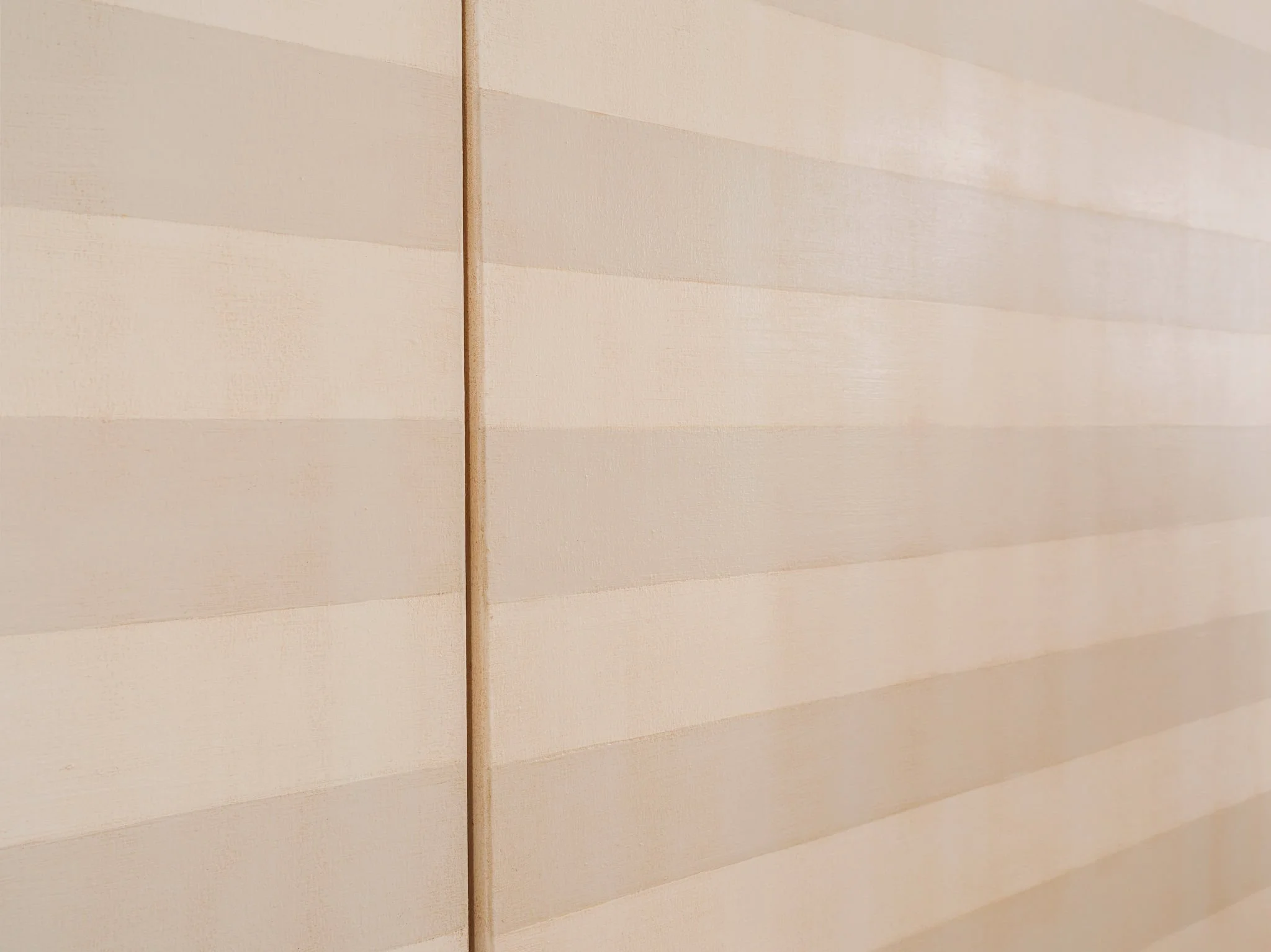
Constructed through successive layers of pigment, graphite and oil, Brooks’ paintings evolve through an extended process of addition, reduction and revision. Fine linear interventions traverse the surface with remarkable restraint, while subtle shifts in tone gradually reveal themselves only through prolonged looking. The exposed, hand-worked edges remain integral to each work, reinforcing the painting as a physical object rather than an illusionistic image. Brooks’ paintings recall a lineage of British modernism, where composition, material and objecthood are held in deliberate equilibrium, and beauty emerges through the careful calibration of proportion, rhythm and restraint.
Central to the exhibition is Titanium Stripes (2025), a significant development of Brooks’ earlier Line Marker series. Enlarged to an architectural scale, the work extends a single formal proposition into a painting of remarkable quietness and precision, where repeated bands dissolve into subtle tonal variation. Alongside these larger works, a series of intimate paintings and relief-like constructions further expand Brooks’ investigation into material and structure. Built through layered supports, exposed canvas, collage and painted surfaces that extend beyond the picture plane, these works occupy a compelling space between painting, relief and sculpture, revealing an artist whose understanding of composition is inseparable from the physical construction of the work itself. Across every scale, Brooks demonstrates an exceptional sensitivity to proportion, material and rhythm, allowing the simplest of visual means to carry extraordinary physical and emotional presence.
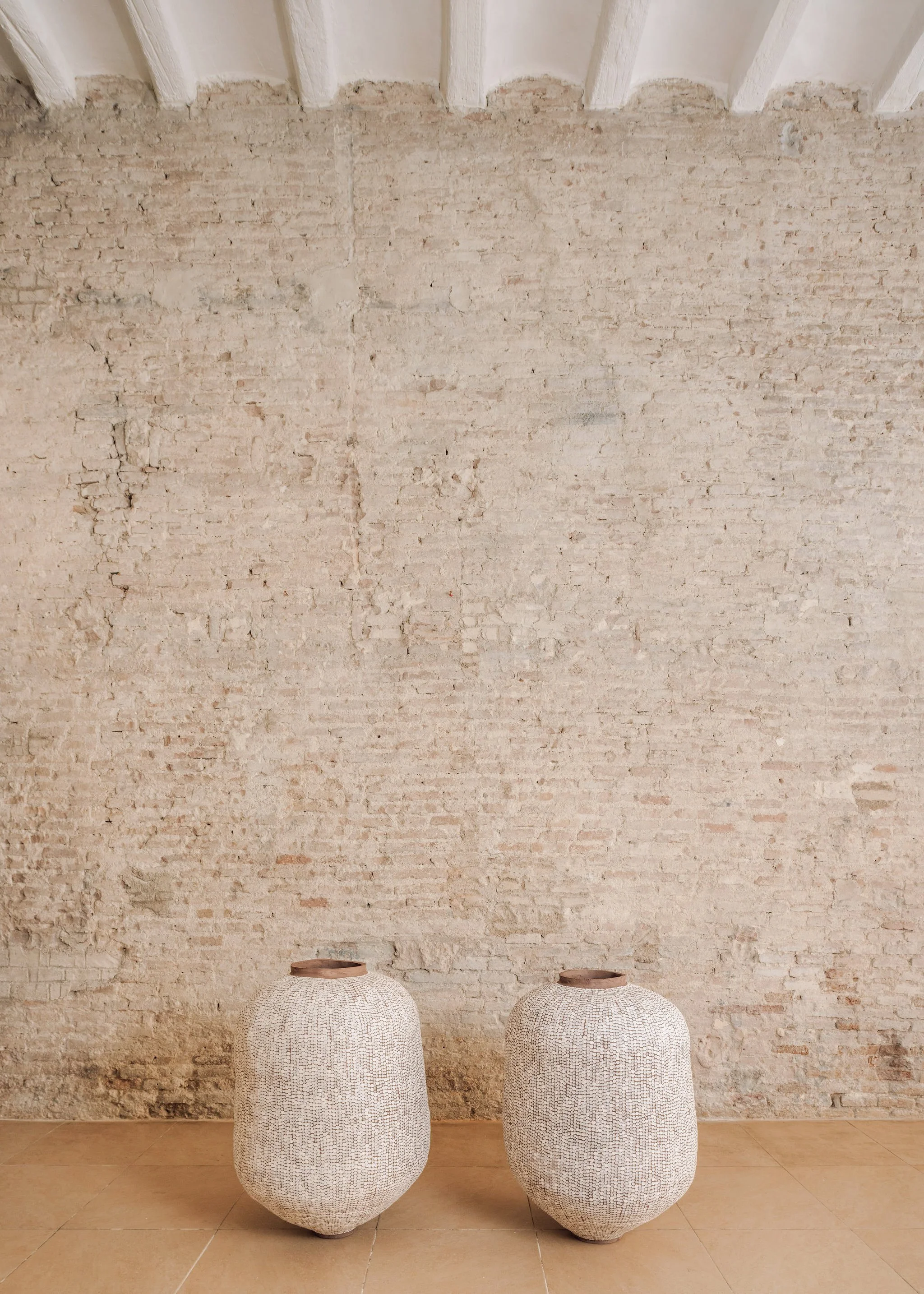
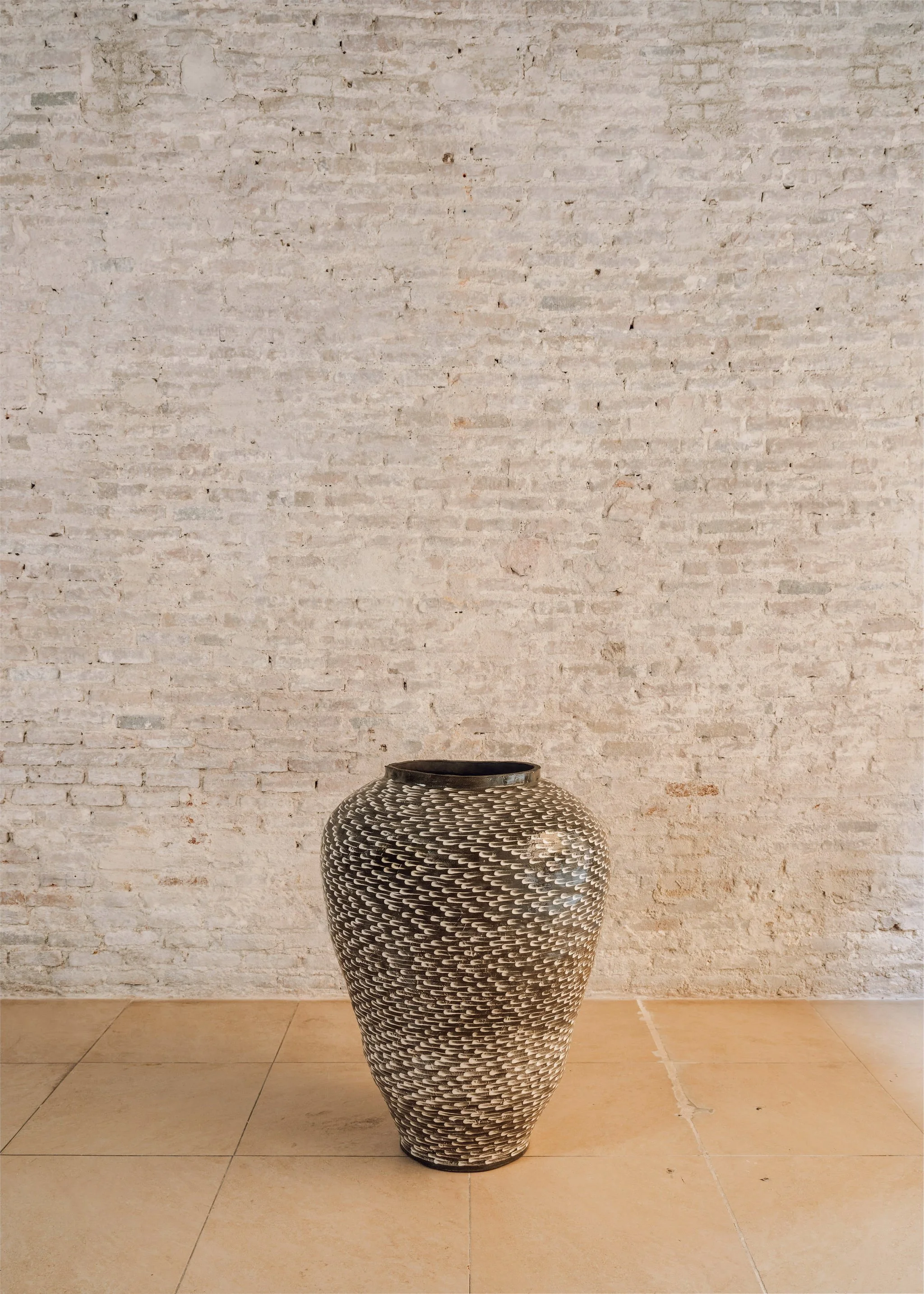
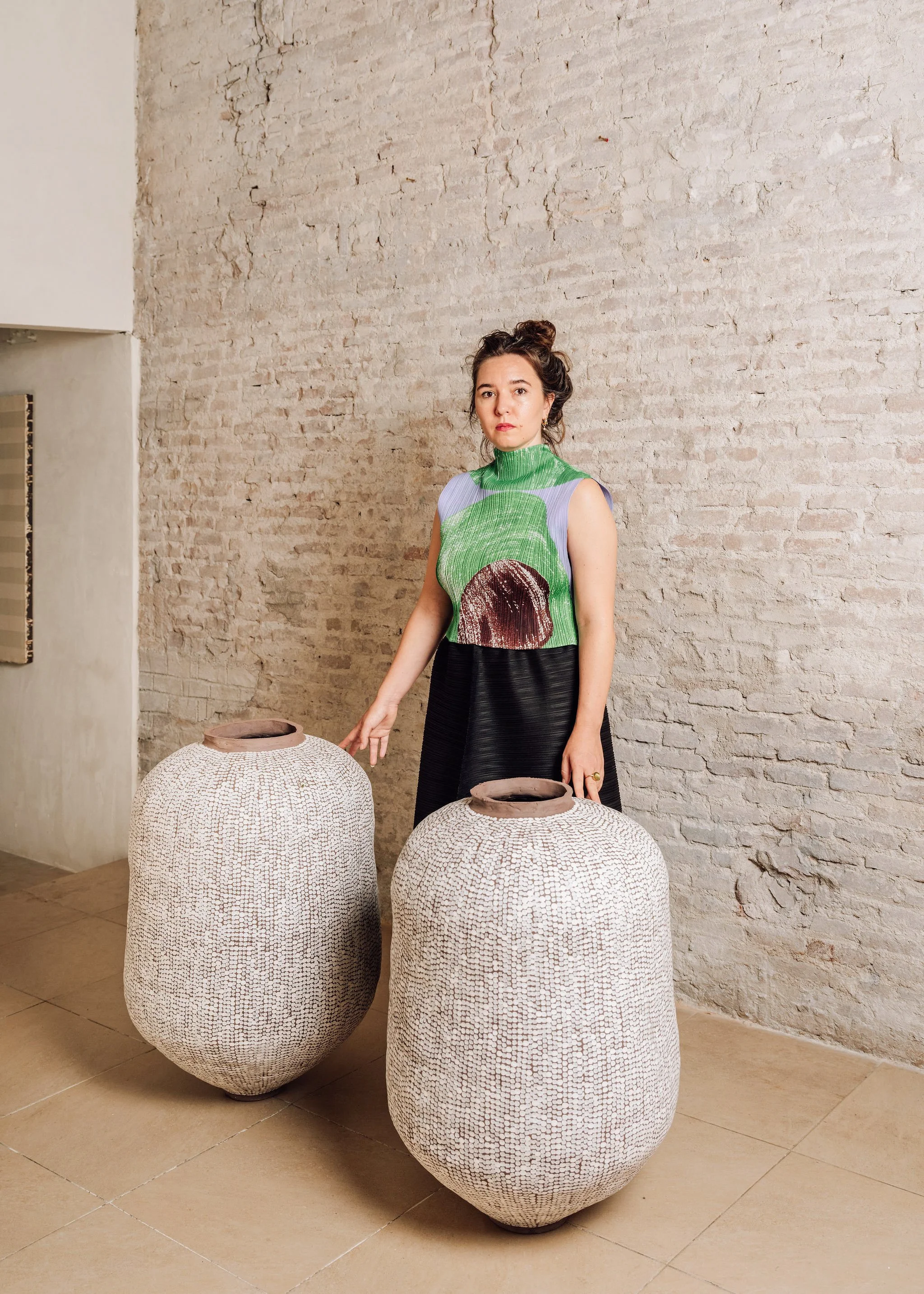
Marea Hildebrandt (b. 1989, Zurich) presents a new body of monumental hand-built ceramic vessels that marks a significant expansion of her practice in both scale and ambition. Trained in painting and textiles before turning to ceramics, Hildebrandt works at the threshold between painting and sculpture, approaching the vessel as a three-dimensional ground upon which surface is constructed through the disciplined repetition of the painted mark. Reaching close to two metres in height, these works push both the physical and technical limits of her practice, embracing the inherent uncertainty of the kiln, where scale introduces an element of risk beyond the artist’s control. Constructed using the coil-building method, each vessel is repeatedly fired before being meticulously painted and etched with thousands of rhythmic marks applied over days of sustained labour. The resulting surfaces are not decorative but built through a process of continual return, where the painted mark becomes a constructive rather than ornamental act. In this slow, highly physical practice, making becomes a form of concentrated attention, allowing the intelligence of the hand to guide the work as much as conscious intention.
Oscillating between painting, textile and sculpture, Hildebrandt transforms pattern into structure. Rather than describing the vessel, the painted mark constructs it. Each mark is less a decision than a continuation, revealing repetition as a discipline of attention through which the work gradually comes into being. Monumental yet quietly contemplative, these vessels stand as compelling records of sustained labour, material risk and the enduring intelligence of the hand.
A similarly elemental sensibility defines the work of Dakyo Oh (b. 1991, Busan, South Korea). Working directly with earth, sand, charcoal and mineral pigments, Ho creates deeply tactile paintings through gradual processes of accumulation, erosion and excavation. Rather than representing nature, her works emerge from it, allowing the behaviour and materiality of the earth itself to determine the image. Presented in Strata, the elongated Pipe VII, created from black sand and animal glue on hemp cloth, forms a grounding presence within the exhibition. Its dense, velvety black surface possesses a remarkable material gravity, anchoring the surrounding works while extending Ho’s investigation into flow, erosion and connection. Inspired by water slowly carving channels through mountain stone, the work considers landscape as a continuous system rather than a fixed image. Like the waterways that shape the land, its vertical composition suggests movement beyond its own boundaries, existing as one fragment within a larger, ever-expanding whole. Through an uncompromising economy of form and material, Ho reduces painting to its elemental essence. Here, material itself carries the image, allowing the work to emerge from natural processes rather than describe them. The result is a practice of remarkable restraint, where the quiet physical presence of the work reveals the profound complexity of the natural world.
Borrowed from archaeology and geology, the title Strata refers to the successive layers through which landscapes, objects and histories are formed and understood. Across painting, textile, sculpture and ceramics, each artist approaches material as a site of discovery rather than description. Whether working with earth, paper, pigment, clay or fibre, their practices reveal meaning through sustained acts of making, where reduction, repetition and excavation become ways of seeing as much as methods of production. Together, these six artists remind us that the deepest understanding is rarely immediate—it is uncovered, layer by layer.