Ane Henriksen
Ane Henriksen (b. 1951, Denmark) is one of Scandinavia's foremost contemporary textile artists, internationally recognised for expanding the expressive and conceptual possibilities of hand weaving. Working within the traditions of Scandinavian shaft weaving while continually testing their limits, Henriksen transforms cloth from a functional object into a profound artistic medium capable of holding memory, history and human experience. Her works are distinguished by extraordinary technical precision, material innovation and a remarkable economy of means, demonstrating how the language of weaving can speak with both visual brilliance and quiet emotional force. As the artist writes, "I shout quietly."
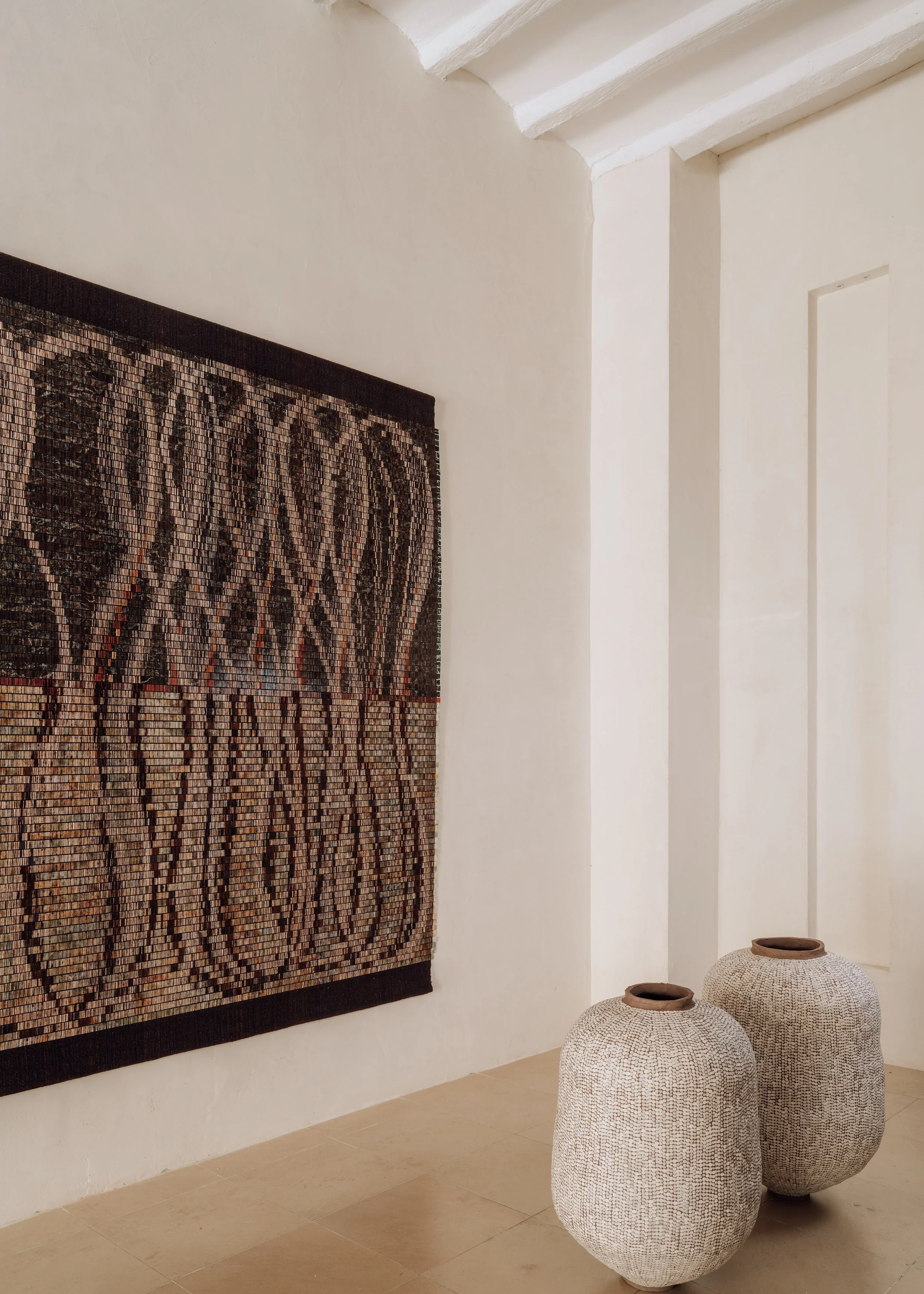
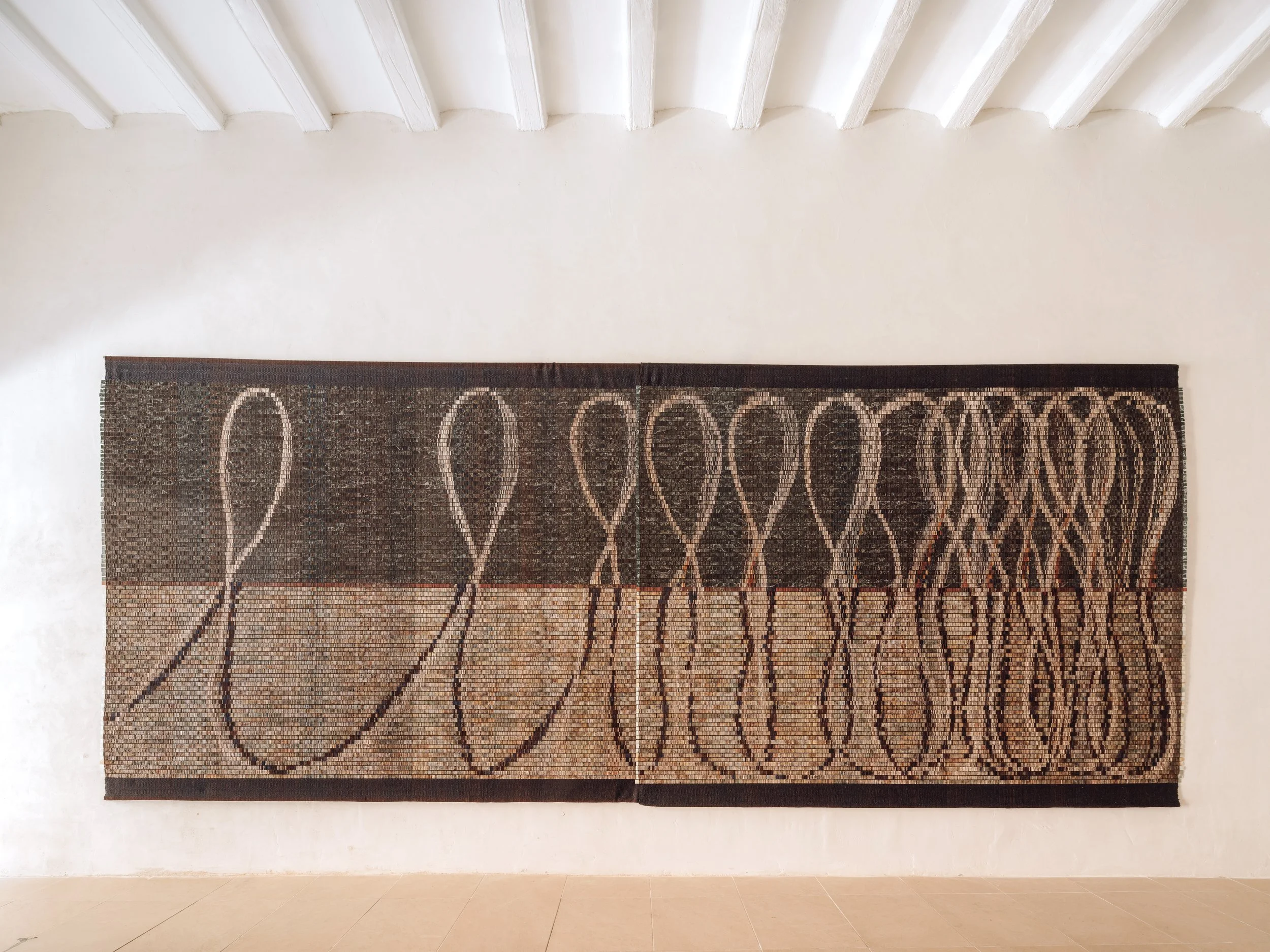
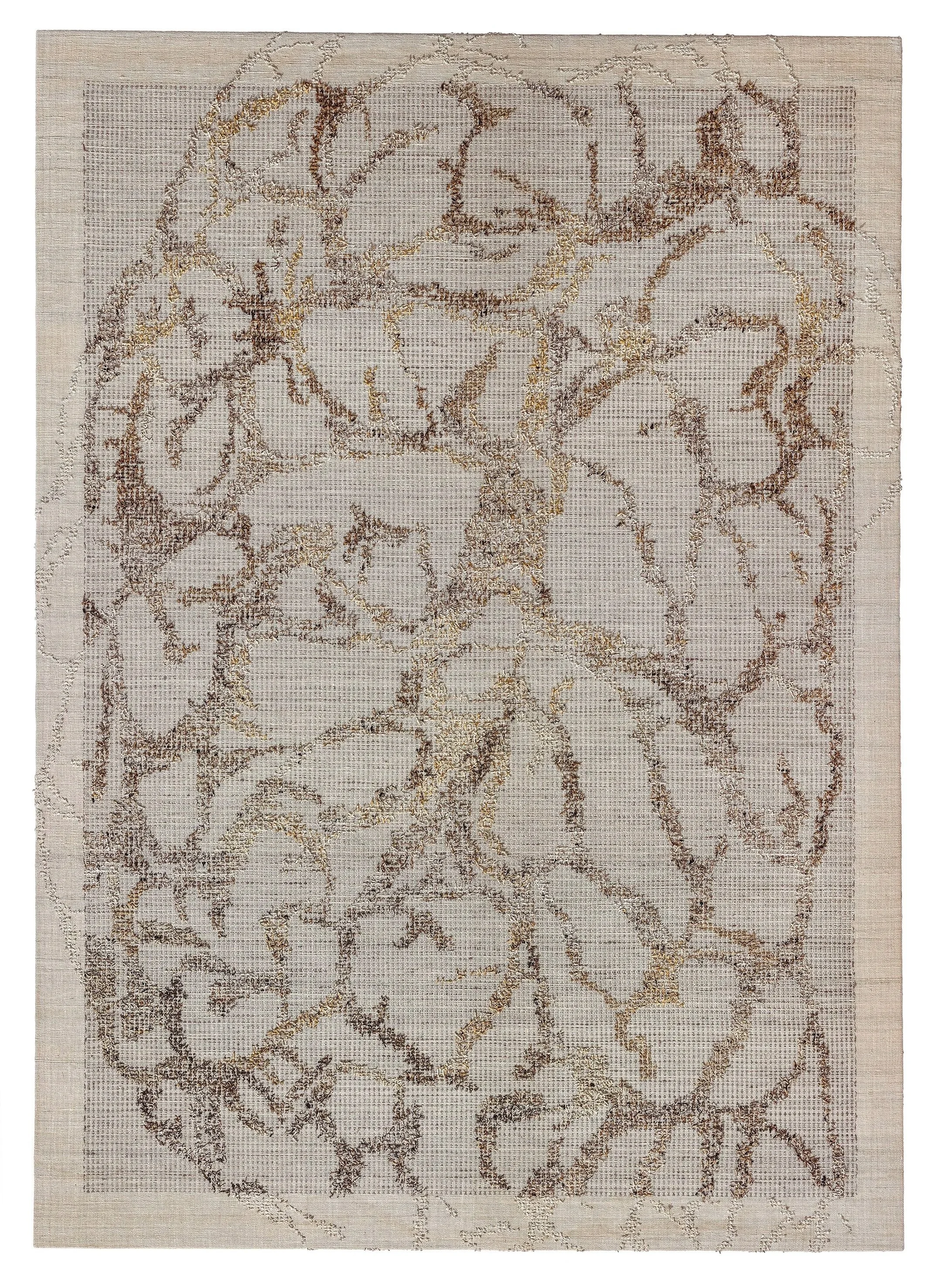
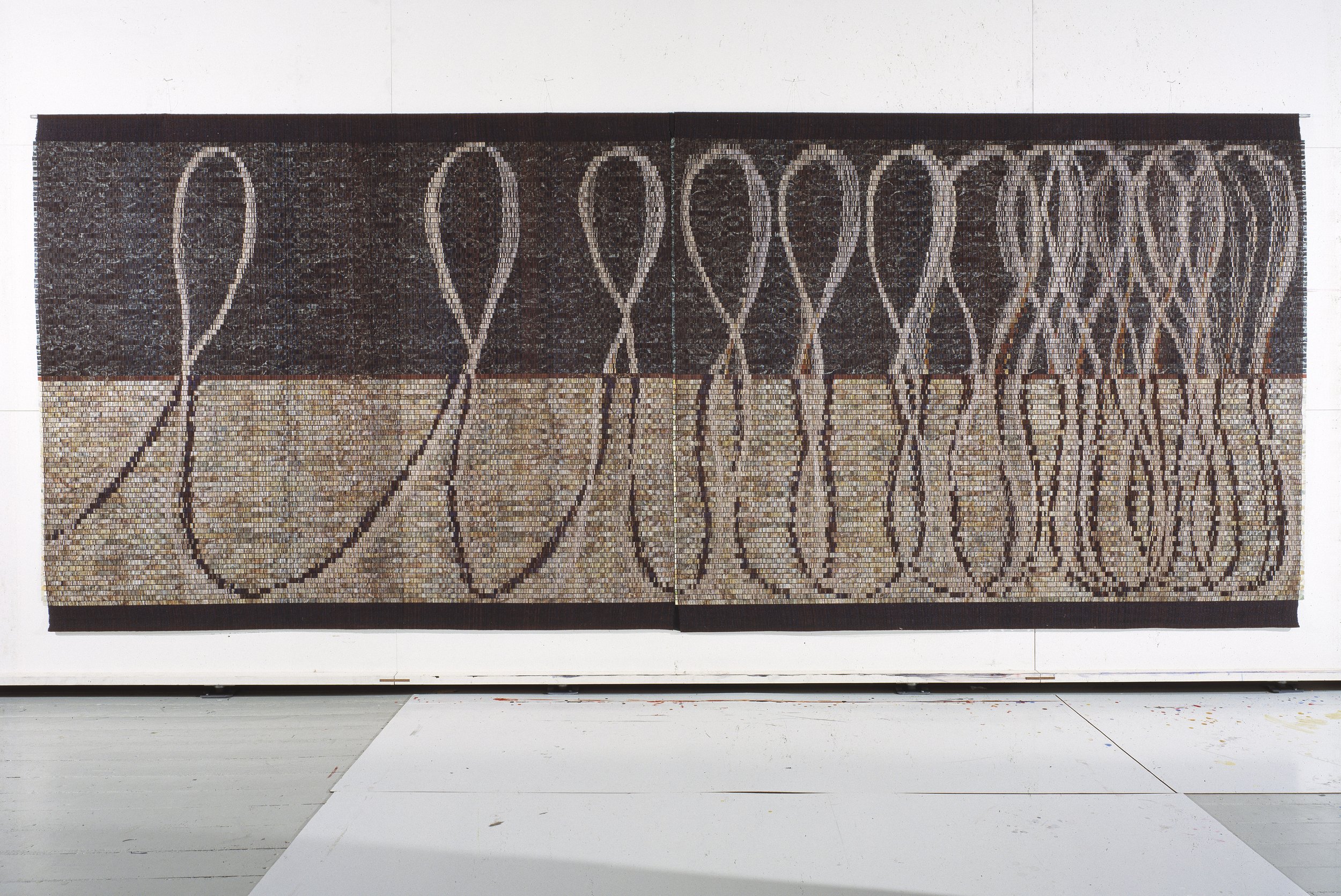
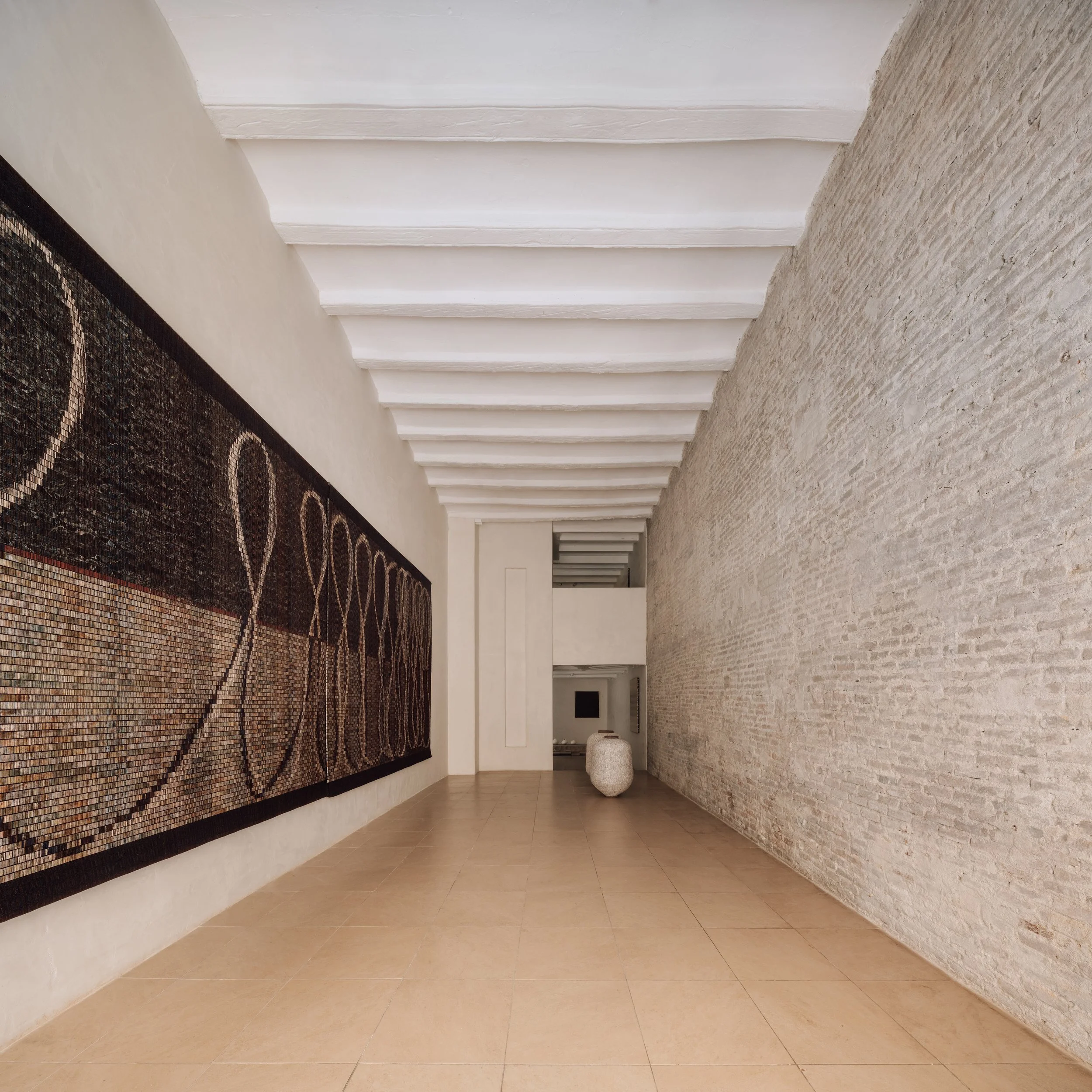
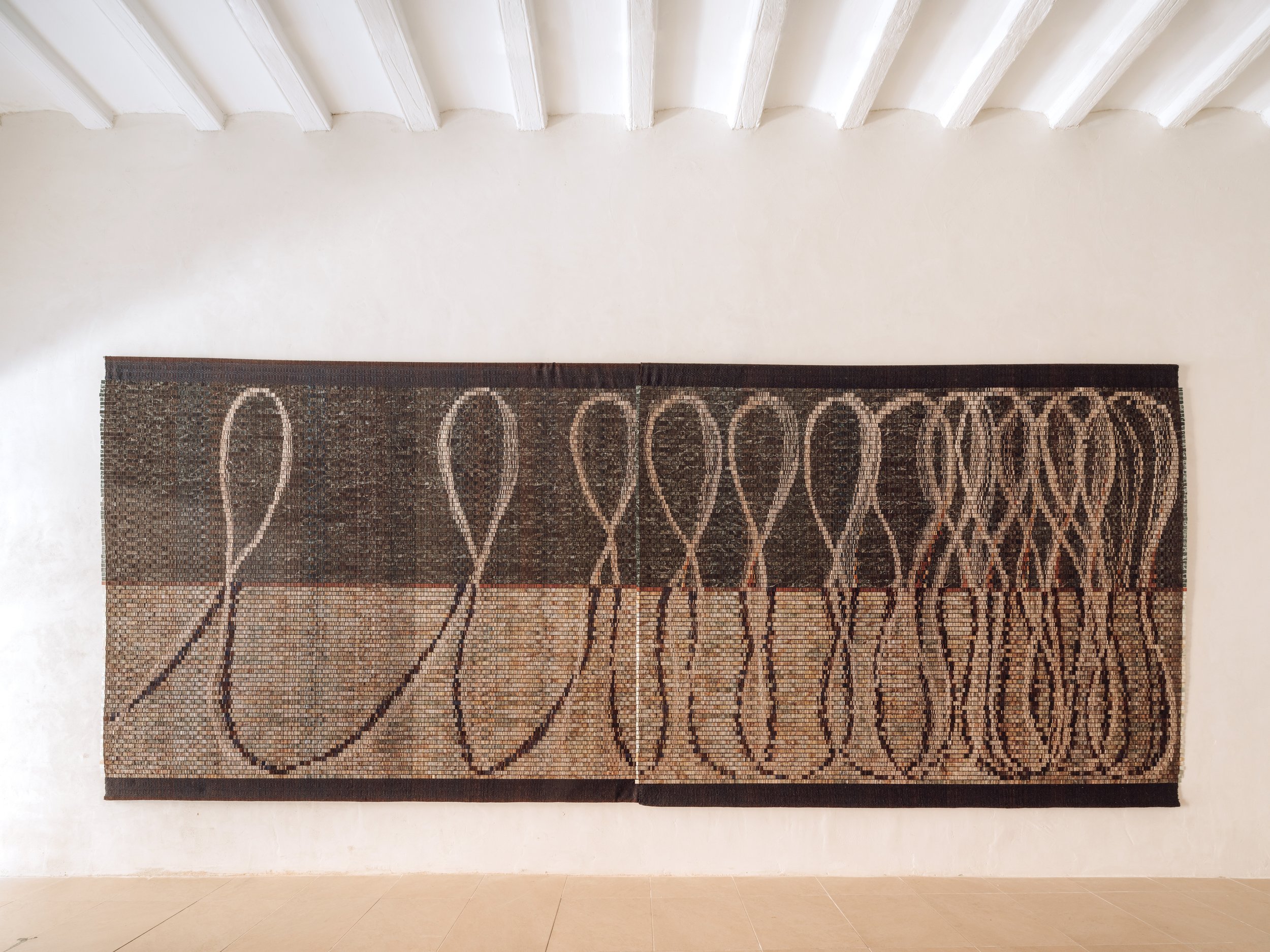
Anchoring the exhibition is Set Going (1990), a monumental handwoven textile measuring 240 × 600 cm, which received the Outstanding Award at the 1992 International Textile Fair at the Museum of Kyoto, Japan. A tour de force of material and structure, the work combines marble-patterned laminated industrial sheeting with wool, silk and flax, transforming an everyday manufactured material into an extraordinarily luminous woven surface. Across its six-metre length, looping forms unfold in shifting rhythms against contrasting fields of black and pale tones, producing a dynamic optical experience that changes as the viewer moves alongside the work. In awarding the prize, the international jury praised Henriksen's ability to convert an industrial, mass-produced material into one of exceptional richness and beauty through weaving, describing the work's vibrating lines as creating the sensation of travelling through changing landscapes. The comparison they drew was telling: just as clay is transformed by fire into ceramic, Henriksen's weaving completely reimagines the expressive potential of industrial material.
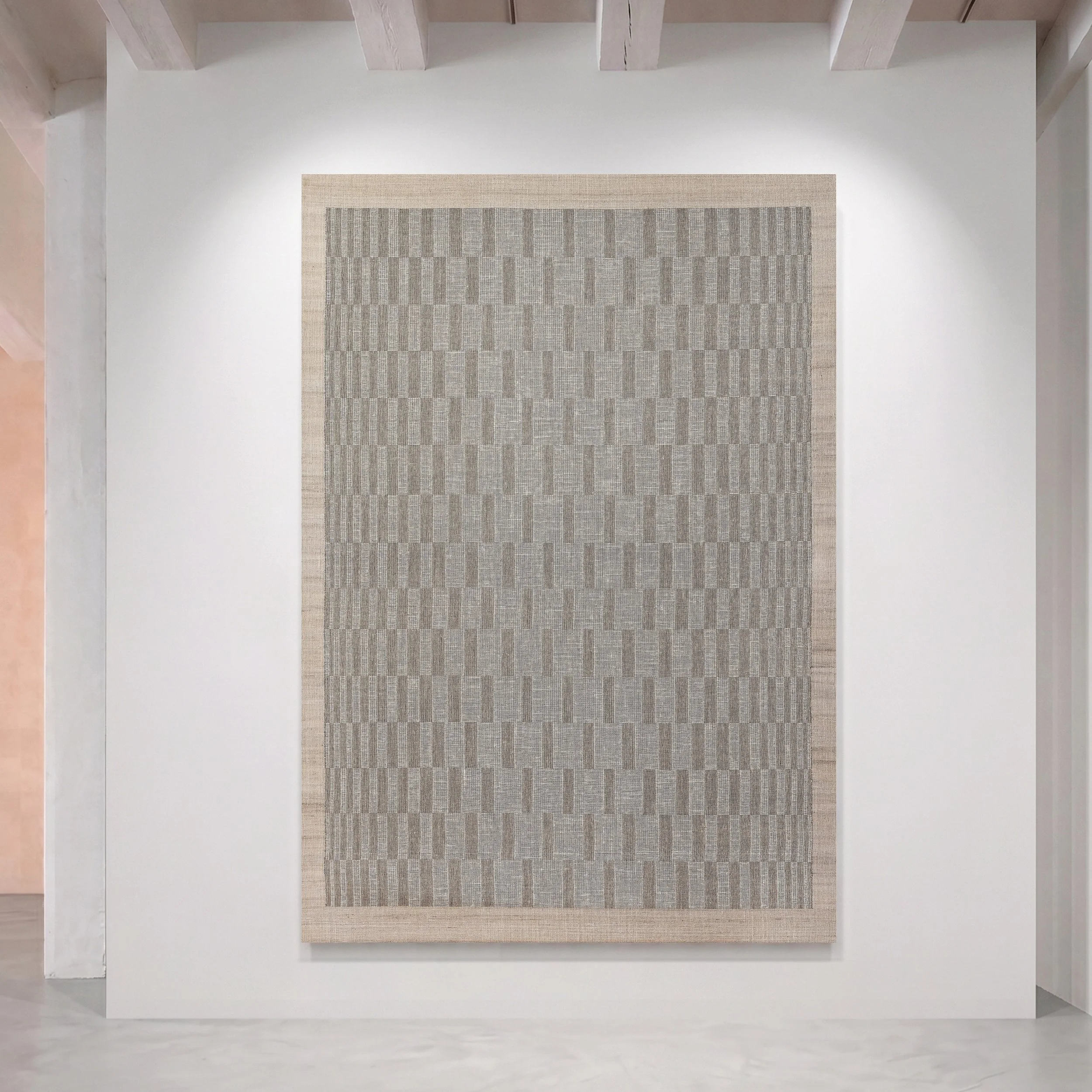
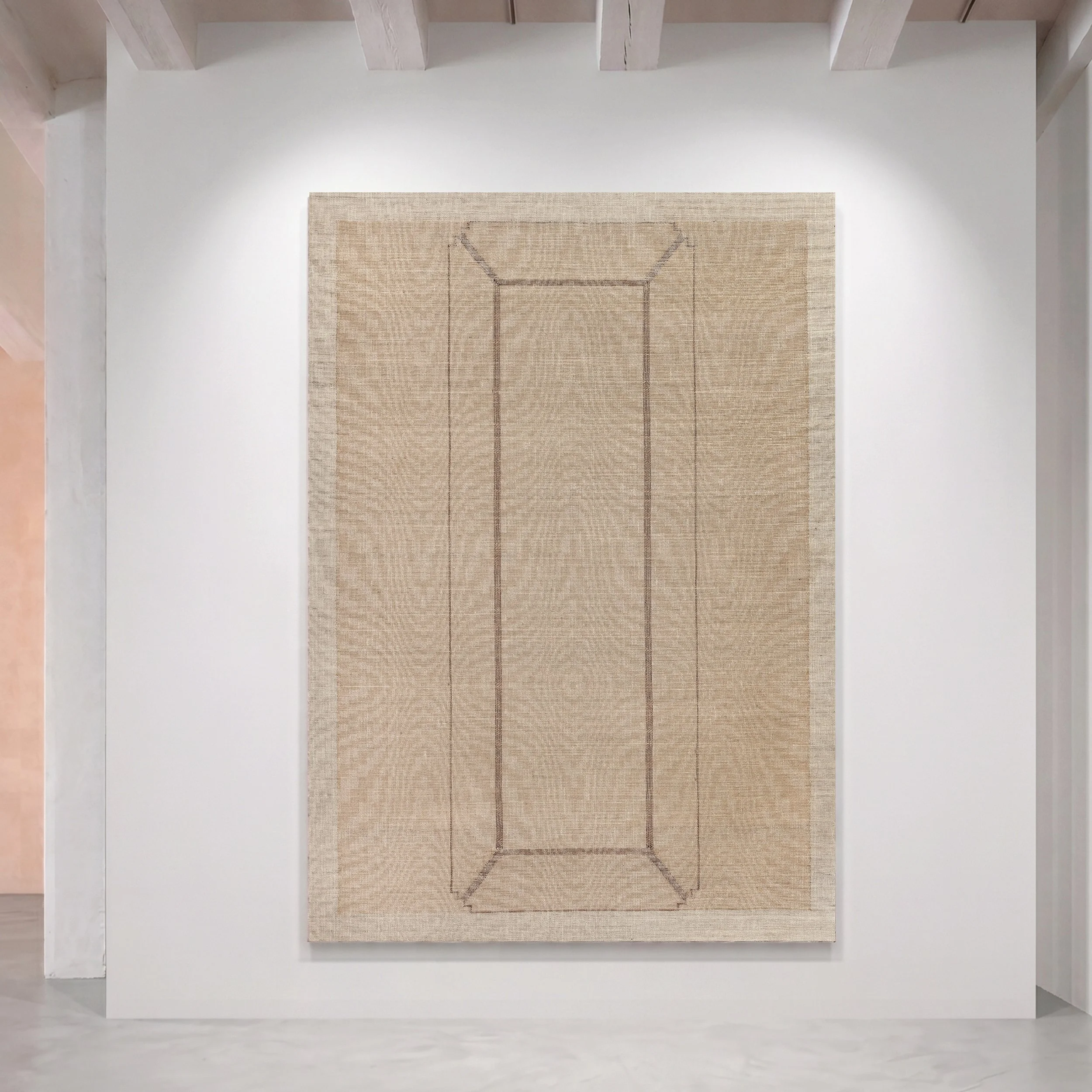
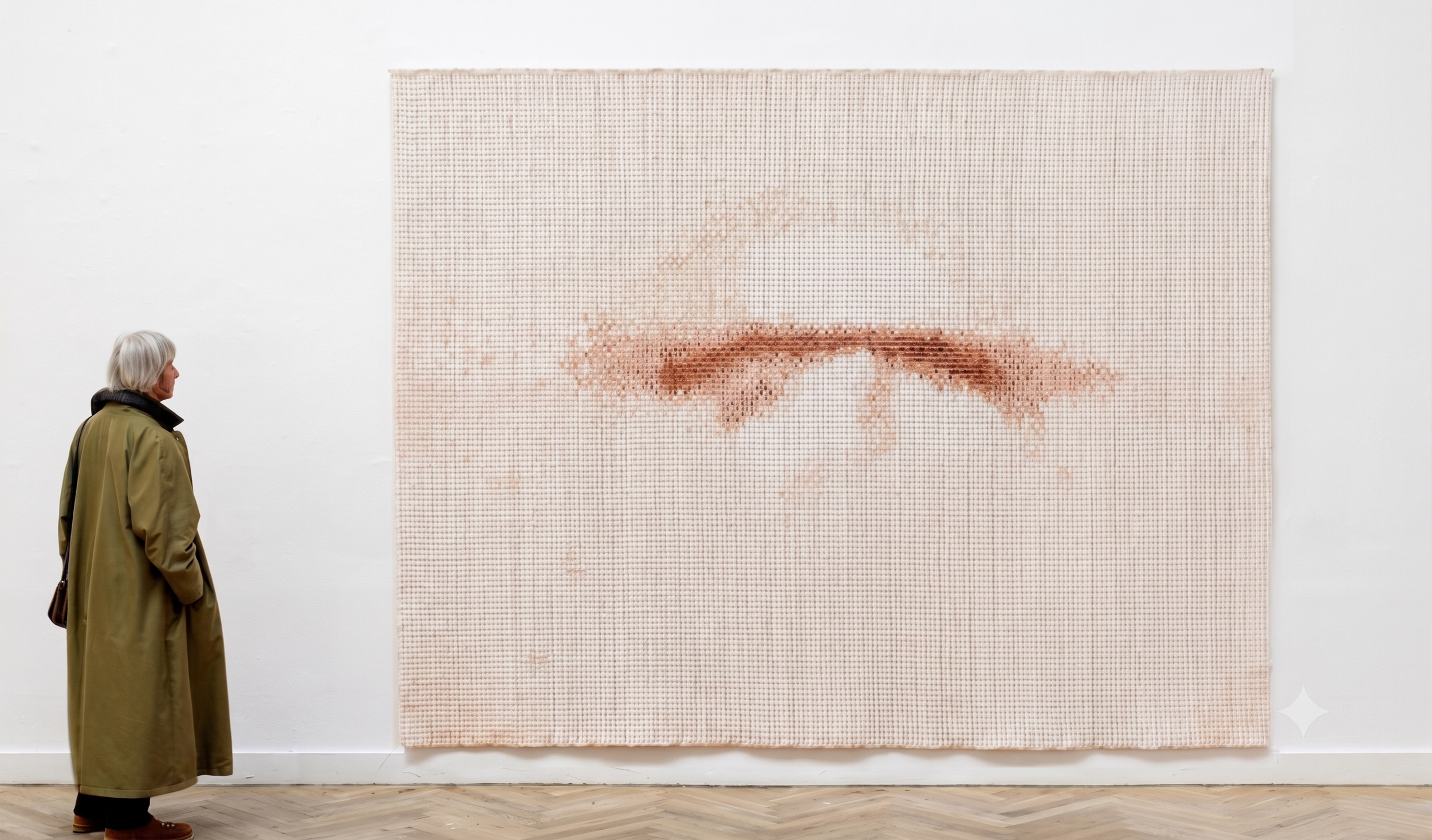
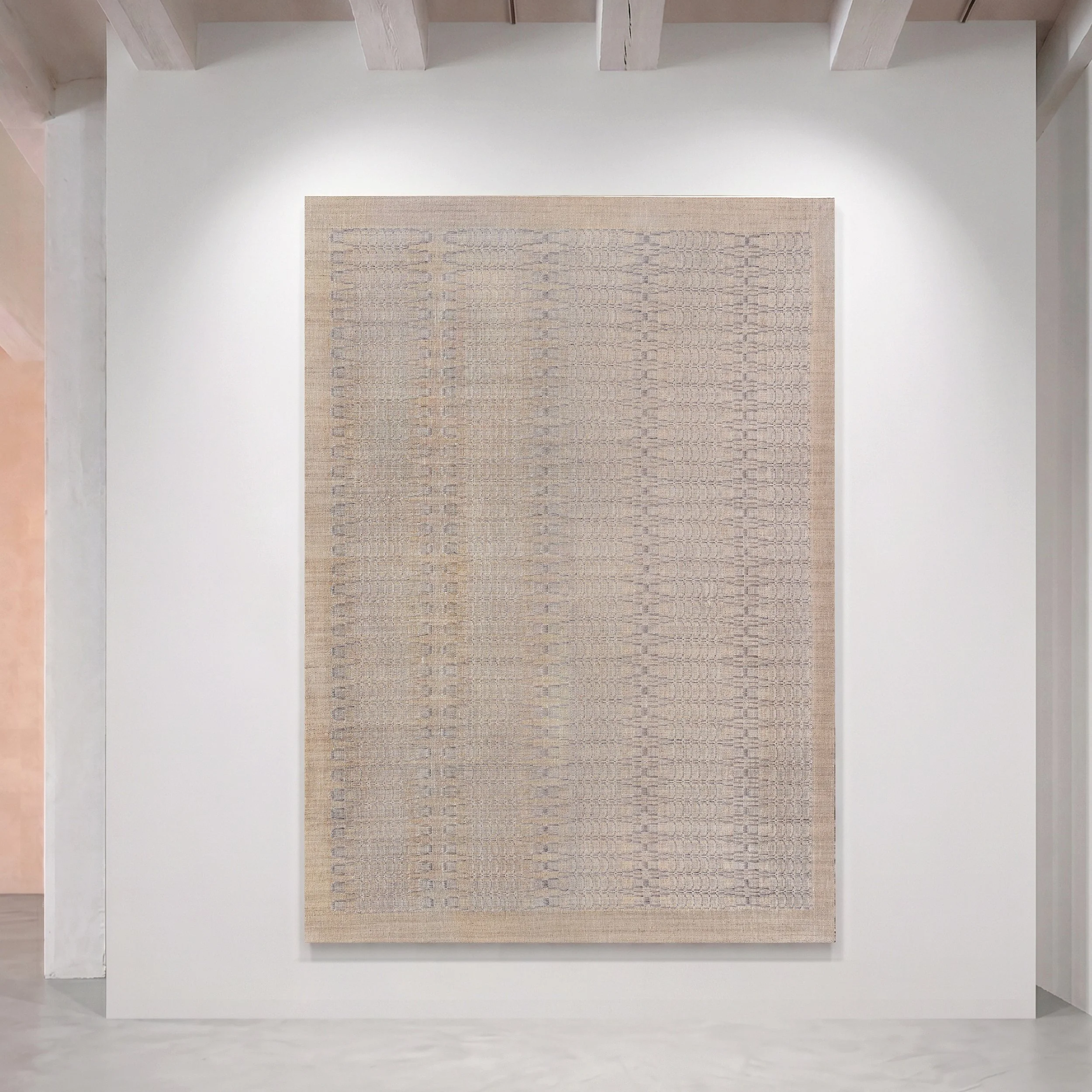
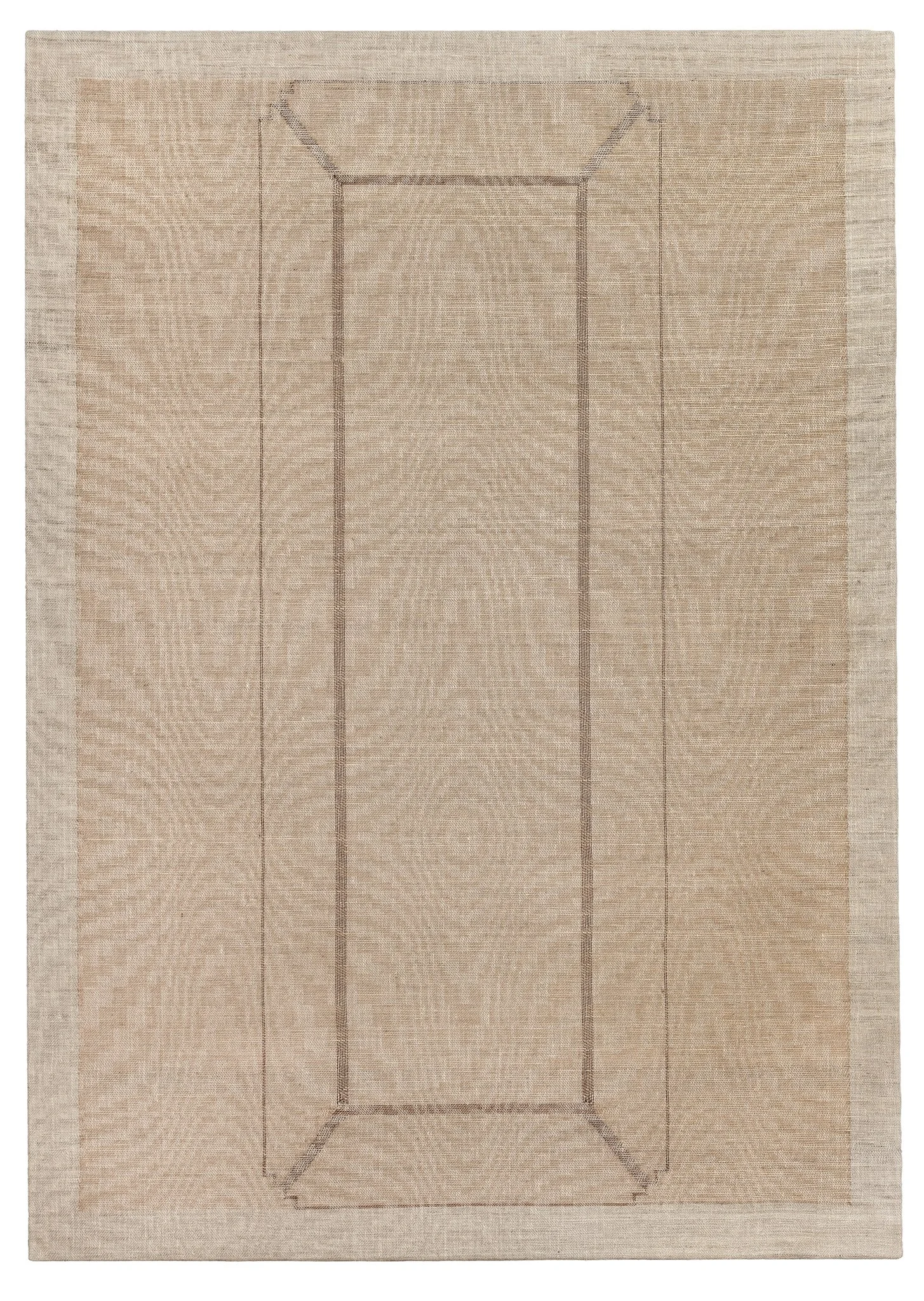
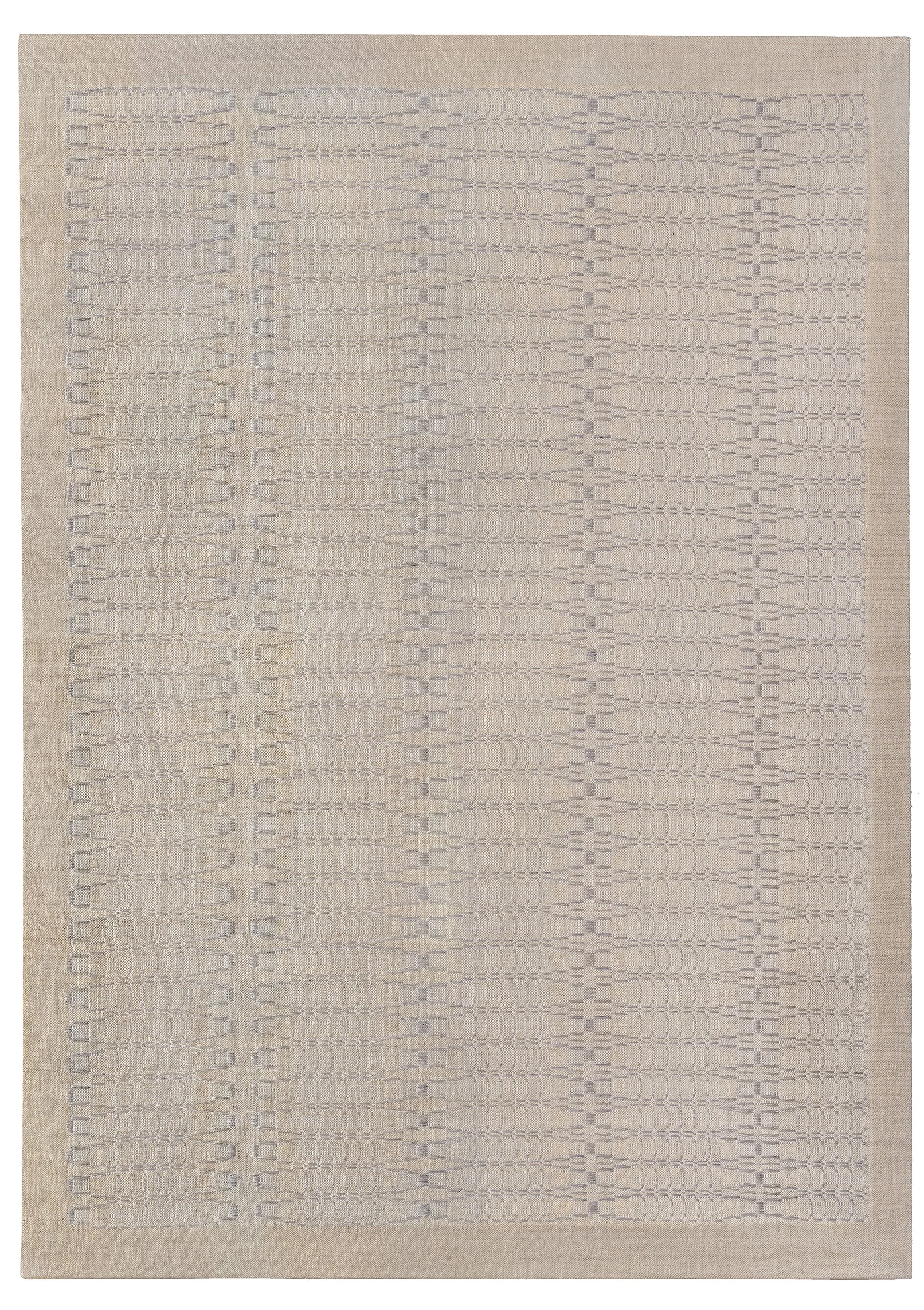
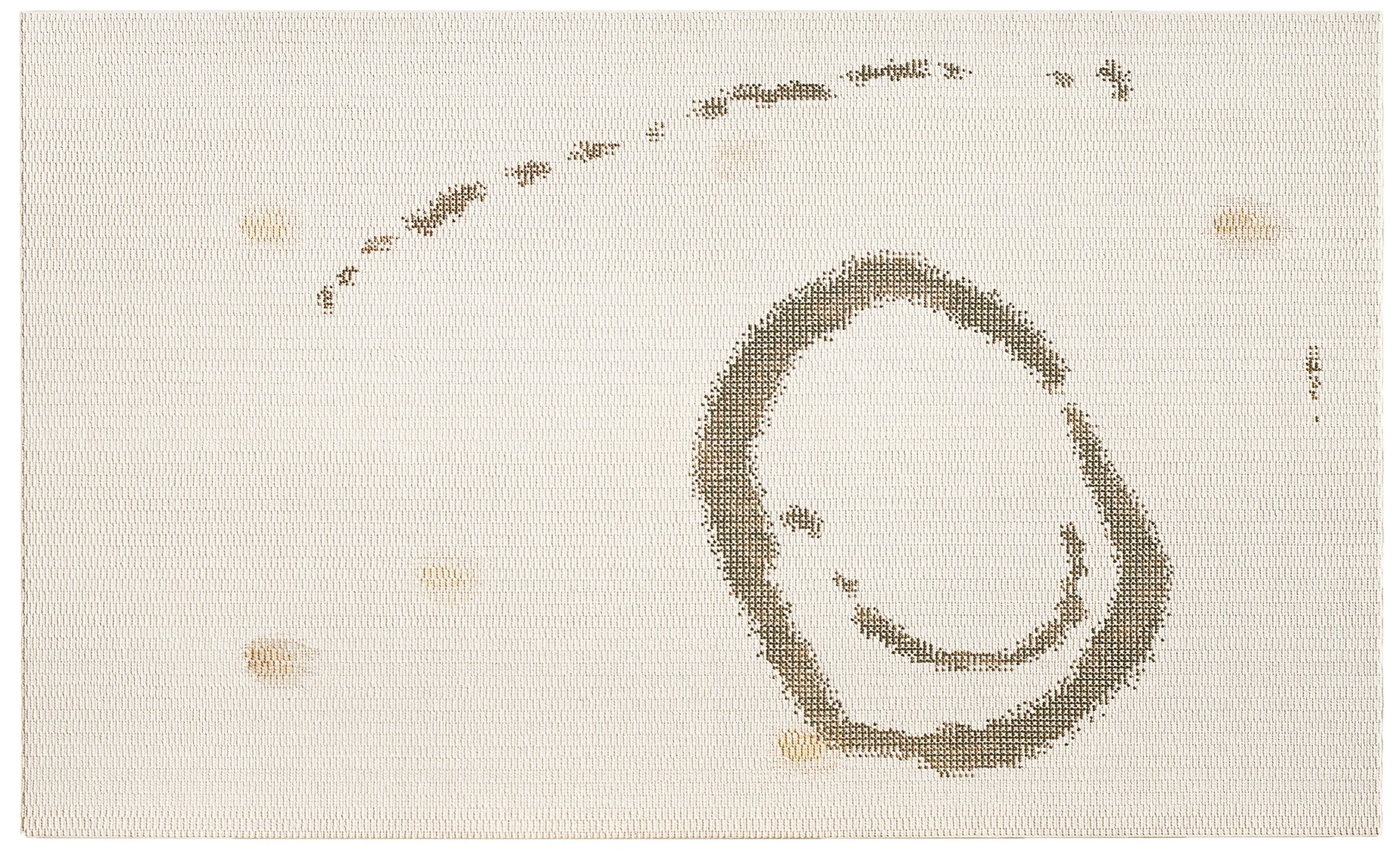
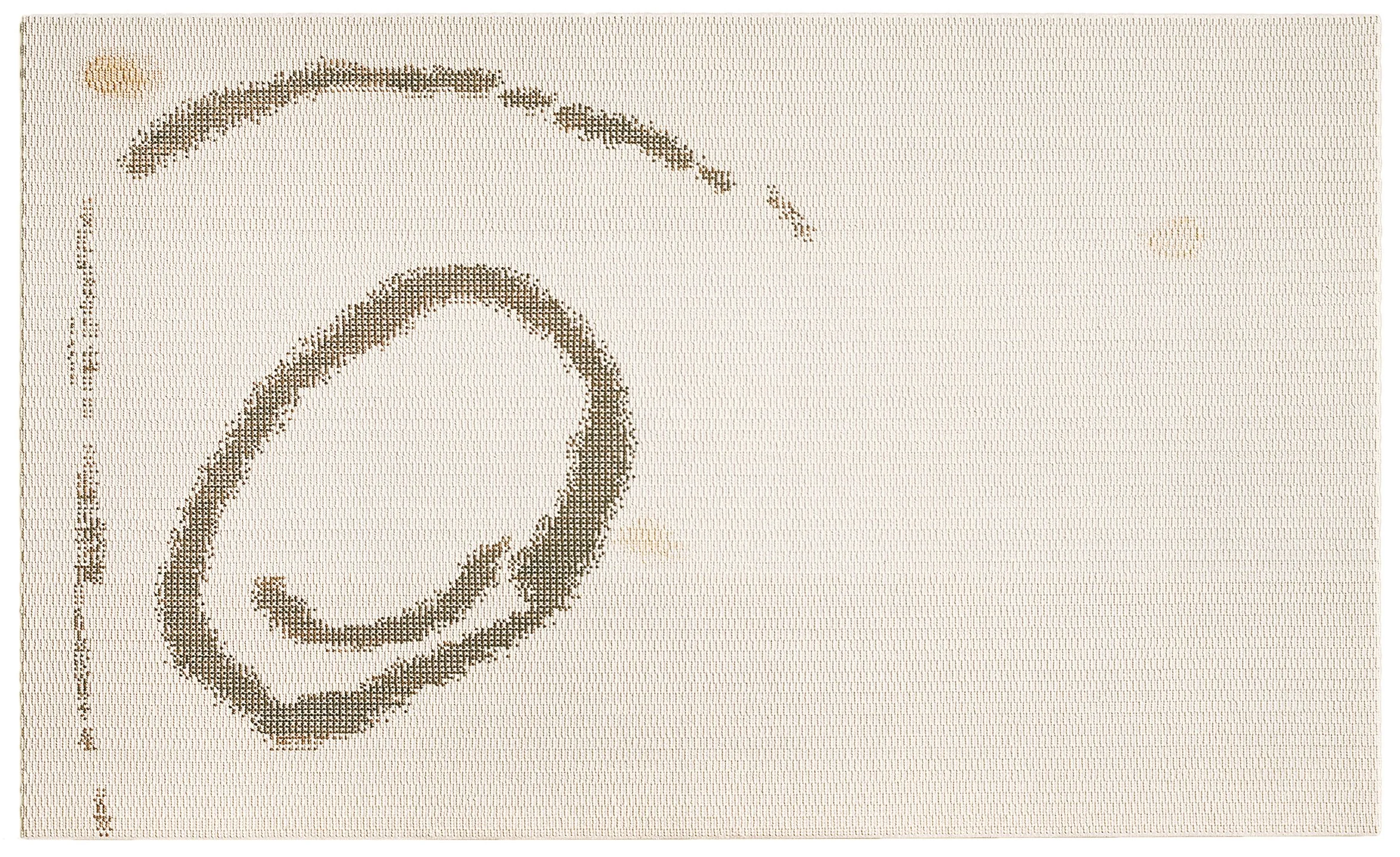
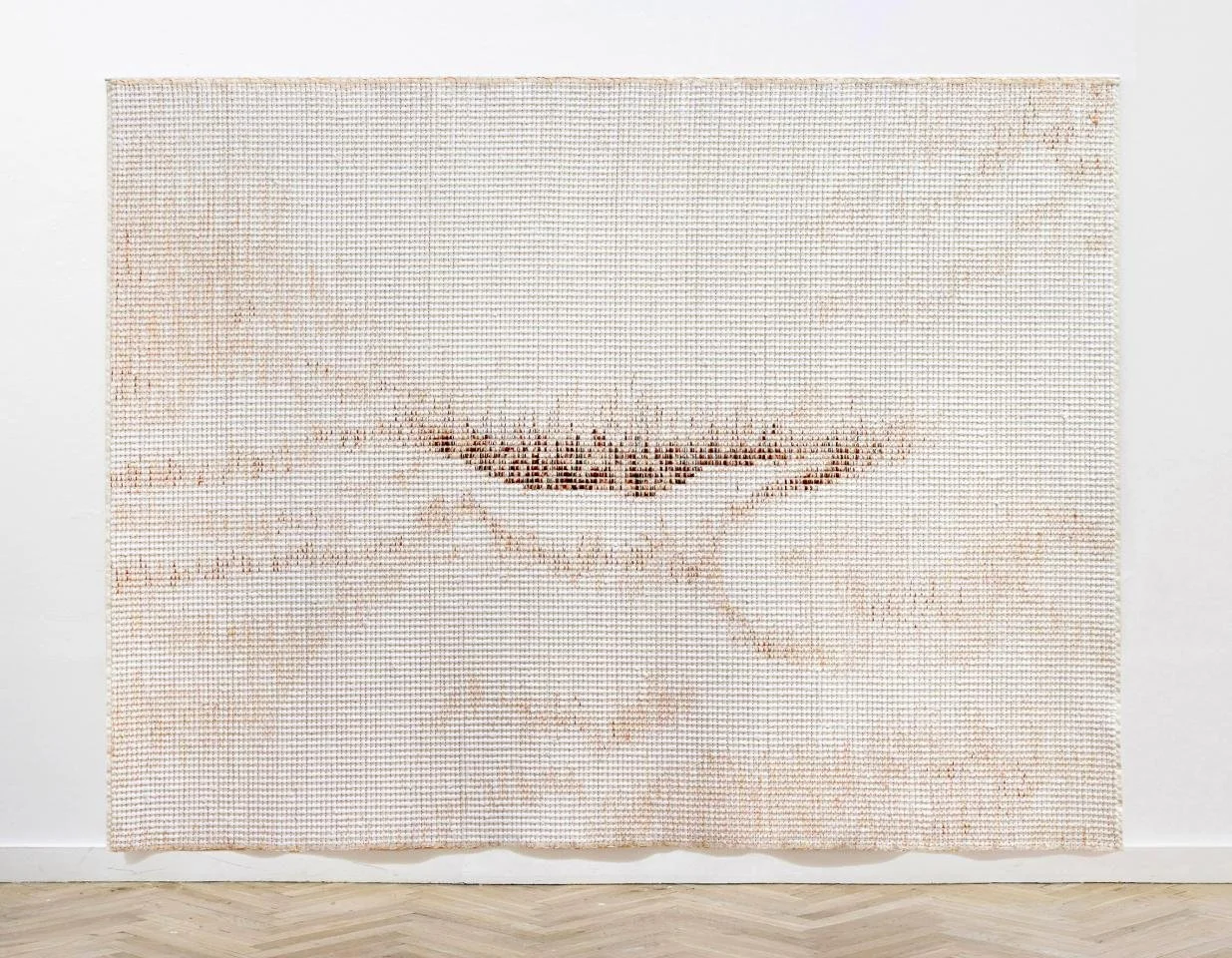
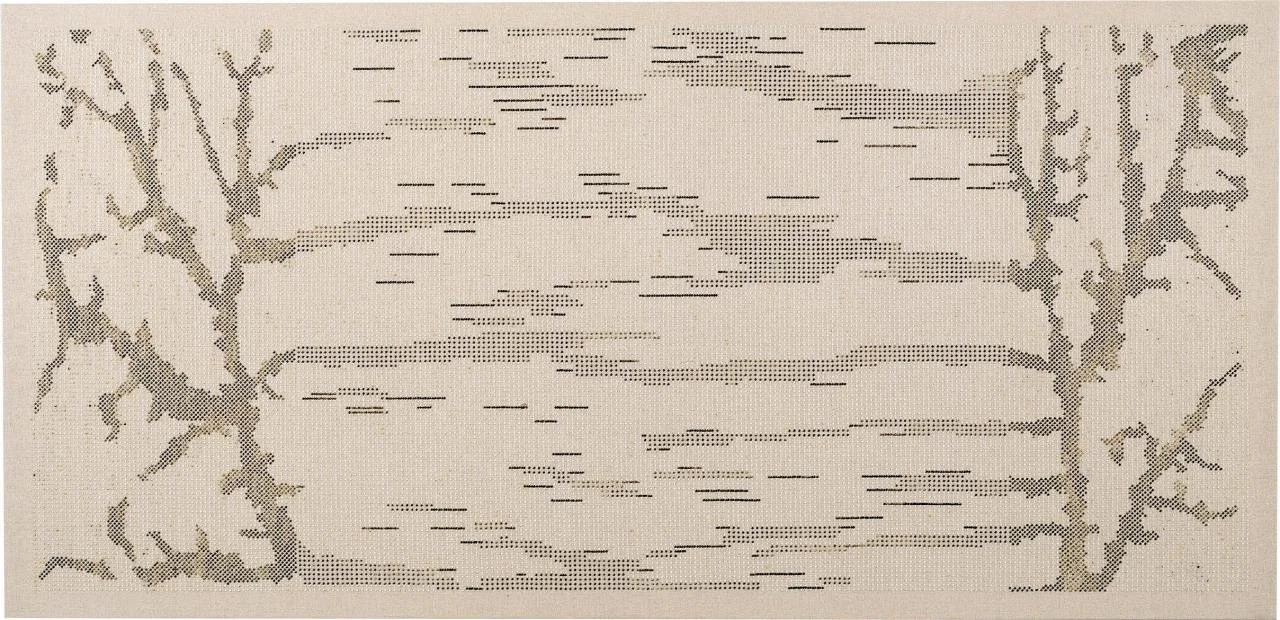
Created during this pivotal period, Set Going stands alongside Henriksen's seminal World Blankets / Winding Sheets series, in which her investigation of cloth assumes an increasingly contemplative and ethical dimension. Initially conceived as World Blankets—works through which the artist gathered what she described as her "scattered knowledge" of the world through the continual flow of media information—the series evolved into Winding Sheets after Henriksen encountered reports that one of the few traces left by UN peacekeeping forces in the former Yugoslavia were the blankets in which victims' bodies had been wrapped. The blanket—an object universally associated with warmth, protection and intimacy—became instead a shroud.
These works are among the most compelling achievements of Henriksen's career. Woven in muted linen using traditional shaft-weaving techniques, they possess an extraordinary visual restraint. Their surfaces unfold through delicate repetitions, subtle tonal shifts and an almost meditative precision, revealing the artist's exceptional command of structure and material. At first they appear serene, even timeless. Only gradually do quiet interruptions—broken rhythms, slight displacements and subtle distortions—begin to emerge. Rather than illustrating violence, Henriksen allows the woven fabric itself to carry memory, absence and grief. Beauty and sorrow remain inseparable, the cloth becoming both witness and memorial.
Henriksen has often spoken of wanting to emphasise "the woven fabric, the cloth and the value of the cloth"—the everyday textile we instinctively associate with comfort and familiarity. By disrupting only a line or two within traditional weaving structures, attention is sharpened and the blanket opens onto the outside world. It is this extraordinary ability to hold formal beauty, technical mastery and profound human reflection within the same woven surface that distinguishes Henriksen's practice. Her textiles do not simply represent experience; they embody it, demonstrating the unique capacity of weaving to carry both cultural memory and emotional resonance.
Henriksen has exhibited extensively throughout Europe, North America and Asia, including at Designmuseum Danmark, Dallas Contemporary, the State Hermitage Museum, Museum Rijswijk and the National Museum of Scotland. Her work is represented in major public collections including Designmuseum Danmark, the Danish Arts Foundation, the New Carlsberg Foundation, and the Musée Jean Lurçat et de la Tapisserie Contemporaine in Angers.